
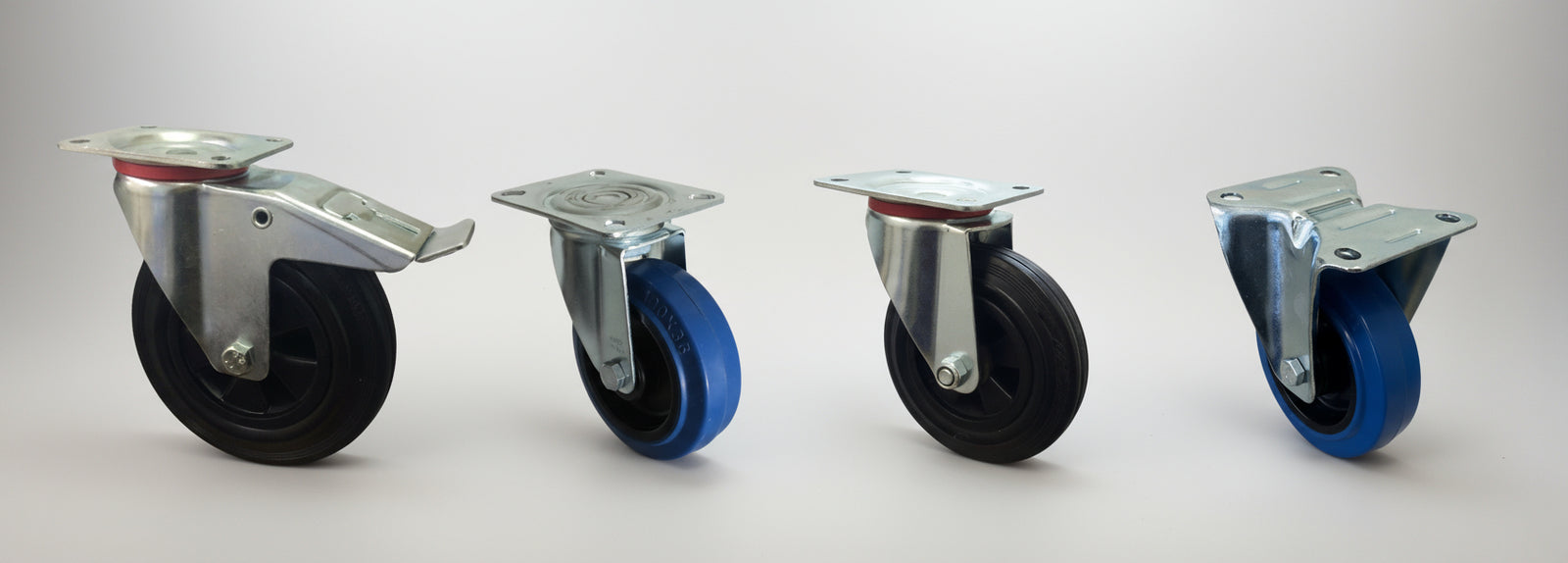
Castors provide smooth mobility for anything that needs to move - furniture, chairs, trolleys, hospital beds and heavy equipment. The choice may seem simple, until you compare them: how the castor swivels, how it is attached, what the castor wheel is made of, and what floors it will be travelling on.
This guide sets out the main types of castors and gives you the ability to choose castors with confidence, whether you need four for a chair or four hundred for a production line.
QED has made and supplied castors since 1987.
A castor is a wheel assembly attached to the underside of an object to allow it to roll. Every castor has three parts: the wheel, the fork or housing that holds it, and the fitting that attaches the castor to the equipment.
Castors differ in three ways, and almost every decision comes down to one of them:
Both spellings describe the same product. Castor is British English; caster is American. UK suppliers, including QED, use "castor".
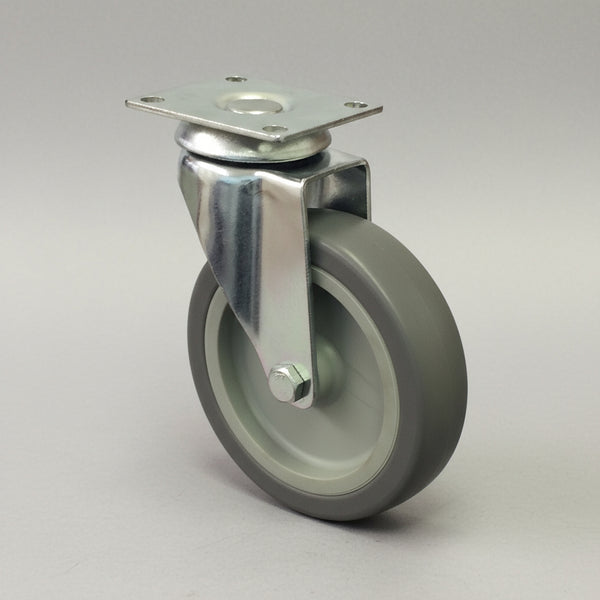
A swivel castor can rotate 360 degrees. The swivel mechanism sits between the top plate and the fork, offset so the wheel trails behind the pivot. That offset makes the wheel turn to follow the push, providing easy movement in confined spaces and making movement easier for those doing the pushing.
Swivel is the default on trolleys and medical equipment. The weakness for these is straight line travel: four swivel castors will wander over distance.
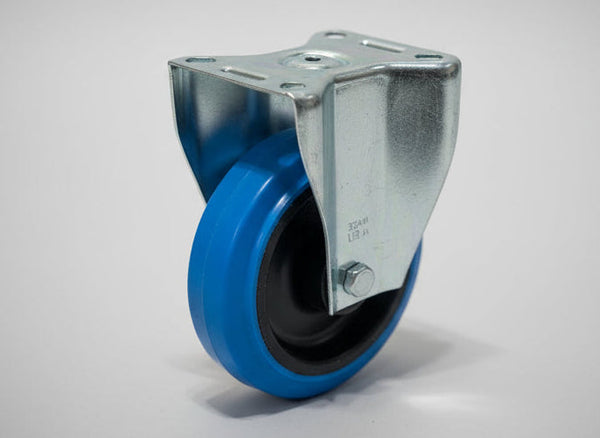
Fixed castors roll in one direction only. With no swivel mechanism they are stronger, and carry heavy loads better than a swivel castor of the same wheel size. Where a load is both heavy and static, they give more stability.
Most equipment uses both: two fixed castors at one end for tracking, two swivel at the other for steering. This is the set-up on almost every trolley you have pushed.
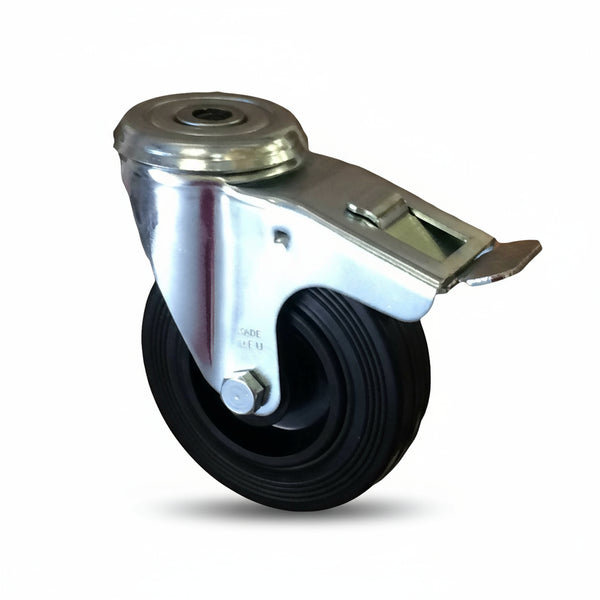
Braked castors add a locking mechanism to either of the types above. Brakes prevent unwanted movement when equipment is loaded or parked, something that in most situations can be essential.
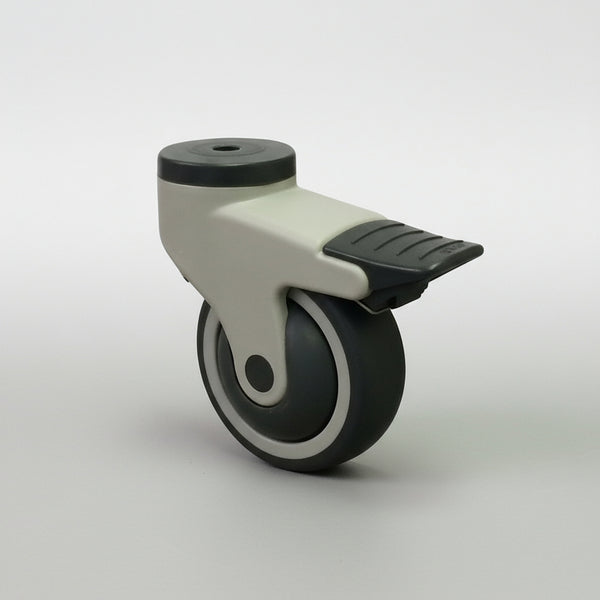
A three-way locking castor combines a wheel brake, swivel lock and a directional lock in one unit. Used mainly on hospital beds and patient handling equipment, it gives complete control: free, locked in one direction, or immobilised.

Dual wheel castors carry two wheels on an axle. Splitting the weight gives greater load capacity at the same wheel diameter and improves stability under a shifting load, so stability rather than capacity is often the reason to choose them. They are the usual choice for patient lifters and display equipment.
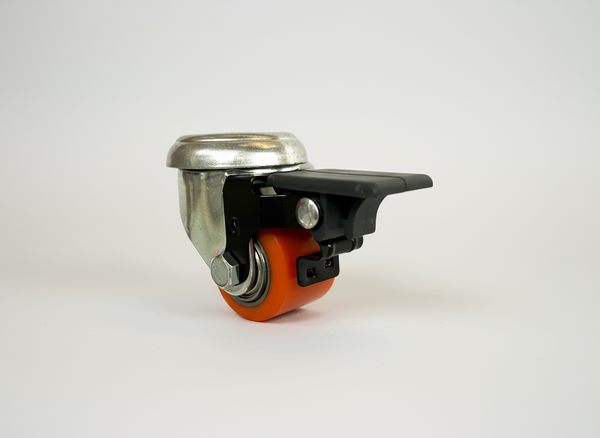
A standard swivel castor pivots on a kingpin, the part that fails first under shock loading. Kingpinless castors replace it with a raceway, providing durability under repeated impact - used in towed trailers, airport equipment and heavy items in constant transit.
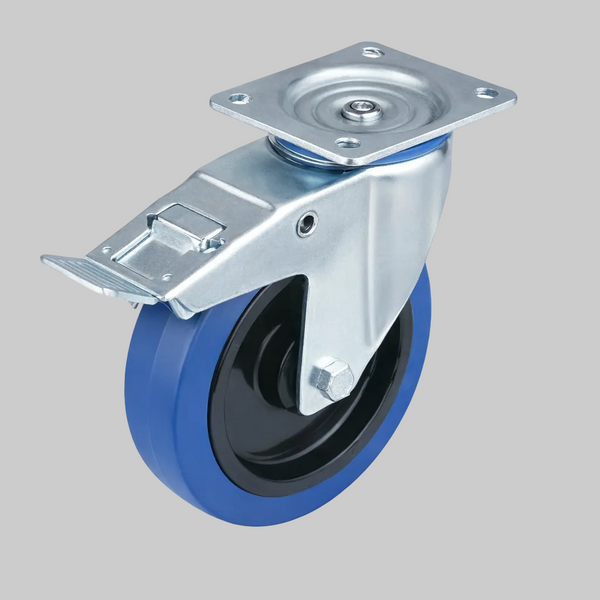
A plate castor uses a flat plate, bolted to the equipment, to distribute weight across a wider area. It is the most rigid fitting and the strongest, which is why industrial castors are mostly plate fitting.
Industrial top plates follow a rough standard: castors up to 125mm generally use a 105 x 80mm top plate with 80 x 60mm slotted bolt hole centres, while 160mm and 200mm use 130 x 106mm. Institutional and medical castors do not follow that convention - plates are smaller and come in many sizes, so a replacement may not match the existing bolt hole pattern.
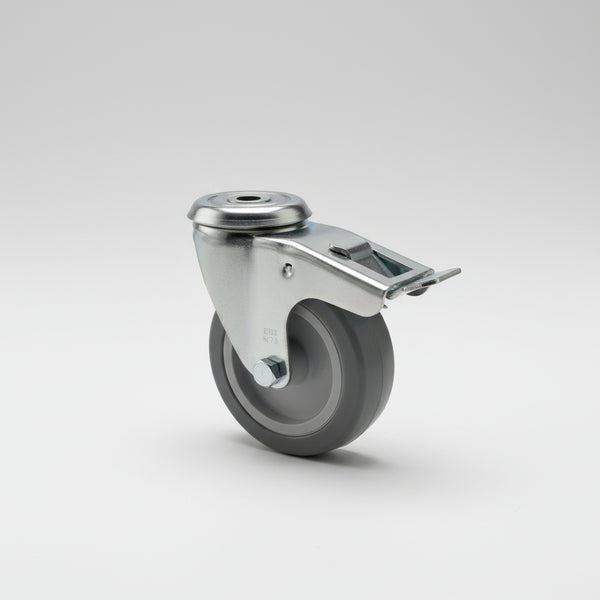
Bolt hole castors are attached through a single central bolt rather than a plate, which suits tubular legs with no flat surface. Industrial versions are usually M12, with M16 and M20 at 150mm and above; institutional and medical are generally M10 or M12. One limitation: a bolt hole castor can be swivel or braked swivel, but will never be fixed.
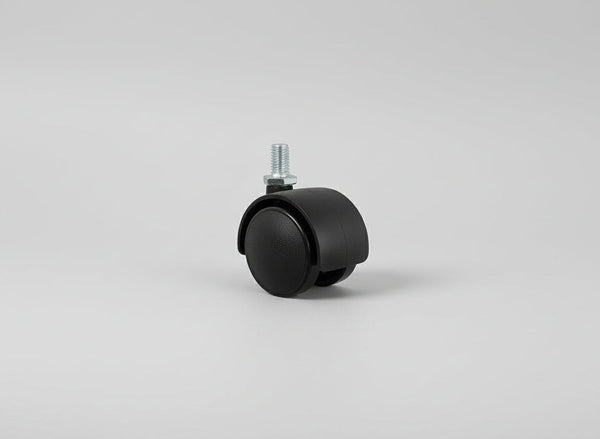
Stem castors are designed to insert into a leg or tube, and are common on lighter furniture. A solid stem is a one-piece shaft specified by diameter and length. An expanding adaptor grips inside a hollow tube instead, in round or square profiles - most commonly 19mm and 22mm, with round the more popular.
Wheel material is the most important factor in the whole decision, more than brand or price, because it decides what floors the castor works best on, how much noise it makes in movement, and how long it lasts. Common materials for castor wheels include rubber, polyurethane, nylon, polypropylene, steel and cast iron. Castors come in a wide range of designs and various materials tailored to specific needs, and the notes below cover the materials you will generally find.
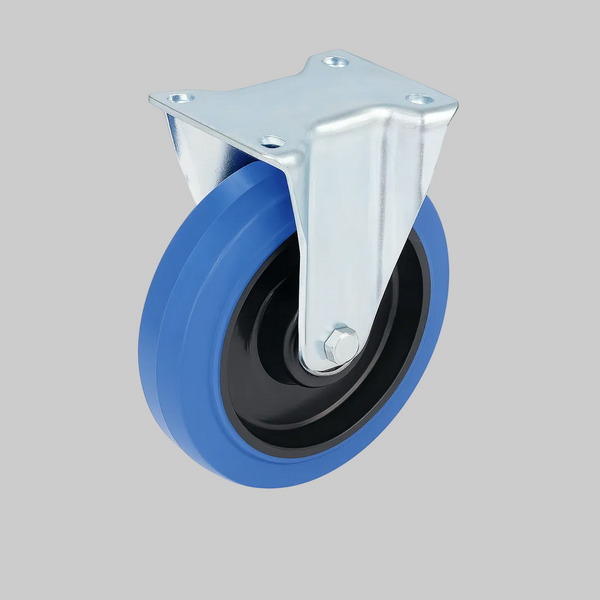
Rubber is one of the oldest materials you'll find used in a castor wheel. A rubber wheel gives good shock absorption and noise reduction, and is floor protective on finished floors. Grey rubber is non marking; black rubber can mark light floors. Hard rubber has a higher load capacity than soft rubber, at the cost of cushioning.
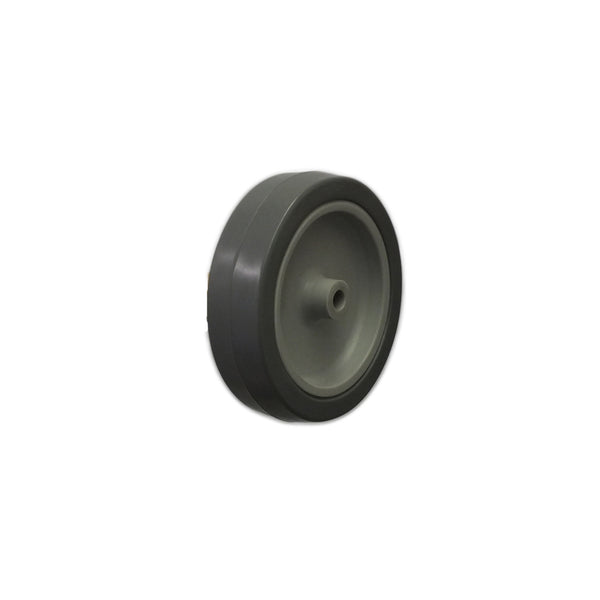
TPR is the institutional standard among wheel materials: quiet operation, non marking, gentle on polished floors. Used frequently in schools, catering and healthcare, where noise and floor damage matter more than outright load bearing.
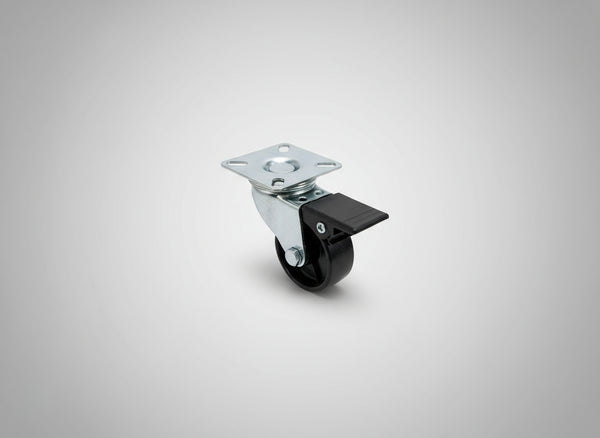
Polyurethane wheels combine high load capacity with floor protection. Chemical resistance is good - they do well at brushing off oils and floor debris - and they are abrasion resistant, rolling more easily than rubber under weight. Polyurethane on a cast iron or steel wheel hub is a common heavy duty combination.
A nylon castor wheel works well in wet conditions and resists chemicals. Nylon is hard, rolls easily and carries weight well, but transmits noise and can mark softer floors. Polypropylene looks almost identical and can easily be mistaken for it.
Pneumatic wheels use an air filled tyre to absorb shocks on rough terrain. They are the ideal solution for sack trucks, wheelbarrows and garden equipment, where the ground is uneven and the load is fragile. The downside (depending on where you use them) is the potential for punctures.
A puncture proof castor wheel gives a similar ride using solid polyurethane instead of air. No punctures, no pressure checks, a slightly firmer ride.
Cast iron wheels are abrasion resistant and long wearing, with the greatest load capacity of any common material. Of all wheel materials these carry heavy loads best, and they suit floors that are rough, dirty or hot. Both are noisy and will damage finished floors, so they belong in foundries rather than commercial settings. Steel centres are also used beneath polyurethane treads, combining steel strength with a softer contact surface.
Match the castor wheel to the floor, not the other way round. A hard wheel on a soft floor damages the floor; a soft wheel on a rough floor surface wears out quickly. Floor type is the second question to ask after weight, and something that often goes unconsidered.
Vinyl, sealed concrete and polished floors need soft, non marking wheels. Rubber, TPR and polyurethane all work, and all deliver smooth movement without marking. Avoid steel and cast iron entirely.
Rough surfaces, gravel and outdoor ground need a large wheel diameter with some give. Pneumatic wheels handle the worst of it; polyurethane on a steel wheel centre handles yard use across various surfaces.
Workshop and warehouse floors collect swarf, grit and packaging waste. A harder wheel cuts through floor debris rather than picking it up, and a larger wheel clears obstructions more easily.
Not every castor goes under a factory trolley. Chair castors, bed castors and furniture castors are the ones most people encounter often, and the same rules apply at a smaller scale.
Castors on a chair are almost always stem fitting, and the stem diameter matters more than the wheel. Office chairs use a standard 11mm stem; dining and occasional chairs vary, so measure before ordering. Wheel material matters here too: a soft polyurethane or rubber wheel protects wooden and laminate floors, where a hard one will likely mark them.
Castors on a bed are usually plate or stem fitting, and carry more weight you might assume. Size for the bed, the mattress and the occupants together, and check the total castor height so the bed sits level.
We supply single castors as readily as full pallets, so a set of four for a chair is as welcome as a contract order.
Divide the total loaded weight by three, not four. On an uneven floor surface only three castors reliably carry the load at any moment, so dividing by three builds in a margin.
Two further points. Brakes should be rated for the same load as the wheel. And a stated capacity assumes rolling, not standing - equipment left loaded for months can flat-spot a softer wheel, which is a durability problem rather than a load problem.
Castors are named by wheel diameter, not overall height. A 100mm castor stands around 127 to 130mm tall once the fork and fitting are included, and the same applies at every diameter. If you are working to a set clearance, measure total castor height rather than wheel size.
A larger wheel diameter rolls more easily, clears obstructions better and offers greater load capacity. The cost is height. Where the two conflict, choose a twin wheel castor for increased capacity without the extra height.
Not all brakes do the same job, and matching the type to the task is crucial.
A drip stand needs a side lock brake. A loaded bed needs a combined brake or three-way locking.
Suppliers group castors into grades. The grade tells you more about build quality than a load rating alone, and it is usually the quickest way to narrow a search.
Trade drawings and quotes use abbreviations that are rarely spelled out. If you have been sent a specification and cannot decode it, this is the list:
Castors group three ways: by movement (swivel, fixed, braked, three-way locking, kingpinless, twin wheel), by fitting (plate, bolt hole, stem, expanding adaptor) and by the wheel types available in each material - rubber, TPR, polyurethane, nylon, cast iron and pneumatic.
The three most common castor wheel types are rubber for quiet running, polyurethane for load capacity with floor protection, and nylon for hard wearing use in wet conditions. All three are suitable for indoor floors.
A glide is a flat pad that lets furniture slide rather than roll. Glides are suitable for light furniture on smooth floors and cost less; castors are the ideal choice for anything heavy or moved often.
Glides, felt pads and moving skates. For a large object moved only occasionally, skates cost less than fitting castors.
Work through five key factors in order: the weight carried, the floor type, the environmental conditions, the fitting on the equipment, and the height available. Weight and floor type between them settle the wheel materials question. Answer those and the choices should narrow significantly.
If you are unsure, talk to us. Send a photograph and a measurement and we will identify what you need.


