
Rubber castors are the quiet choice. A rubber tyre absorbs shock, cuts noise and protects a finished floor, which is why rubber wheels sit under retail trolleys, display units, bakery frames, hospital equipment and furniture. Our rubber castors run from 50mm to 125mm wheel diameter and 50kg to 200kg per castor, in plate and bolt hole fittings, as swivel, braked or fixed, with grey, black and blue elastic rubber tyres to suit the floor and the load. Every product is a durable pressed steel castor with a rubber wheel that is suitable for a wide variety of applications, from industrial settings to healthcare.
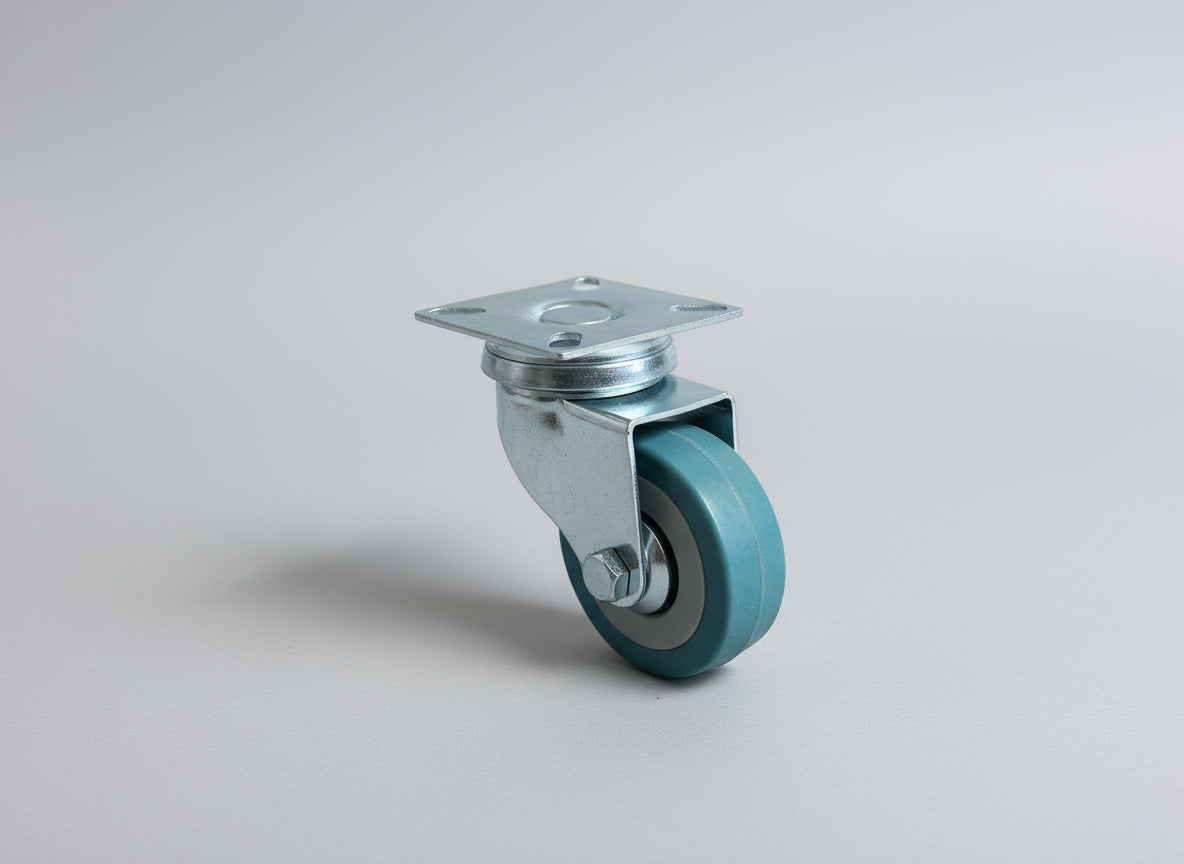
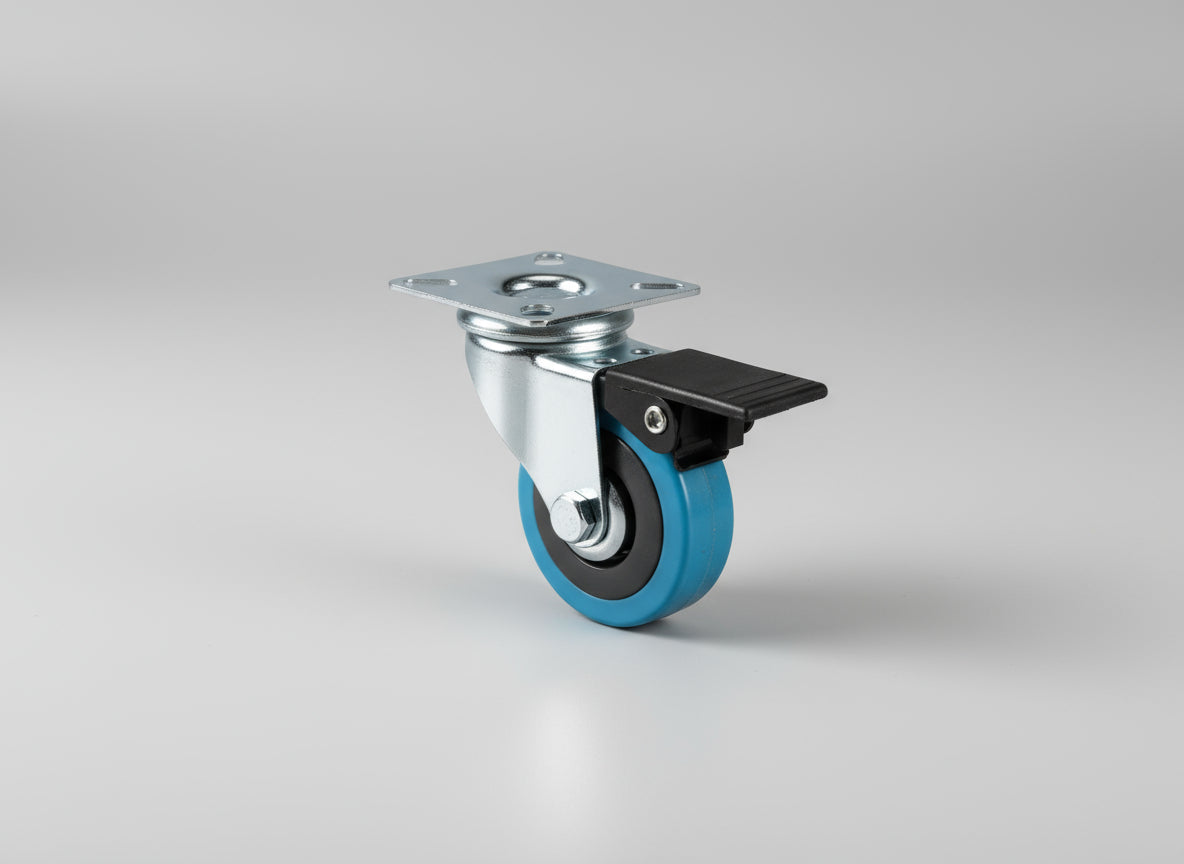
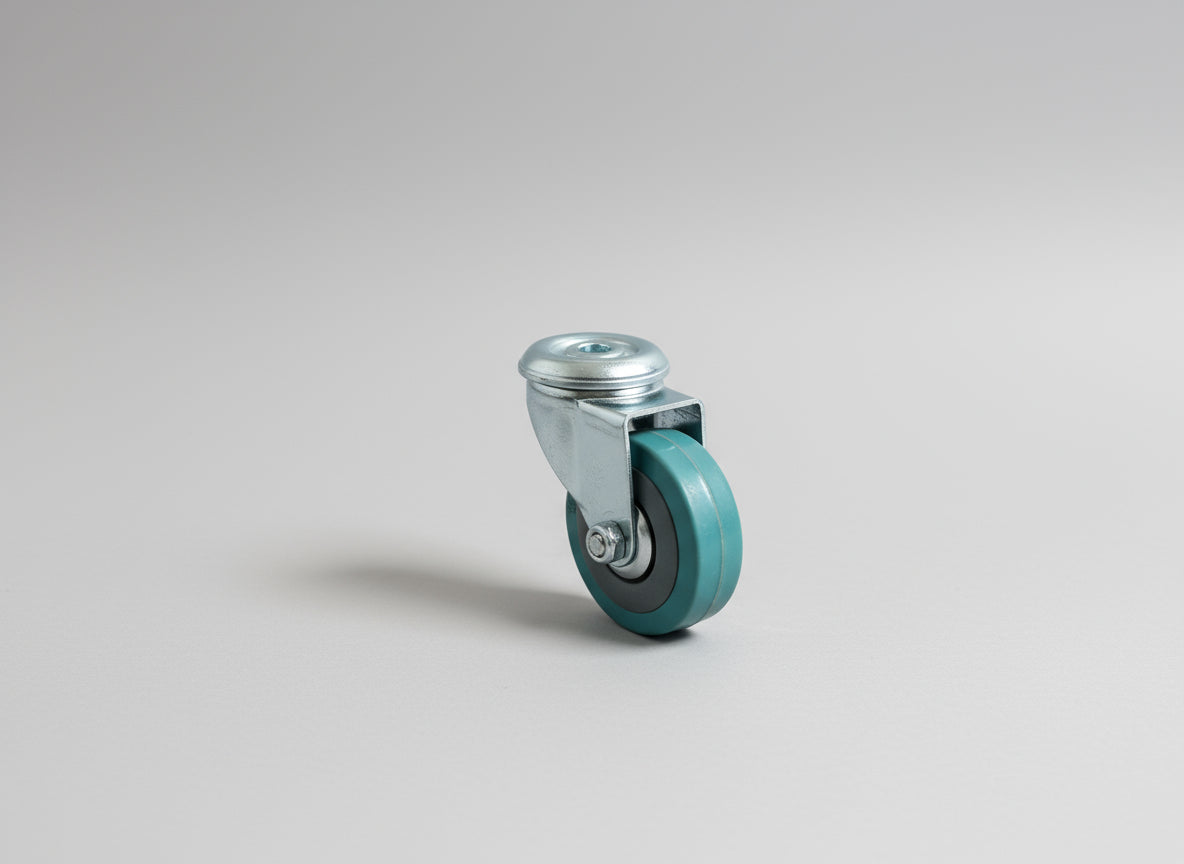
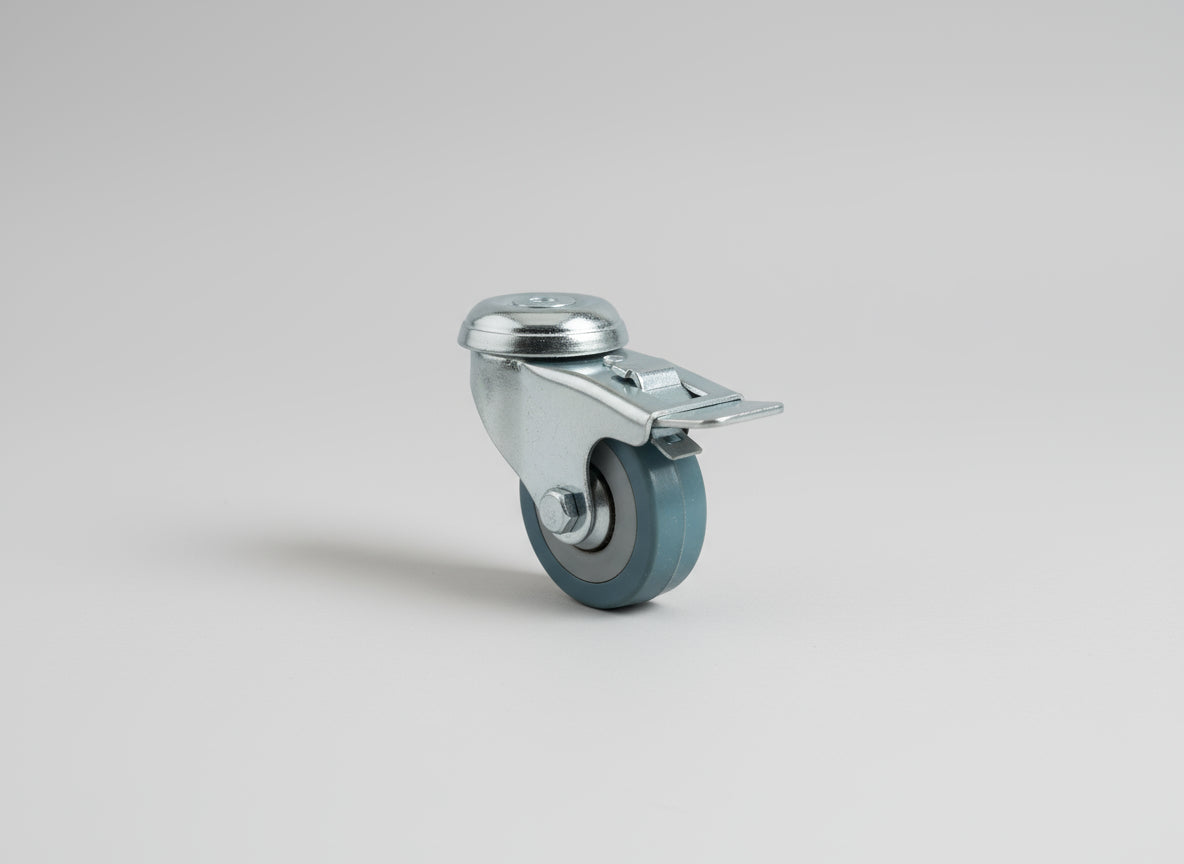
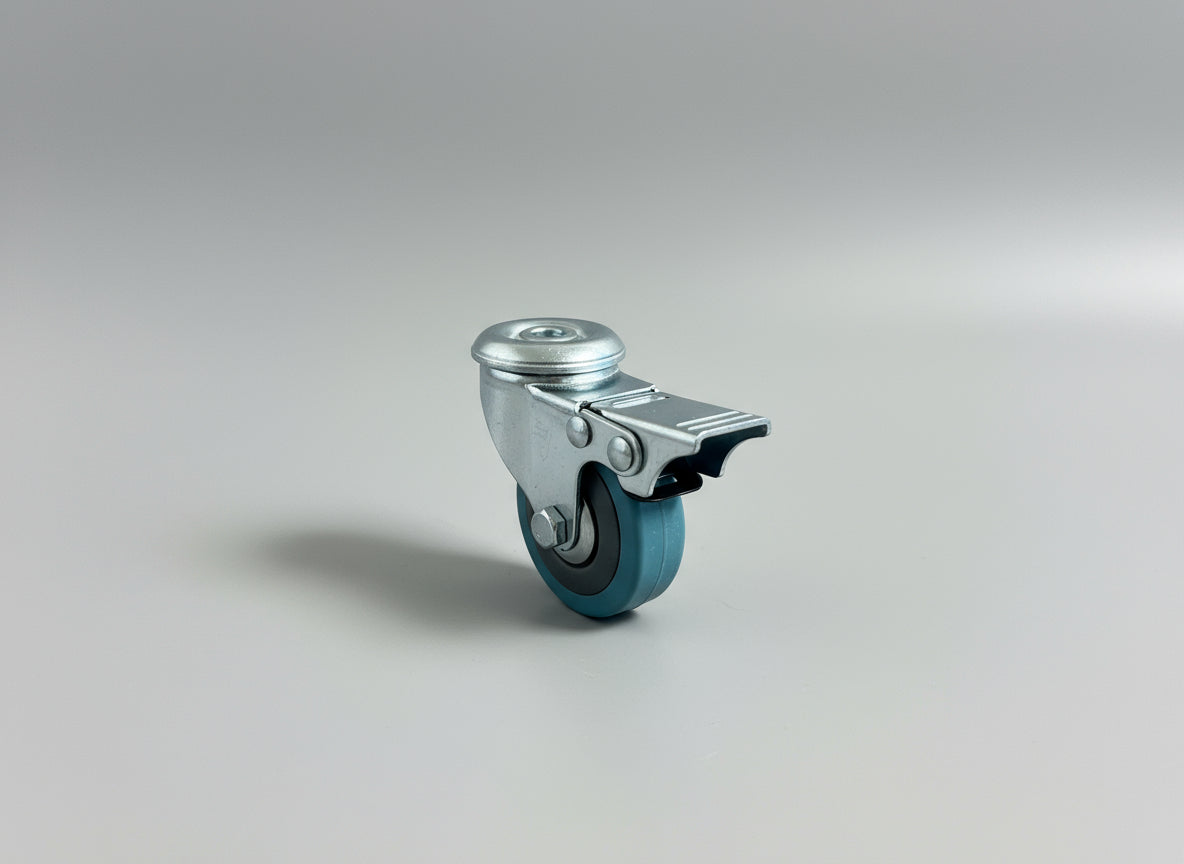
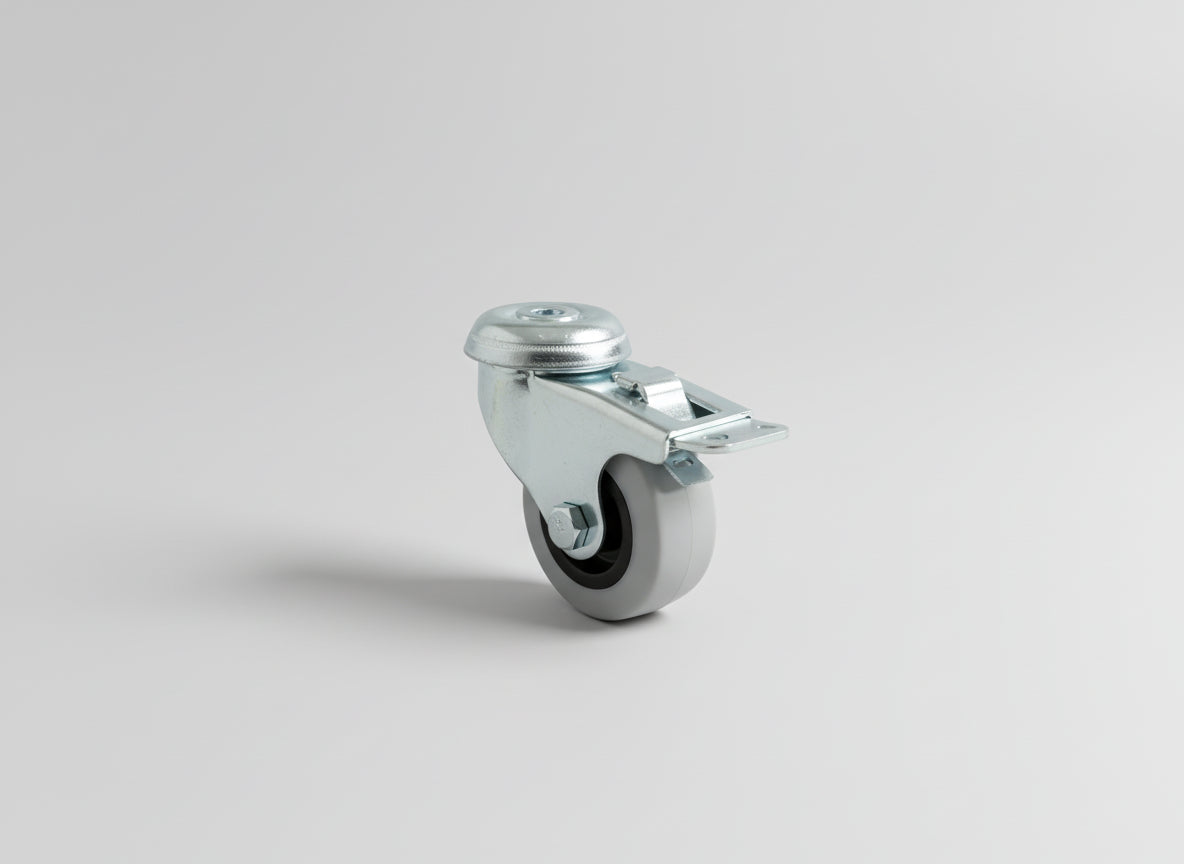
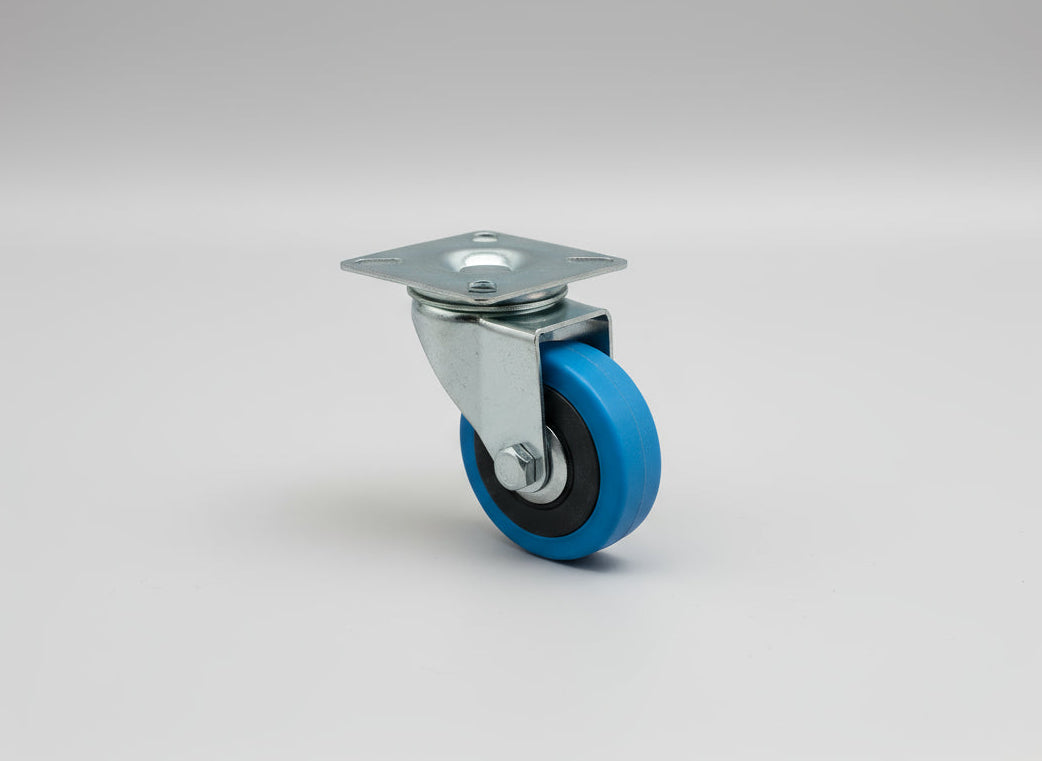
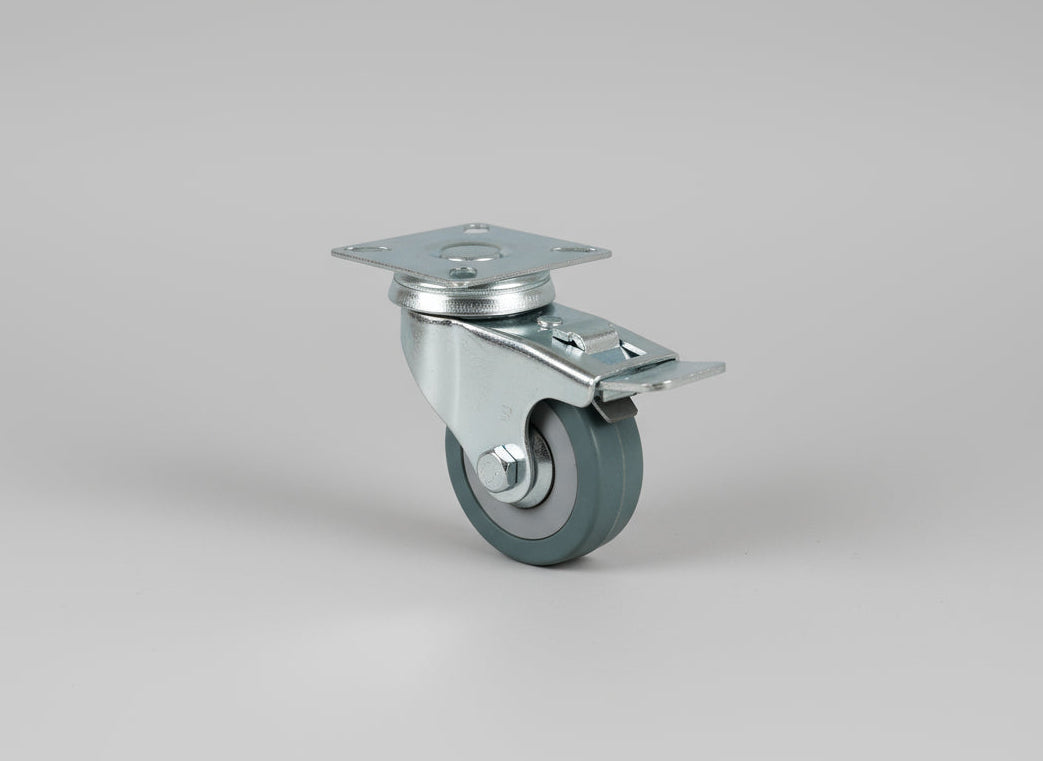
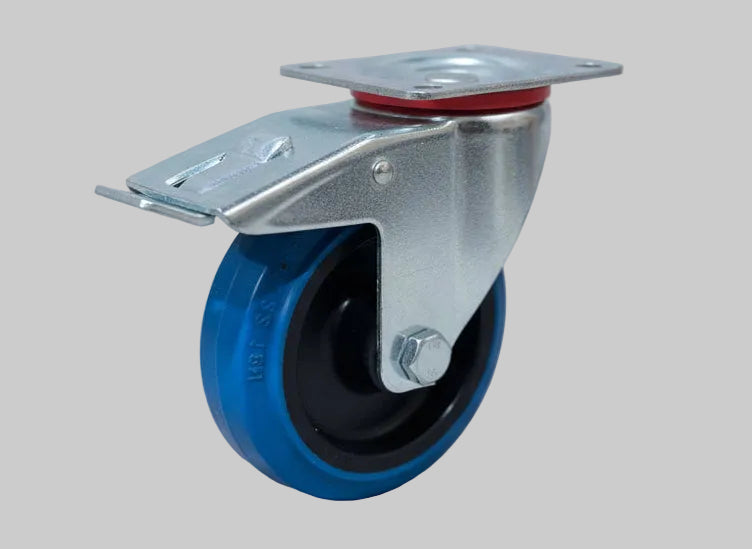
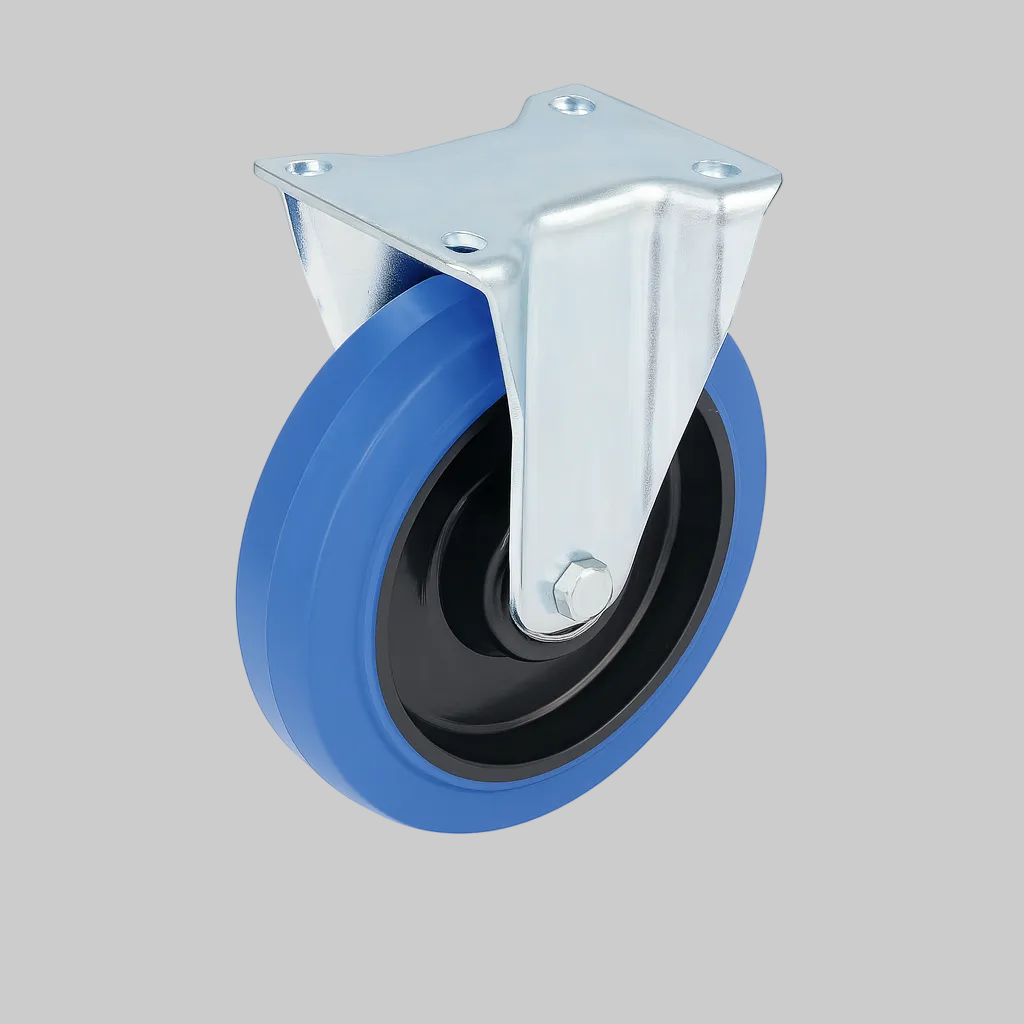
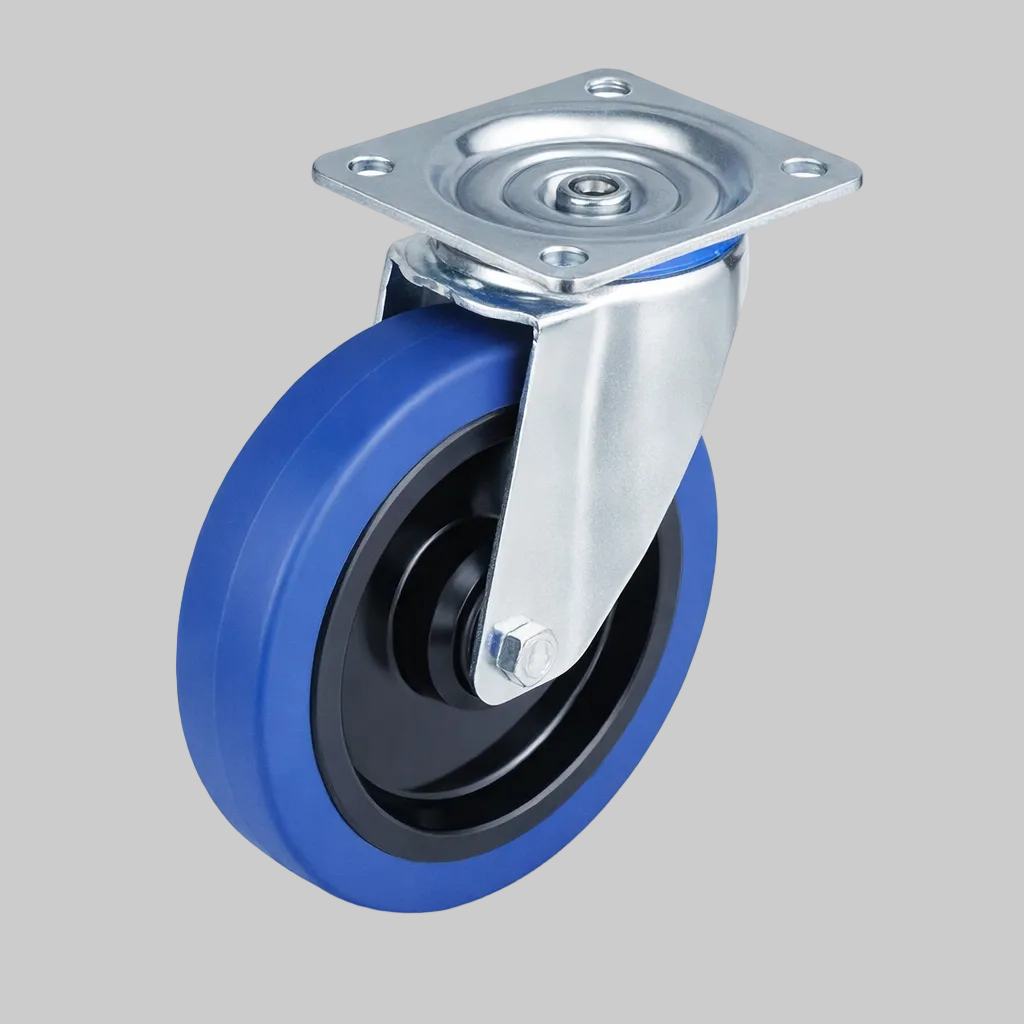
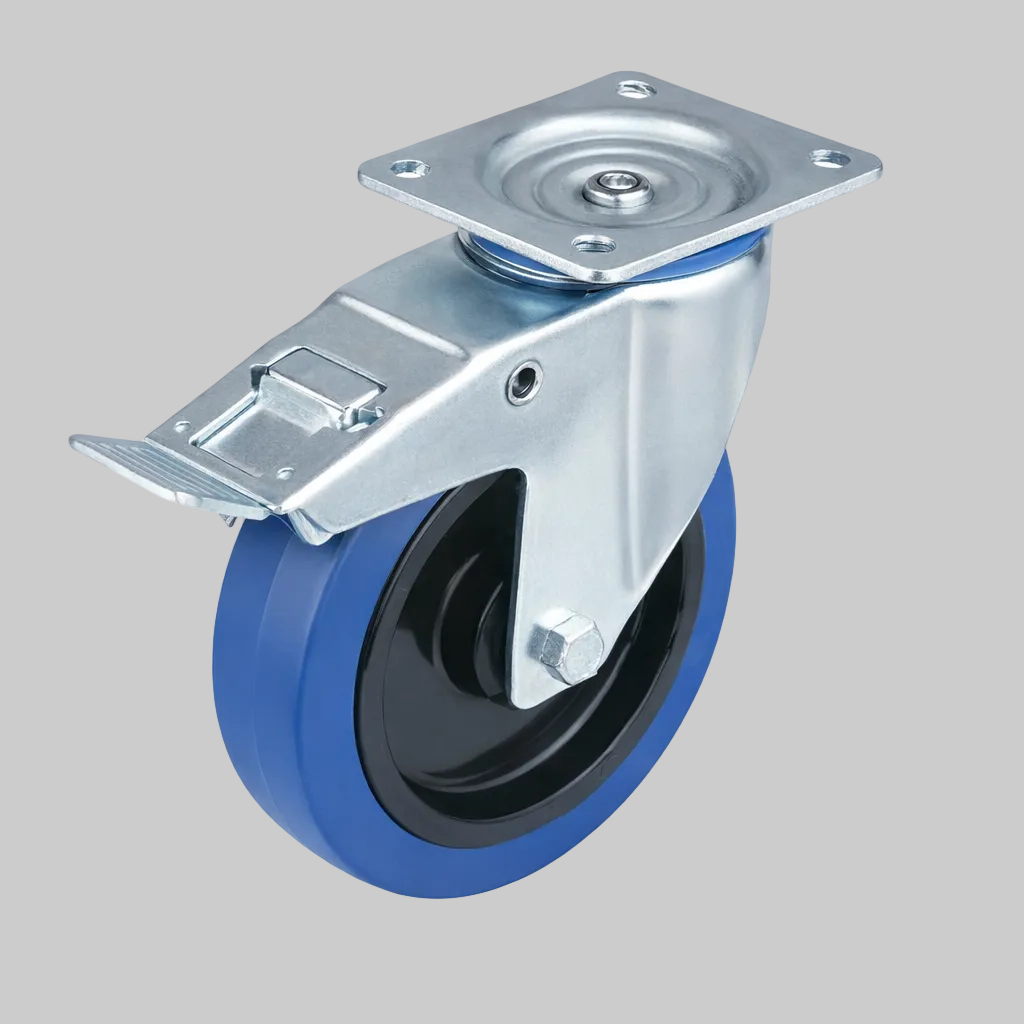
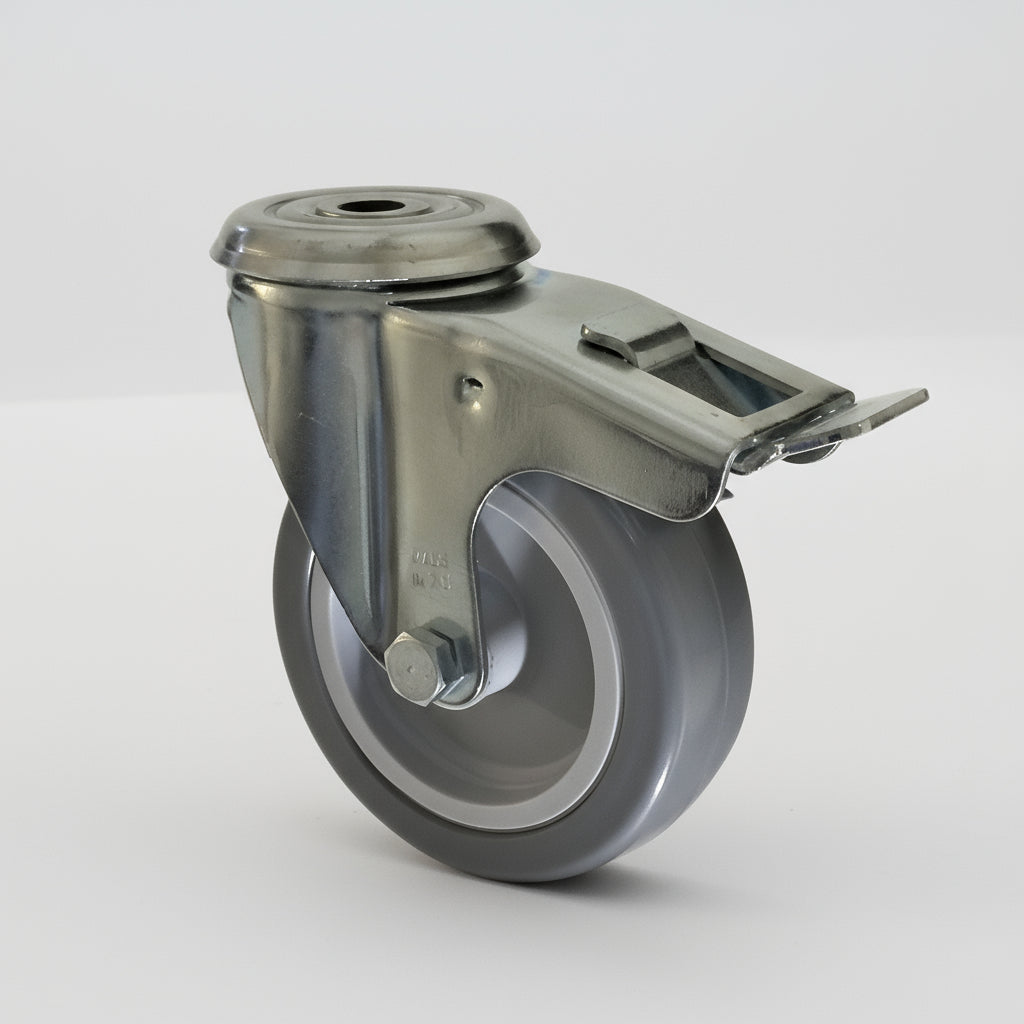
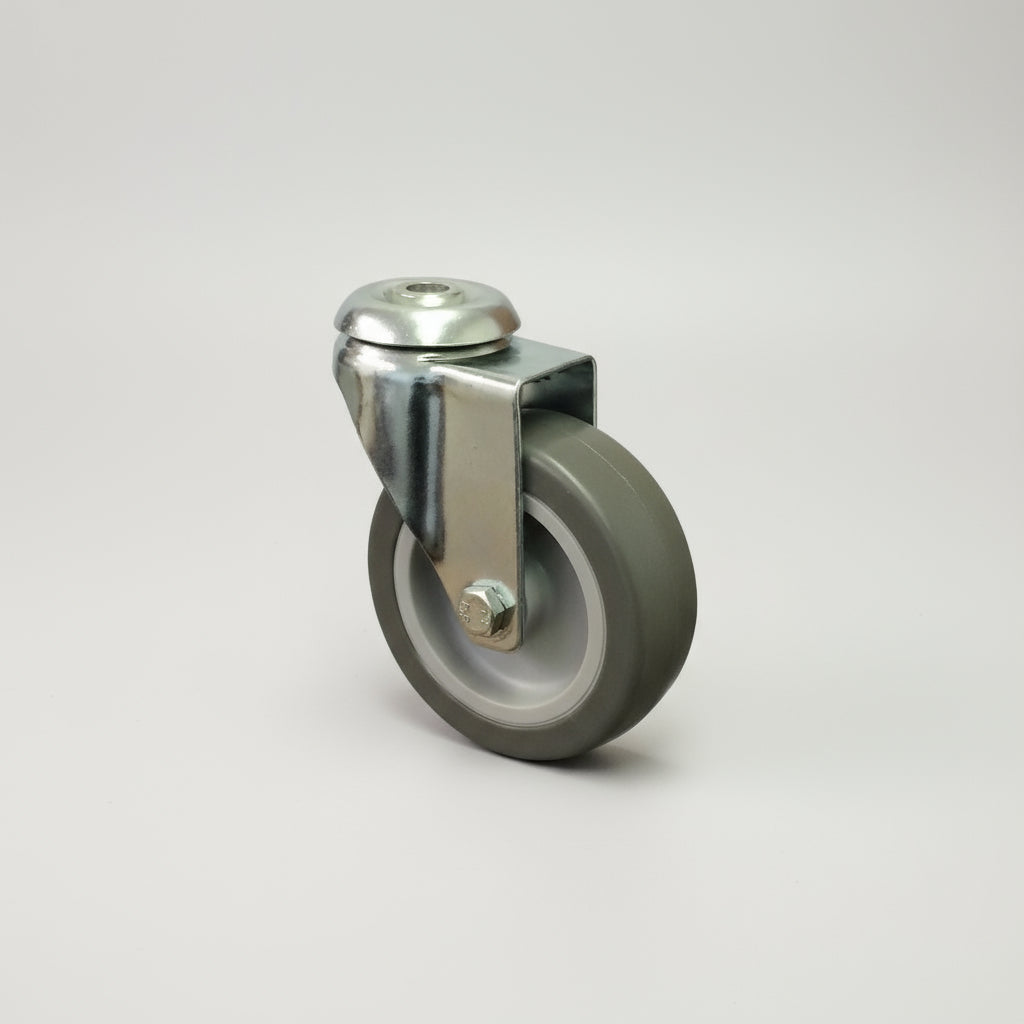
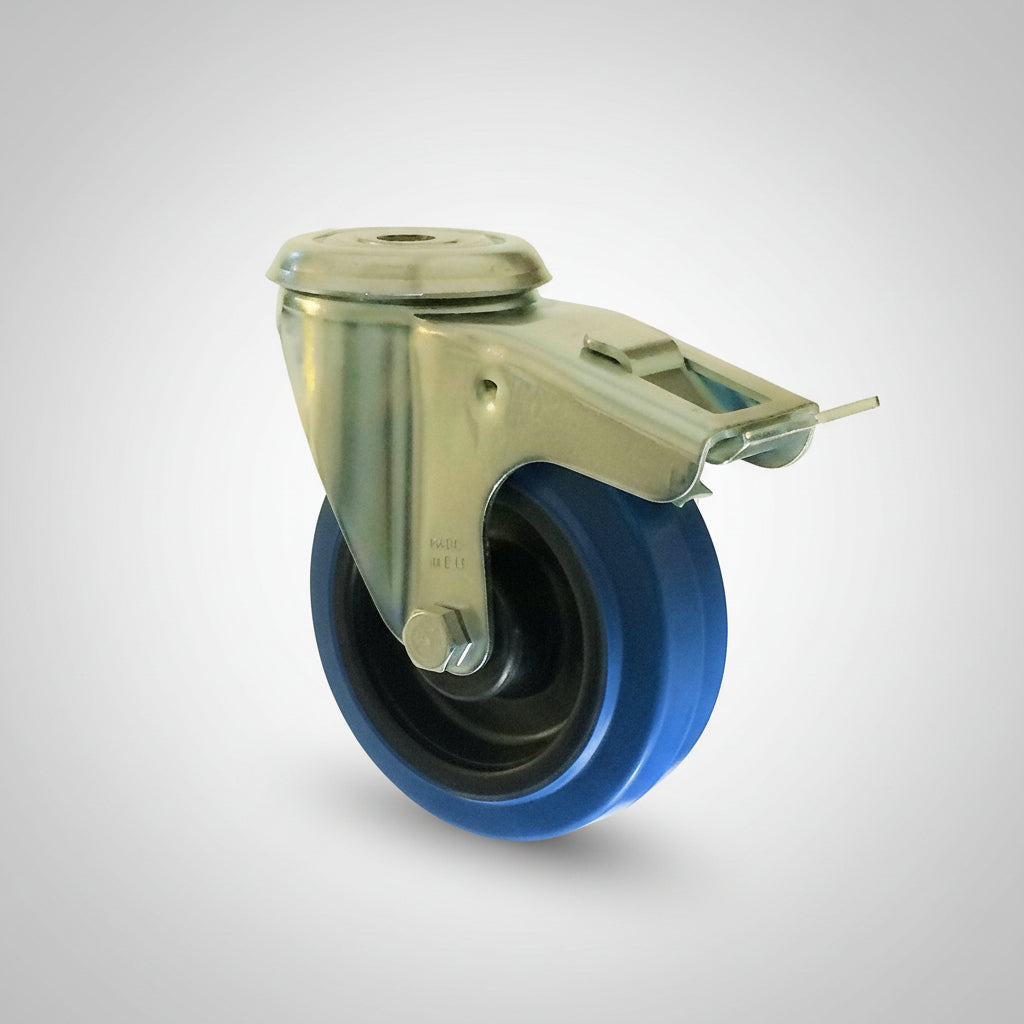
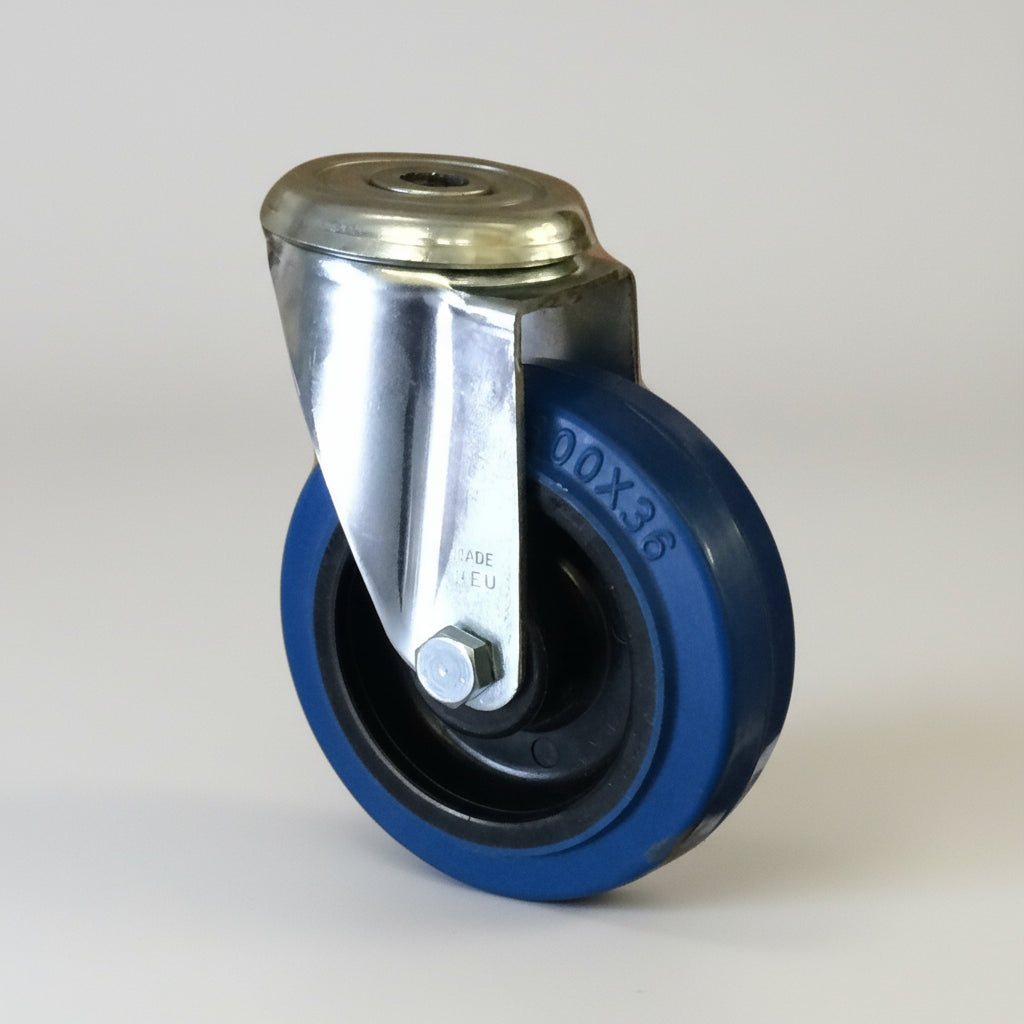
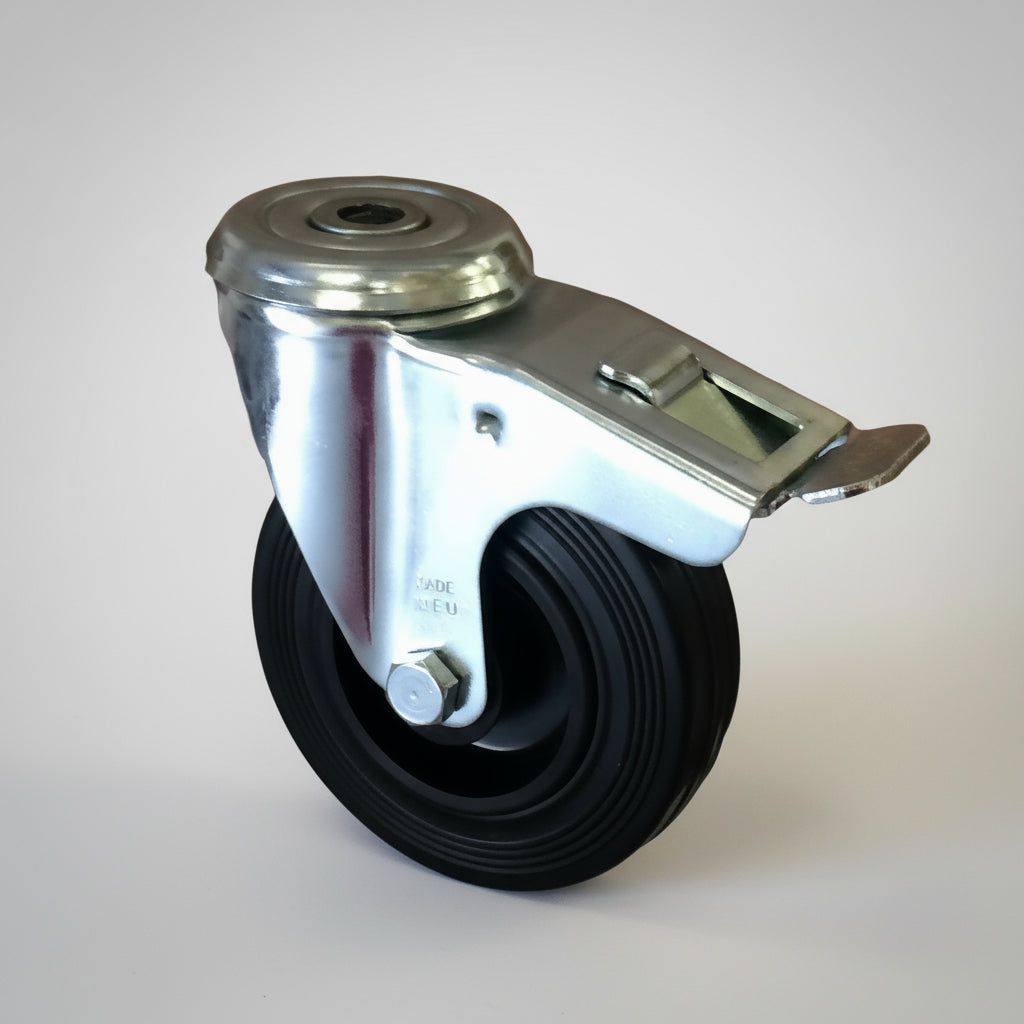
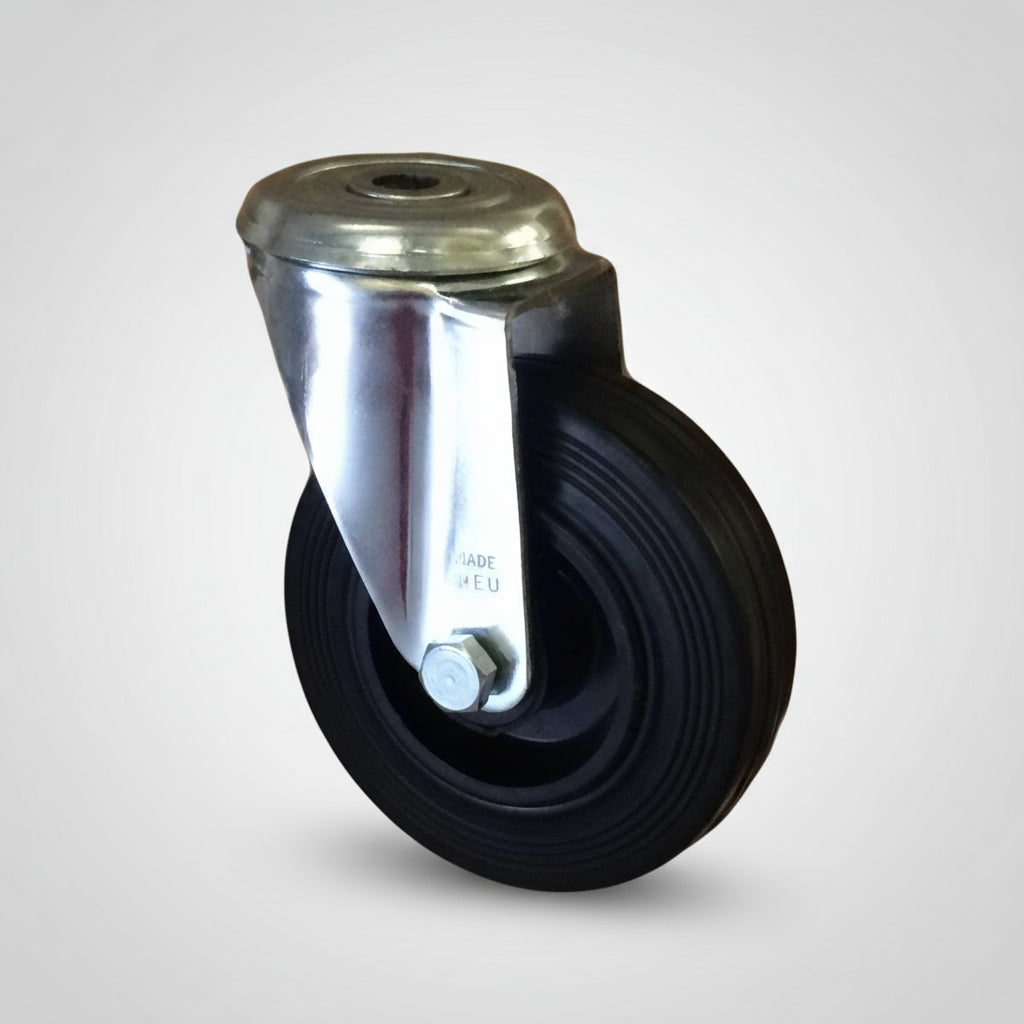
Rubber is one of the oldest castor wheel materials and still one of the most useful. Rubber wheels give good shock absorption and noise reduction, and protect vinyl, sealed concrete and polished surfaces. That makes rubber castors the natural fit for smooth indoor floors where movement has to be quiet, with a steadier ride and better stability over uneven surfaces than a hard wheel.
The colour of the tyre tells you how it behaves. Grey rubber is non marking. Black rubber can mark light surfaces, so it belongs in workshops and manufacturing rather than showrooms. Hard rubber carries a higher load capacity than soft rubber, at the cost of some cushioning, and a blue elastic rubber tyre combines that softness with easier rolling under load. Trade quotes abbreviate these as G.R.T and B.R.T - grey or black rubber tyred - and you will find the same letters in our product codes.
Four product families, each a different type of rubber castor, cover light duty display work through to heavy duty industrial applications. Each product page carries the fitting information for that castor.
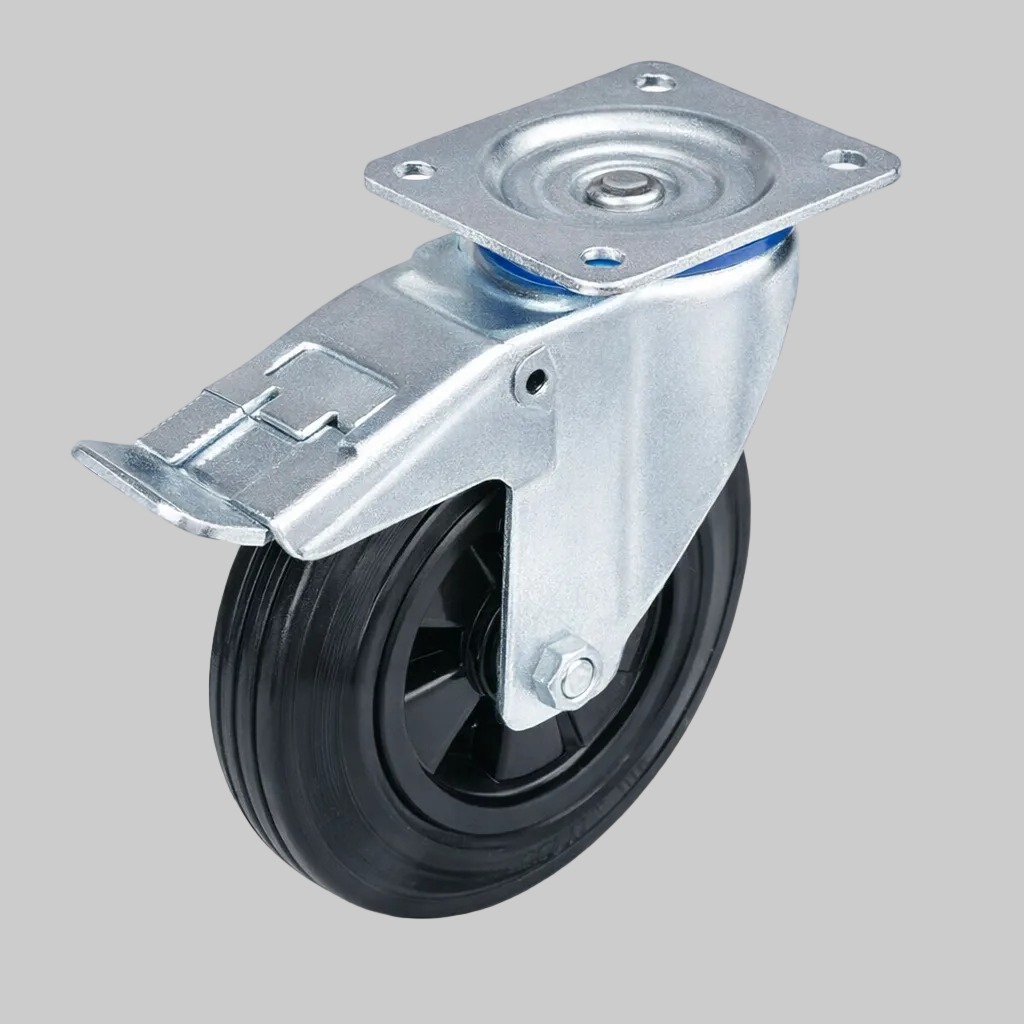
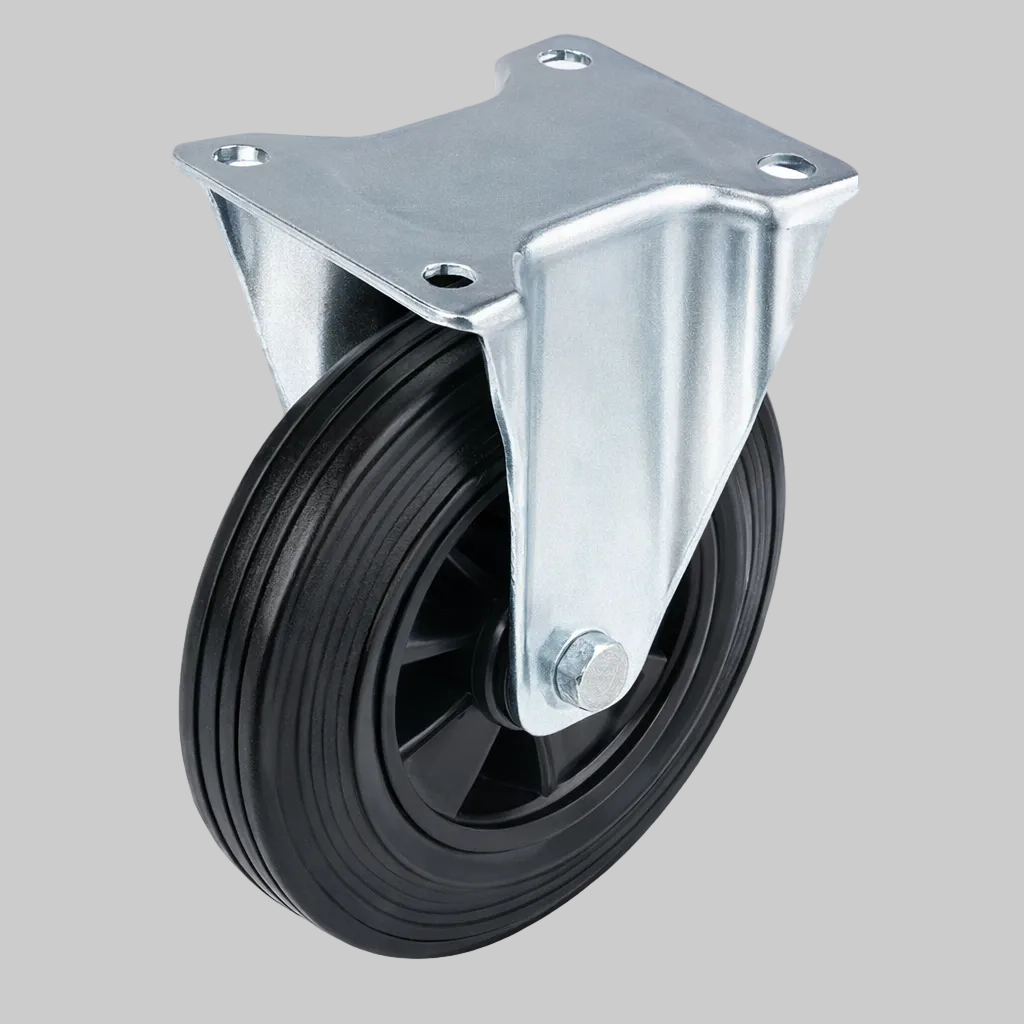
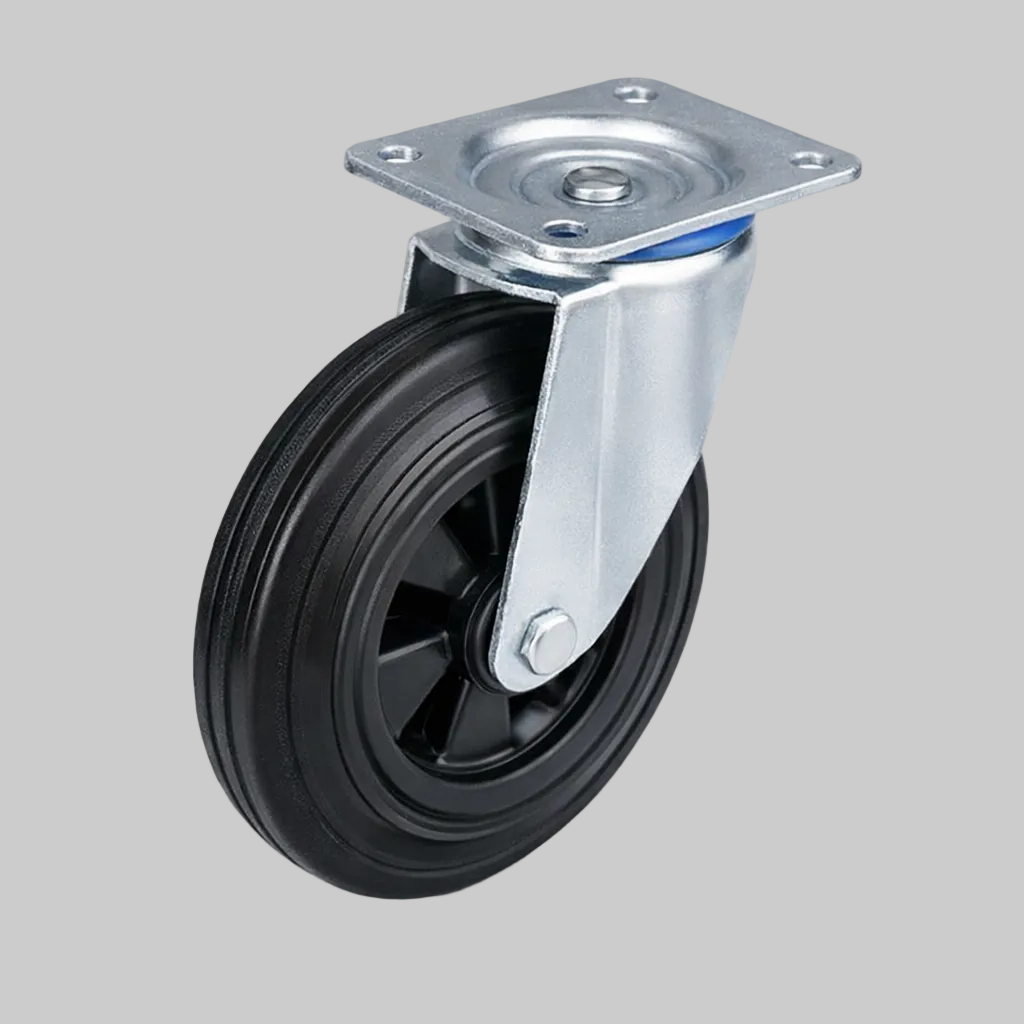
Our industrial black rubber tyre castors have a durable pressed steel fork with a double ball race. Plate fitted designs in 100mm rated to 100kg per castor, in braked, swivel and fixed; 100mm bolt hole castors carry 70kg with an M12 fitting. The black rubber tyre reduces vibration, allowing quiet operation with low rolling resistance under heavy loads - a popular, robust castor for trucks, trolleys, bakery frames and industrial refuse bins in manufacturing and industrial settings.
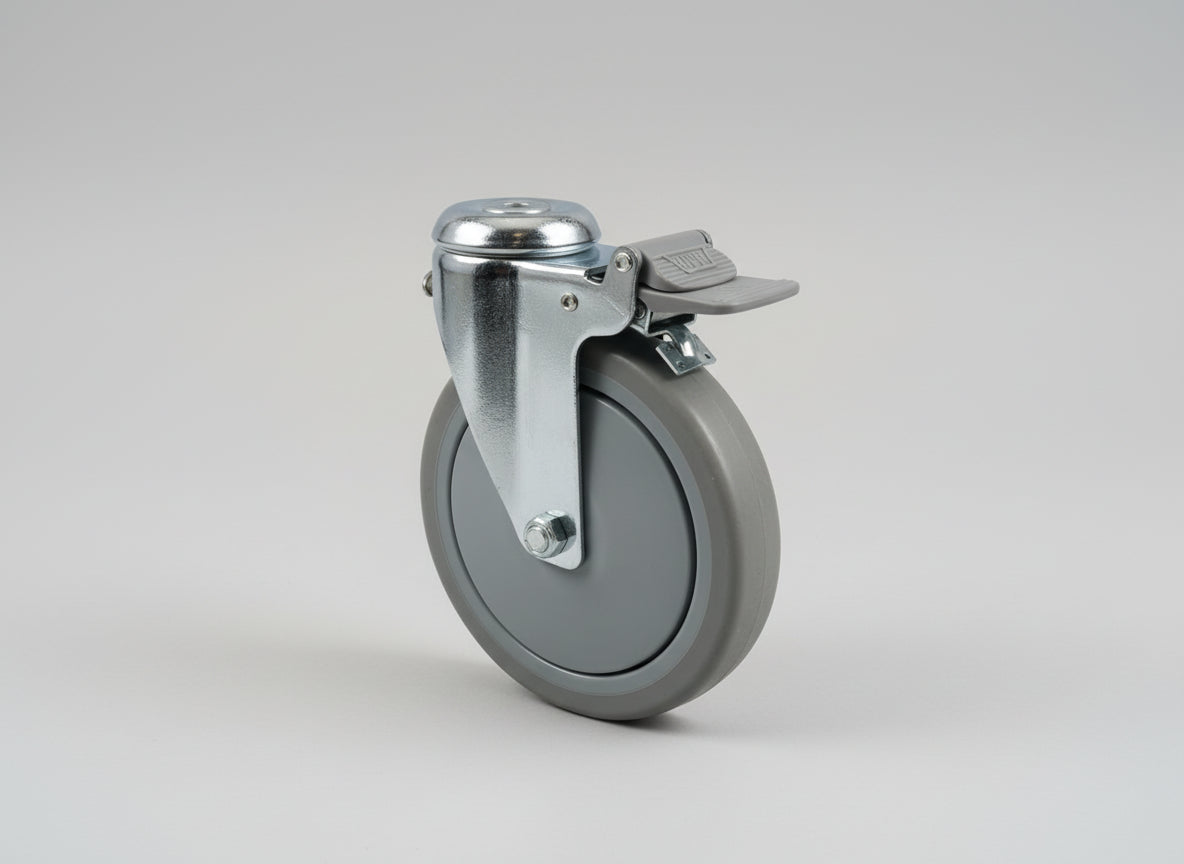
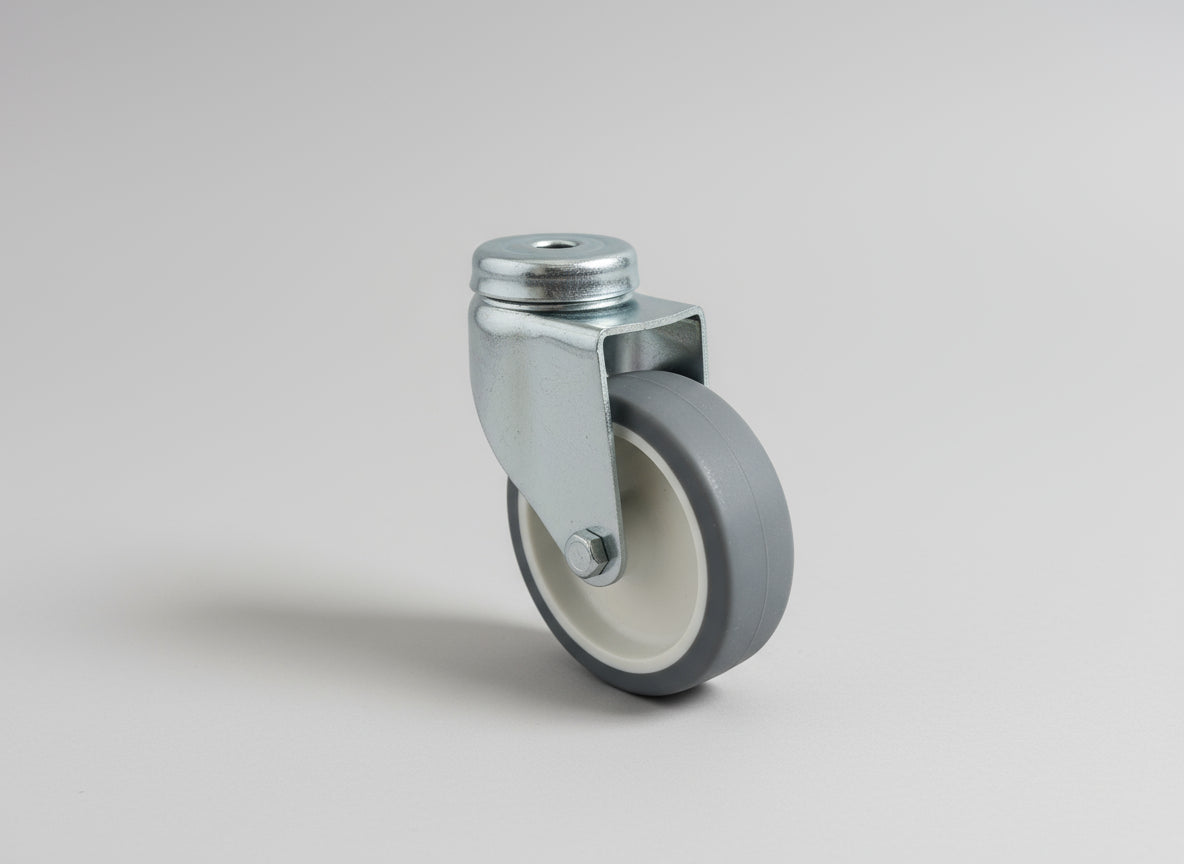
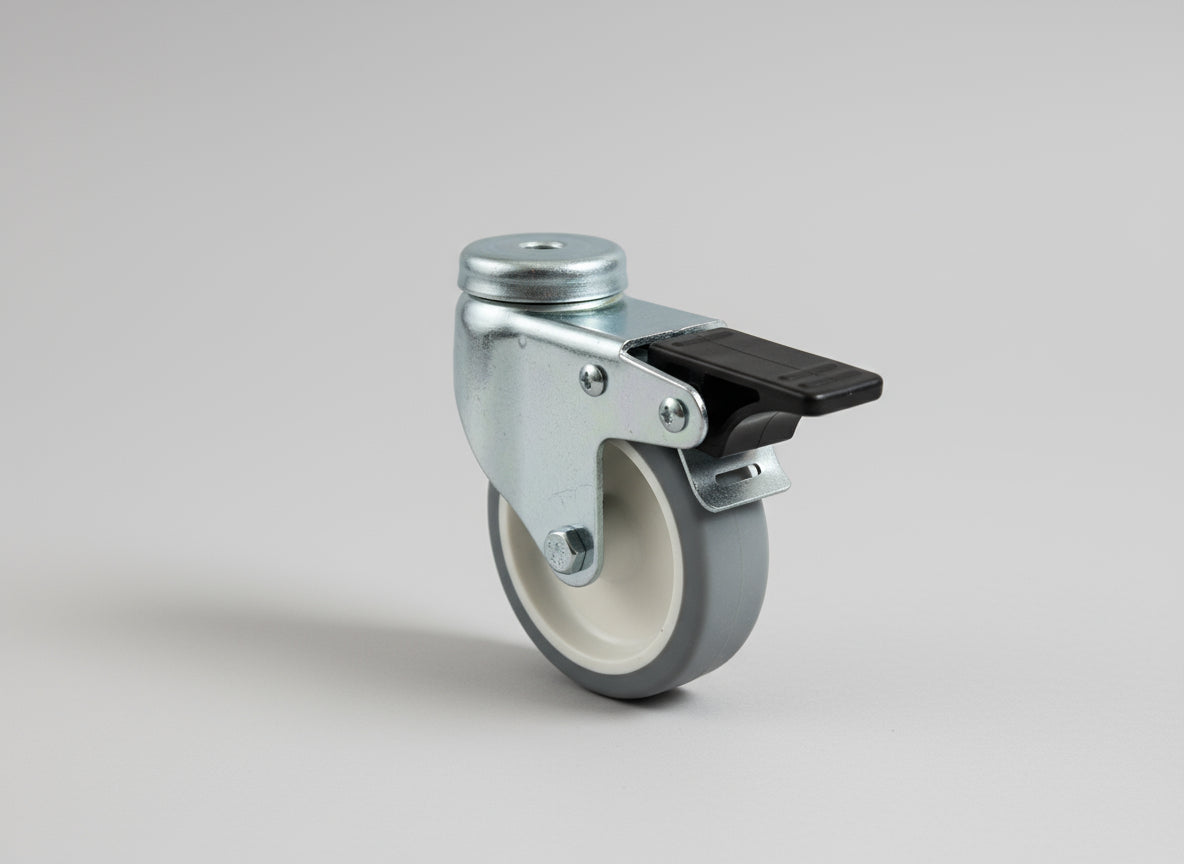
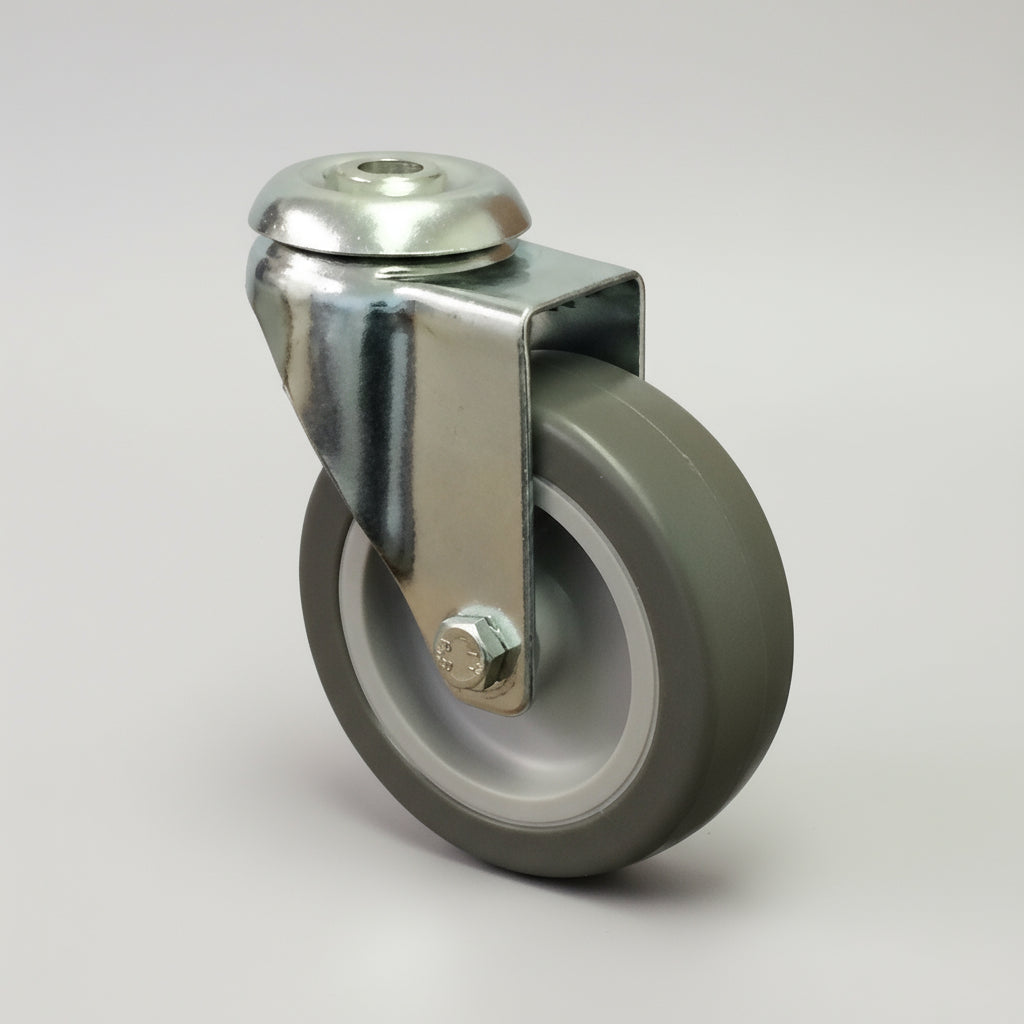
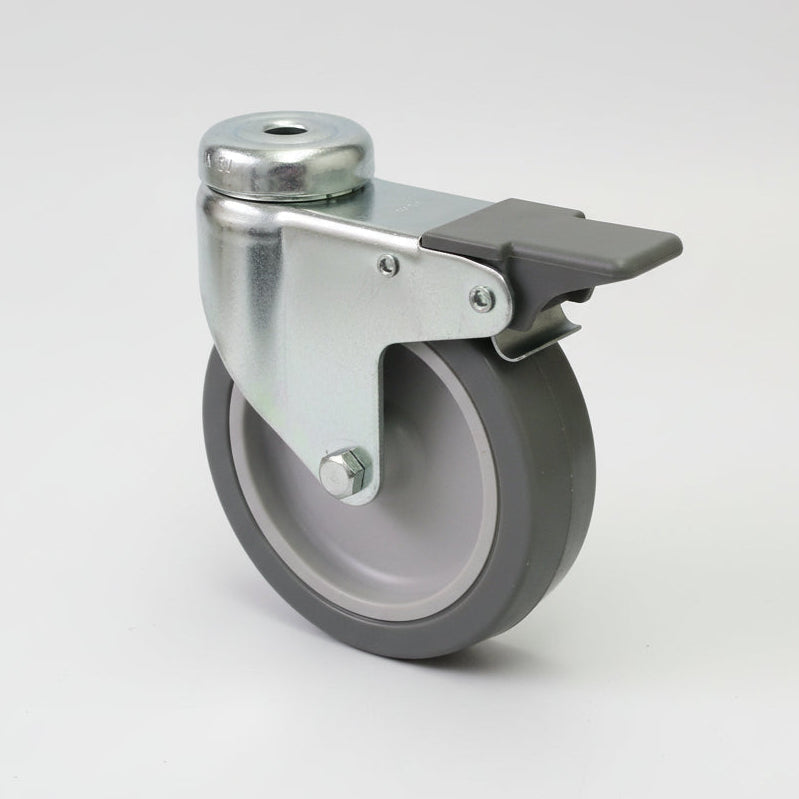
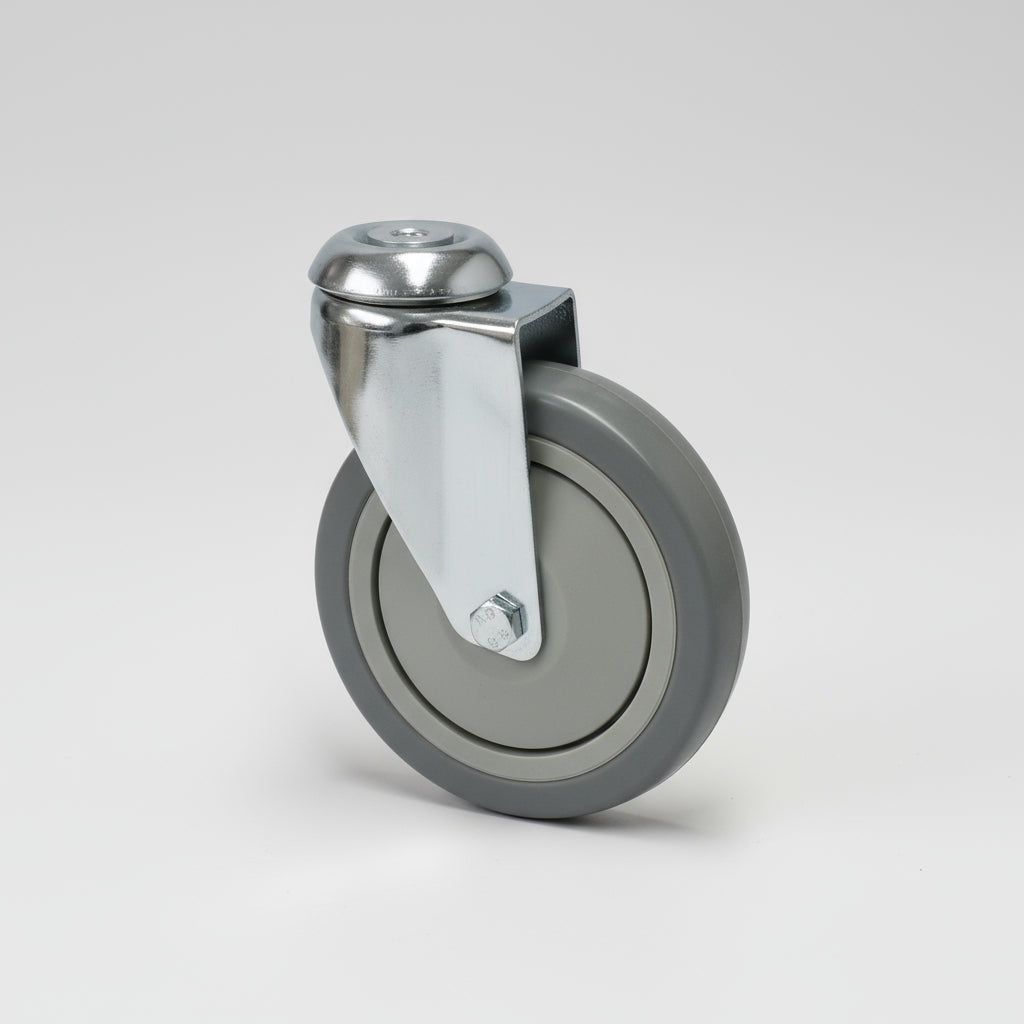
Grey rubber tyre castors are the choice where the surface matters. The non marking grey tyre gives low rolling resistance and quiet movement, ideal for manufacturing and healthcare environments, display cases and lightweight trolleys. Bolt hole options run from 50mm with an M8 fitting, through 75mm with M10, to 100mm and 125mm with M12, in swivel and braked versions rated from 50kg to 100kg. The 50mm and 75mm castors use a plain bearing wheel for light duty work. For furniture and light equipment there are compact 50mm plate castors with a 50 x 50mm plate, in swivel and braked, rated to 50kg - ideal for display units and retail applications.
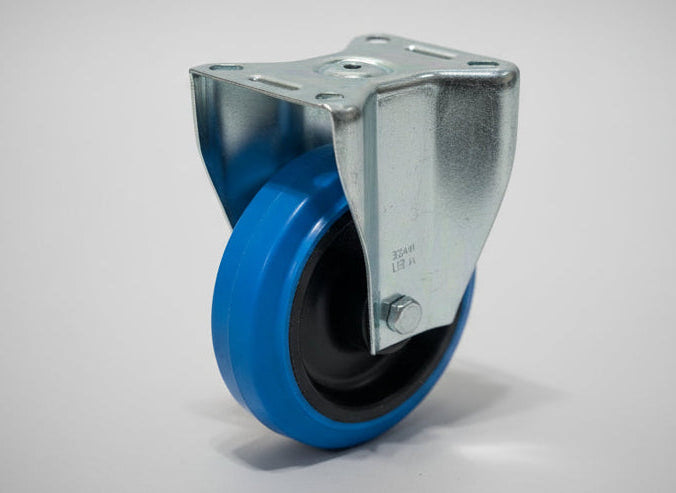
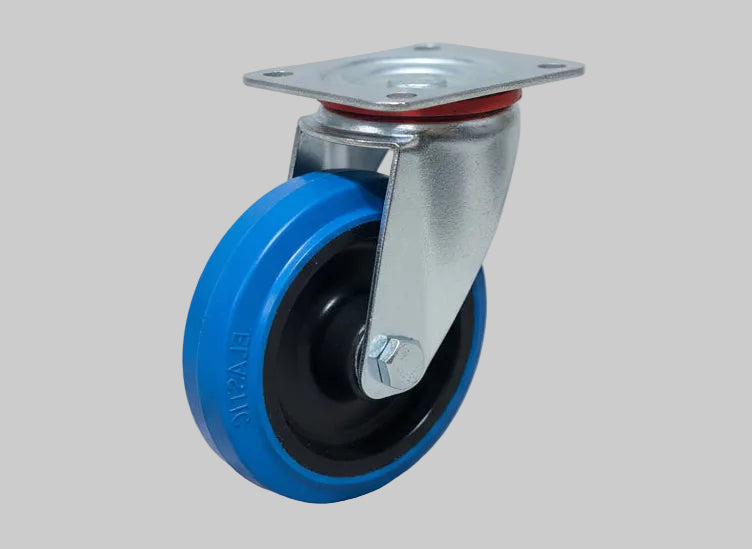
Blue elastic roller bearing castors are often referred to as flight case castors. A hard wearing blue elastic tyre dampens vibration for quiet operation and low rolling resistance, and the roller bearing wheel keeps the castor rolling smoothly under load. Plate fitted castors in 100mm and 125mm are rated to 150kg and 200kg, in braked, swivel and fixed; 100mm bolt hole castors carry 70kg in swivel and braked. Widely used across manufacturing and medical equipment, tool chests and mobile display cases, these are the most versatile heavy duty rubber castors in the range.
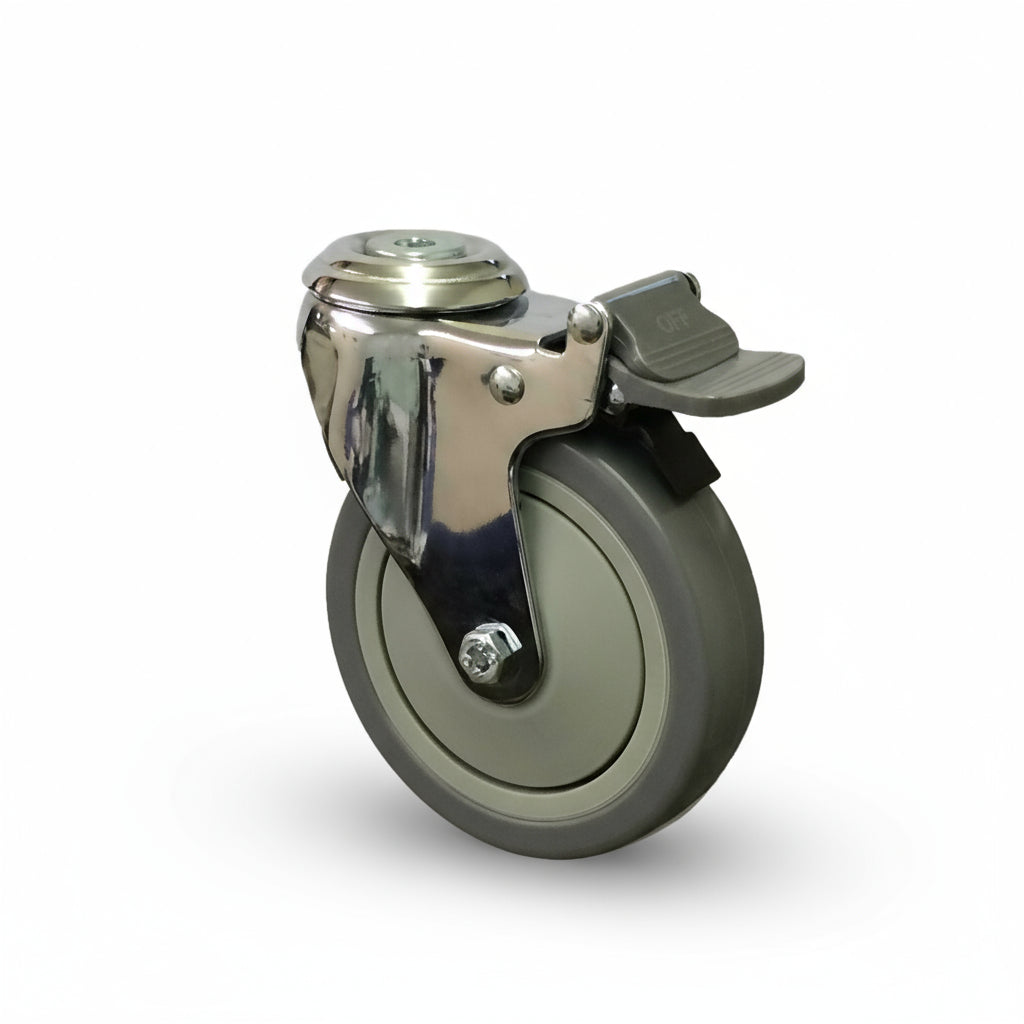
For hospital trolleys, laboratory trolleys and food service carts, our 100mm chrome plated bolt hole castors pair a grey, non marking rubber tyre with a chrome finish that resists oxidation, so they are suitable for both indoor and outdoor use. Swivel and braked, rated to 60kg, with an M10 fitting.
A plate castor bolts through four fixing holes and spreads the weight across a wider area. It is the most rigid fitting and the strongest, which is why the black rubber and blue elastic castors are plate fitted. Bolt hole castors fix through a single central hole - M8, M10 or M12 depending on size - and suit tubular frames with no flat surface. A bolt hole castor can be swivel or braked swivel, but never fixed, so the fitting type on your equipment decides the options open to you. Swivel castors give flexibility and ease of steering; fixed castors track straight, and most trolleys use two of each.
To work out the load capacity you need, add up the weight of the equipment plus its maximum load and divide by three, not four. On an uneven floor only three castors may carry the load at any moment, so dividing by three builds in a margin. Choose rubber castors rated at or above that figure, and size up when handling heavy loads - an overloaded castor wears quickly and can fail without warning. Capacities are stated in kg per castor.
Castor size is the wheel diameter in mm, not the overall height: a 100mm rubber castor stands around 127mm to 130mm tall once the fork and fitting are included. A larger wheel diameter rolls more easily, clears obstructions better and offers greater load capacity, so if you are working to a set clearance, measure total castor height rather than wheel size.
Wheel material decides which surfaces a castor works on, how much noise it makes and how long it lasts, so the environmental conditions matter as much as the weight. The information below covers the materials you will generally find.
Polyurethane combines high load capacity with surface protection, and rolls more easily than rubber under weight - the better choice for heavy duty applications on a good surface. Rubber wheels win on cushioning and quietness.
Nylon is hard, rolls easily and works in wet conditions, but transmits noise and can mark softer surfaces. Our nylon castors suit the warehouse; rubber suits the surfaces you want to protect.
Thermoplastic rubber (TPR) is the institutional standard for catering, education and healthcare - non marking and quiet. TPR tyred castors sit in our medical castors range.
Steel and cast iron carry the greatest loads and suit rough, dirty or hot conditions, but are noisy and will damage a finished surface.
Indoors on smooth surfaces, rubber, TPR and polyurethane all deliver smooth movement without marking. Where there is swarf and grit underfoot, a harder wheel cuts through the debris rather than picking it up.
If you need the wheel without the bracket, our castor wheels and trolley wheels collections include solid rubber wheels with plastic or metal centres from 100mm to 380mm, in plain bore, roller bearing and precision bearing designs. Solid rubber wheels are the usual replacement for sack trucks and catering trolleys, and we sell solid rubber wheels to fit existing brackets as readily as complete castors. For rough ground and outdoor use, pneumatic wheels and puncture proof wheels give a cushioned ride where solid rubber wheels would struggle.
Both spellings describe the same product, and both appear on product listings across the UK. Castor is British English, caster is American. UK suppliers, including QED, use castor - so if you searched for rubber casters or rubber caster wheels, you are in the right place.
Rubber gives better shock absorption and quieter running. Polyurethane carries more weight, resists abrasion and rolls more easily under load. For quiet movement of moderate loads, choose rubber; for heavy loads and intensive use, choose polyurethane.
For surface protection and noise, yes. A nylon or polypropylene wheel rolls easily and carries weight well but transmits noise and can mark softer surfaces. Rubber wheels are quieter and kinder to the floor.
There is no single best material, only the right type for the job. Rubber for quiet running and floor protection, polyurethane for load capacity with surface protection, nylon for hard wearing use in wet conditions, and cast iron for the heaviest loads on rough ground.
Some are. Castor wheels are made in rubber, polyurethane, nylon, polypropylene, TPR, steel and cast iron. A rubber castor has a rubber tyre on a plastic or metal wheel centre; the tyre is the part that touches the ground.
The majority of our castor wheels are moulded here in the UK using our own tooling, and every product is rated honestly at its stated capacity. Order by 2pm for next day delivery, or contact us with quantities and product specifications for trade pricing. Not sure which rubber castor you need? Send a photograph and a measurement to our team and we will identify it for you.