

Medical castors carry equipment that people depend on. A hospital bed, a patient lifter or a trolley of diagnostic equipment has to move quietly, stop securely and keep working for years without maintenance. QED has supplied medical castors for over 40 years, and every castor in this range is designed for healthcare environments - not simply adapted from general industrial stock.
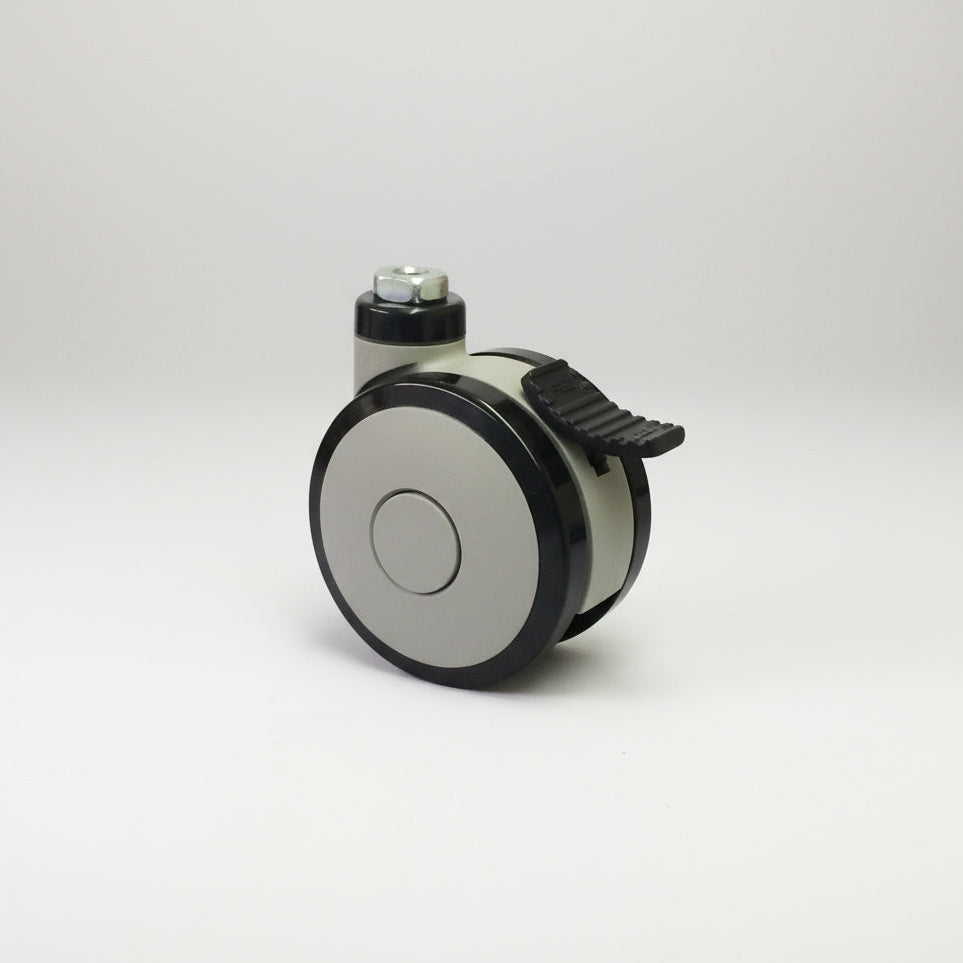
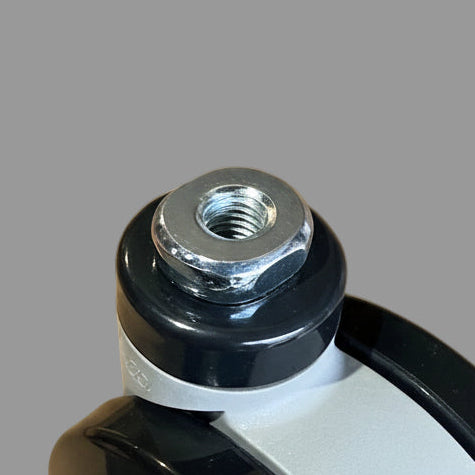
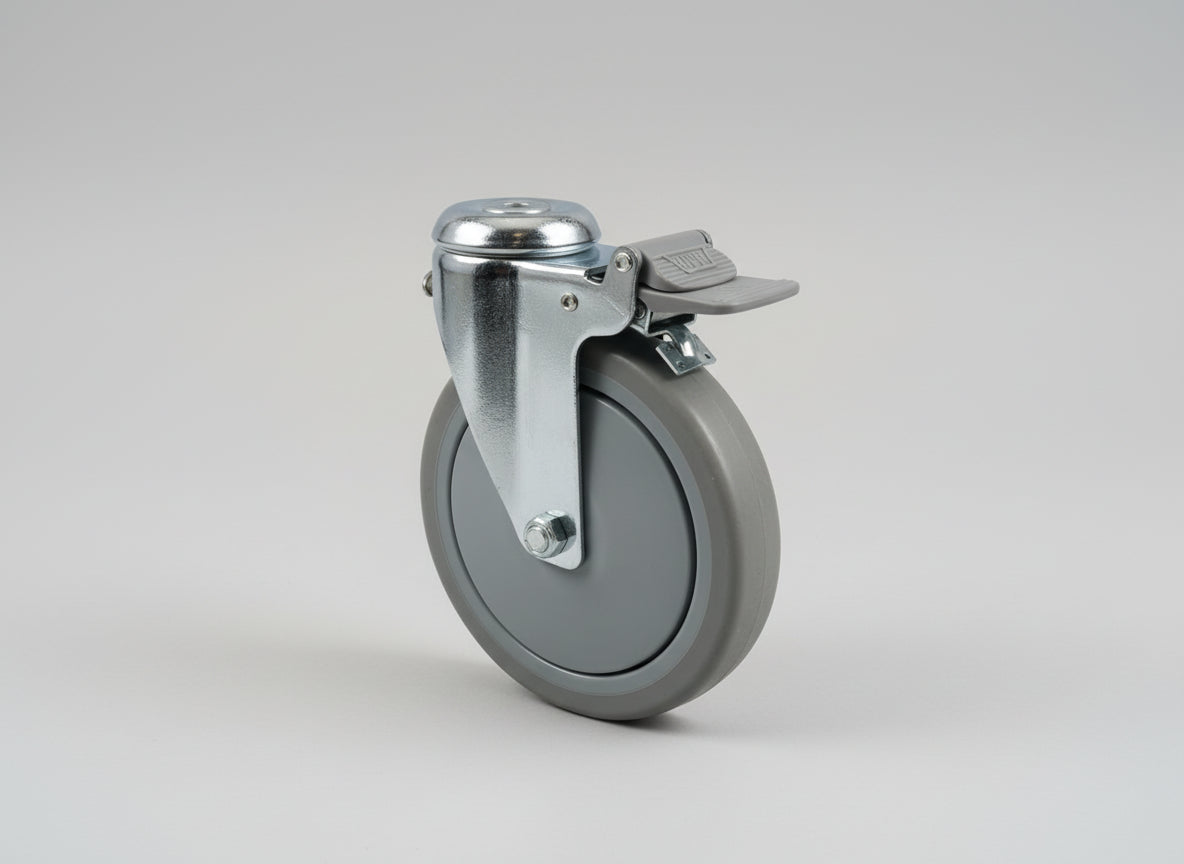
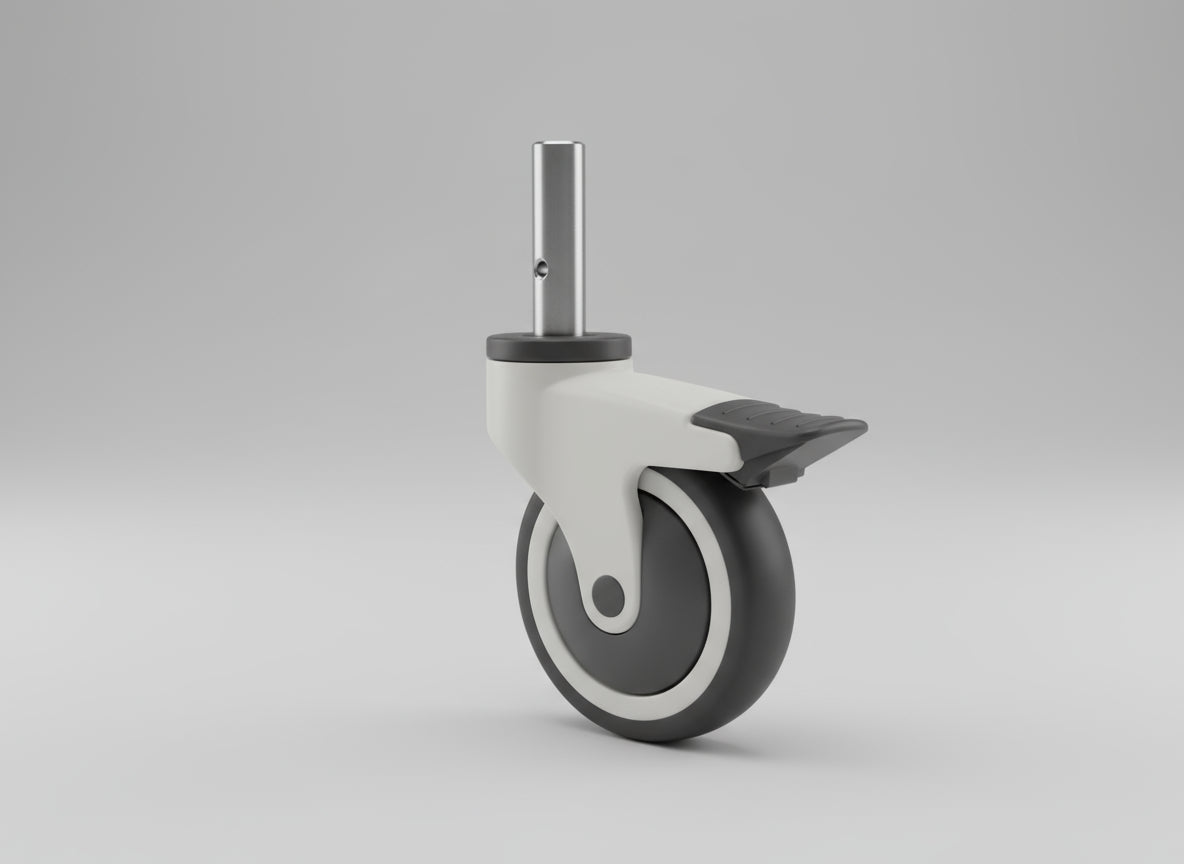
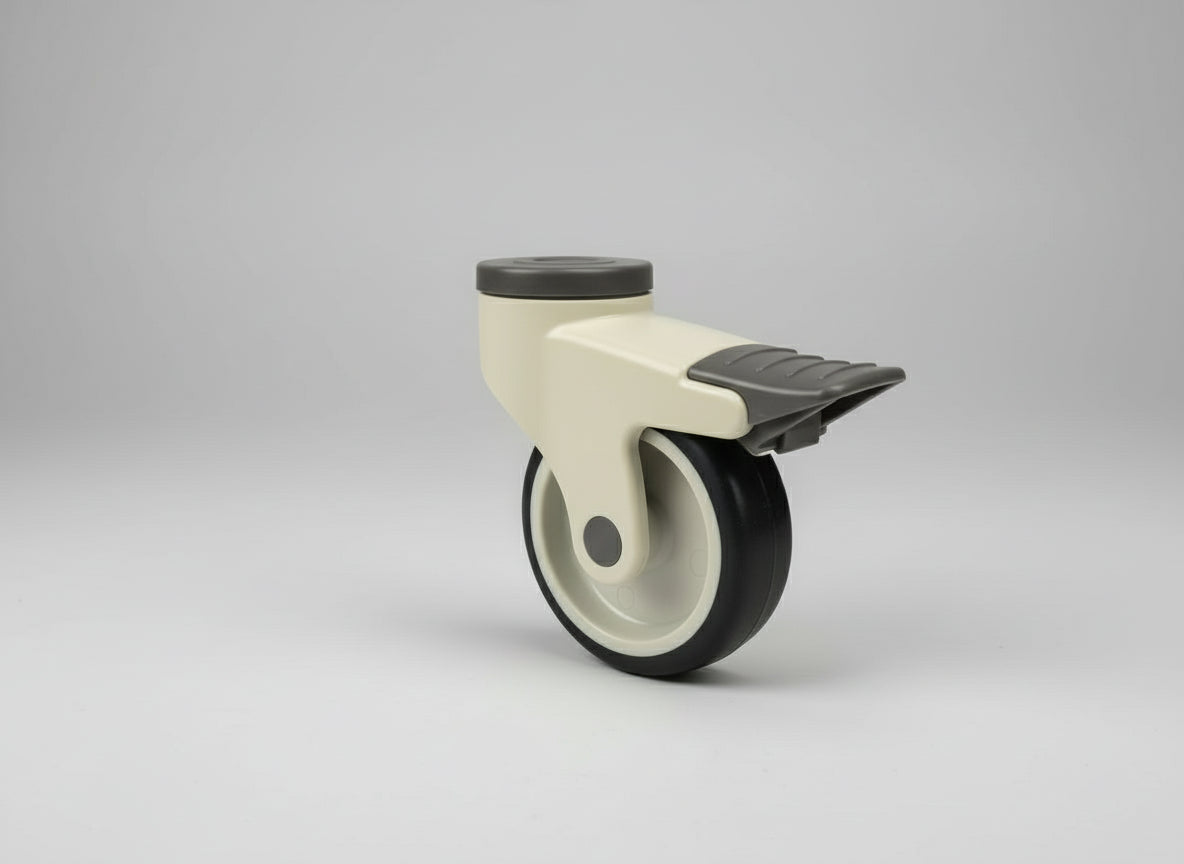
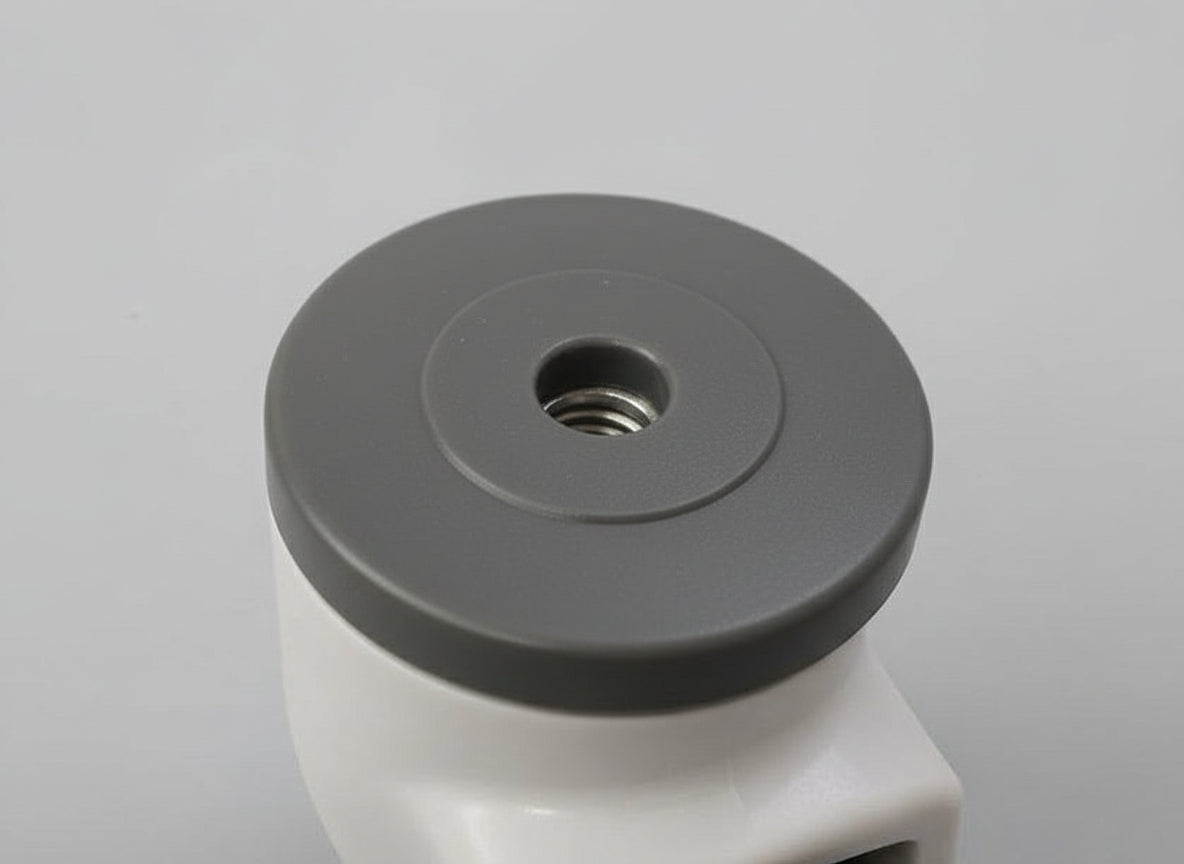
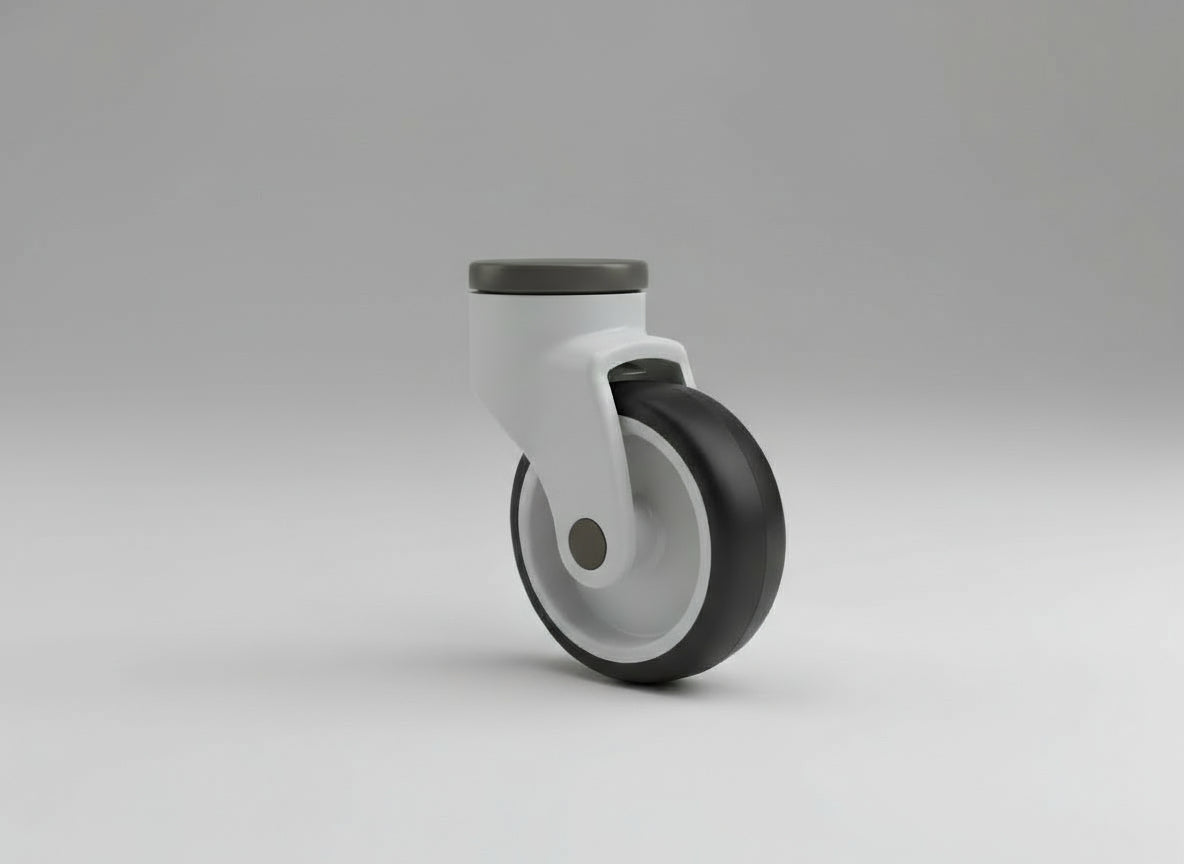
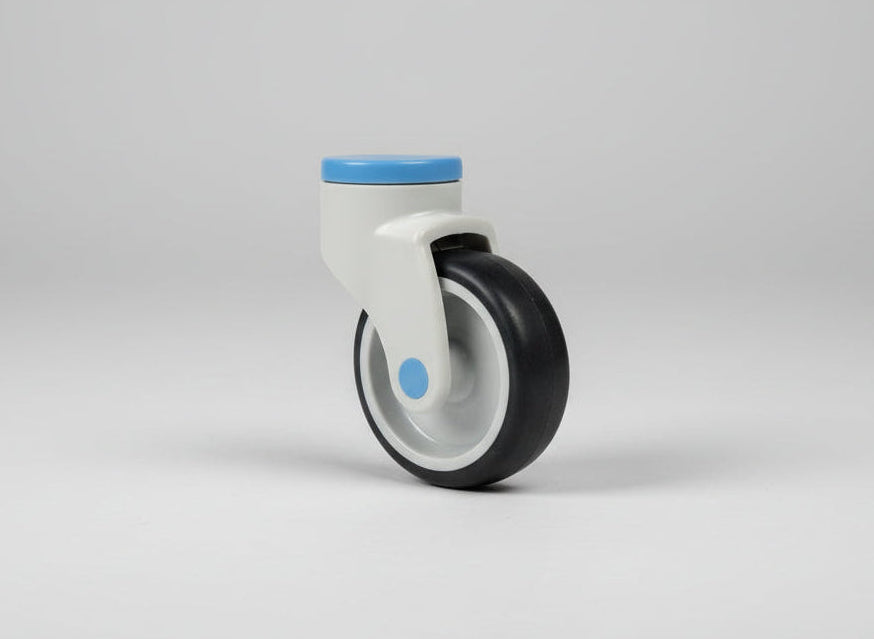
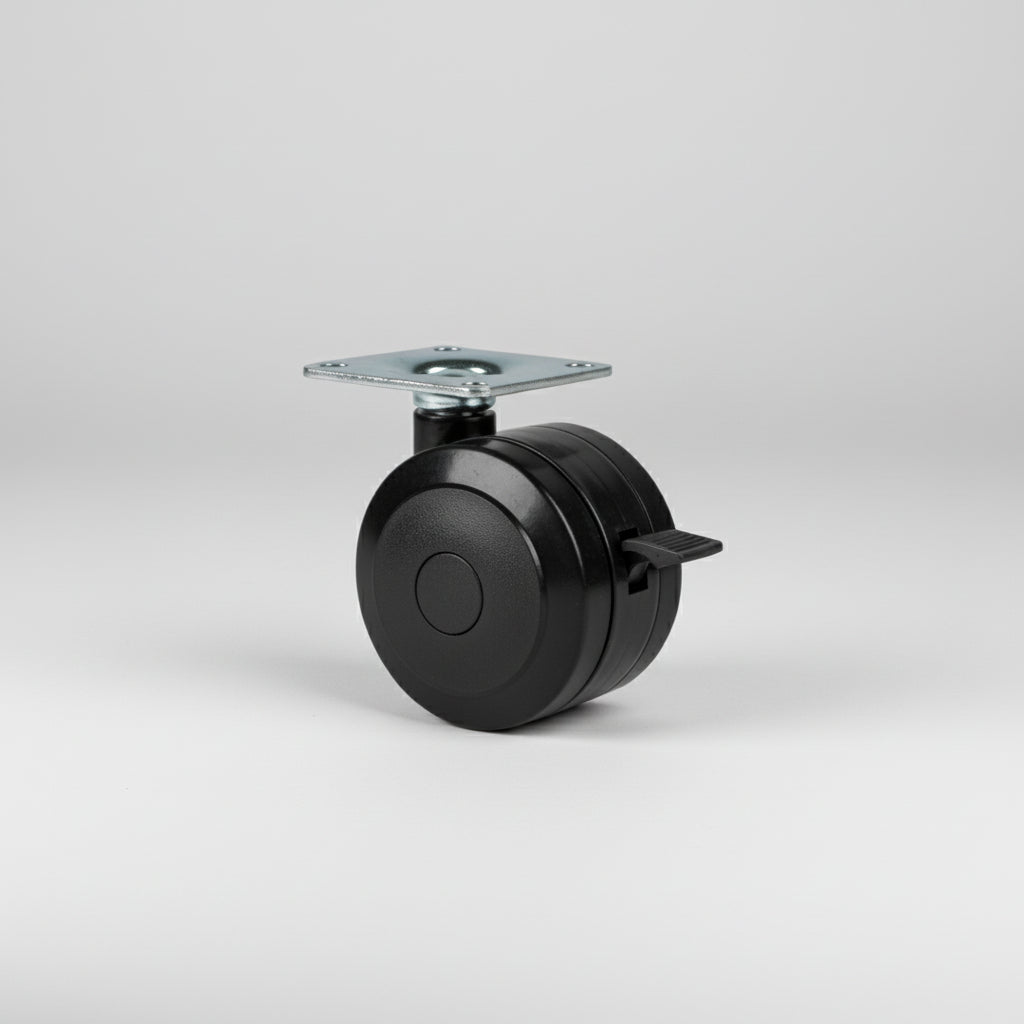
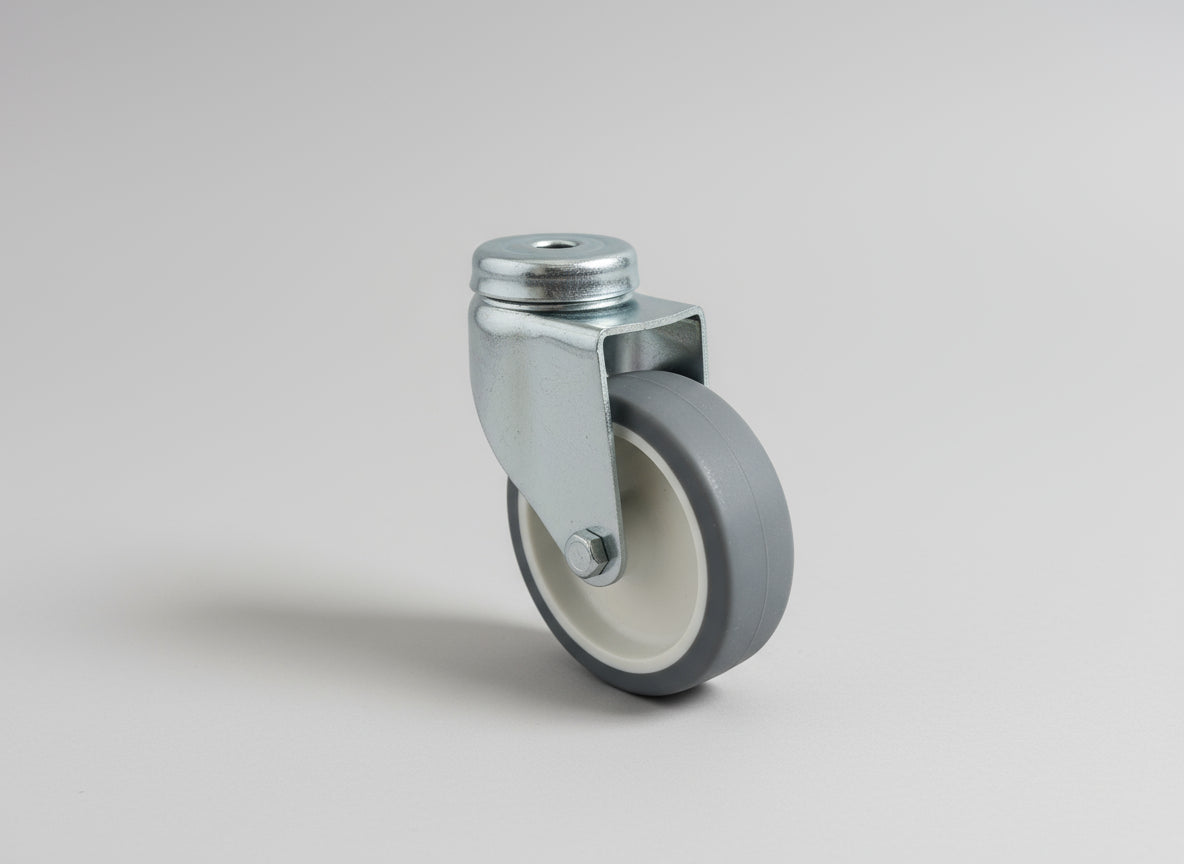
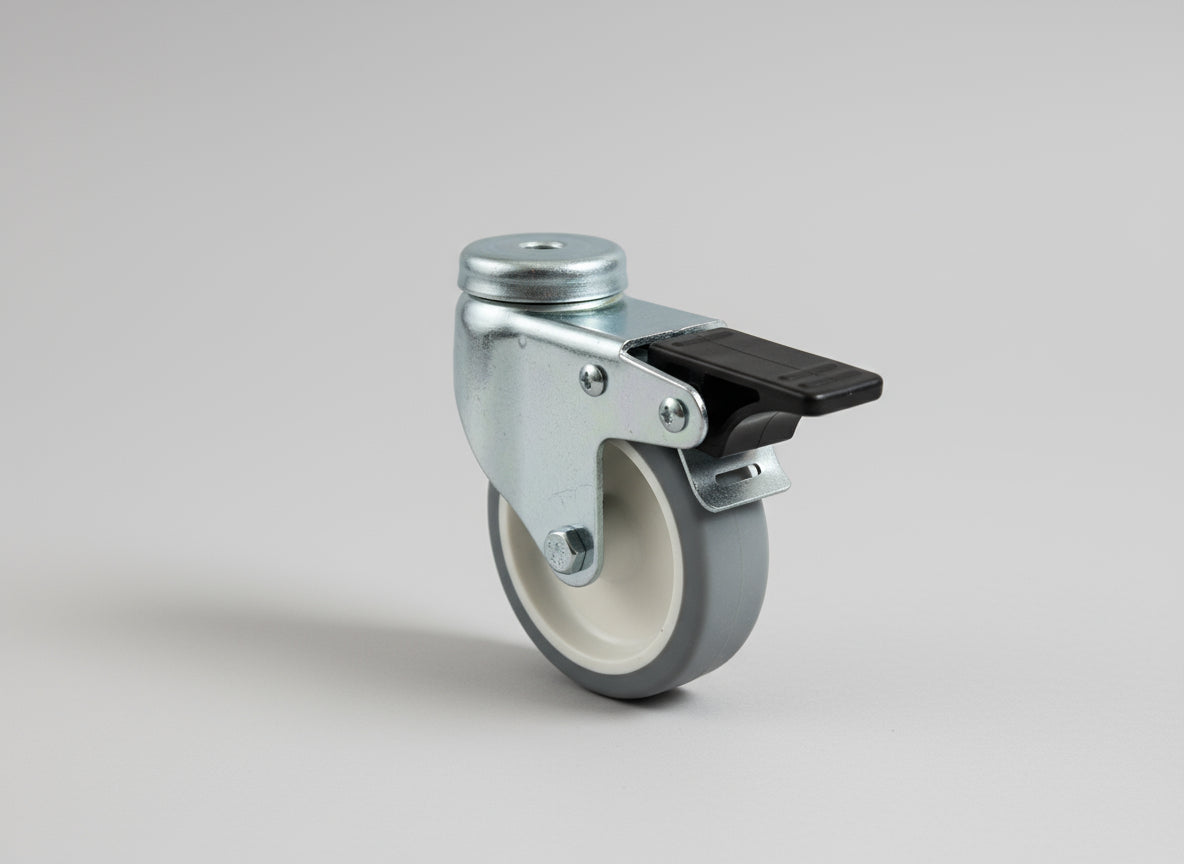
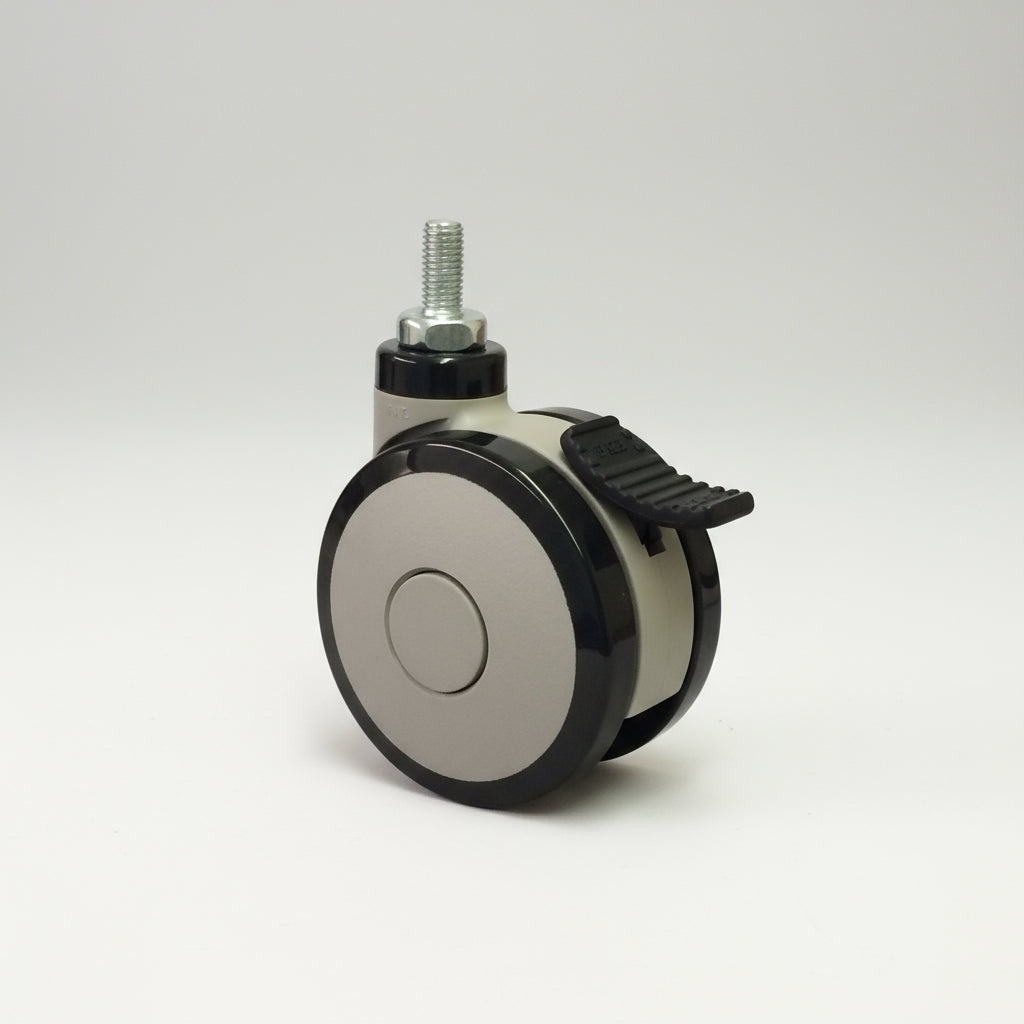
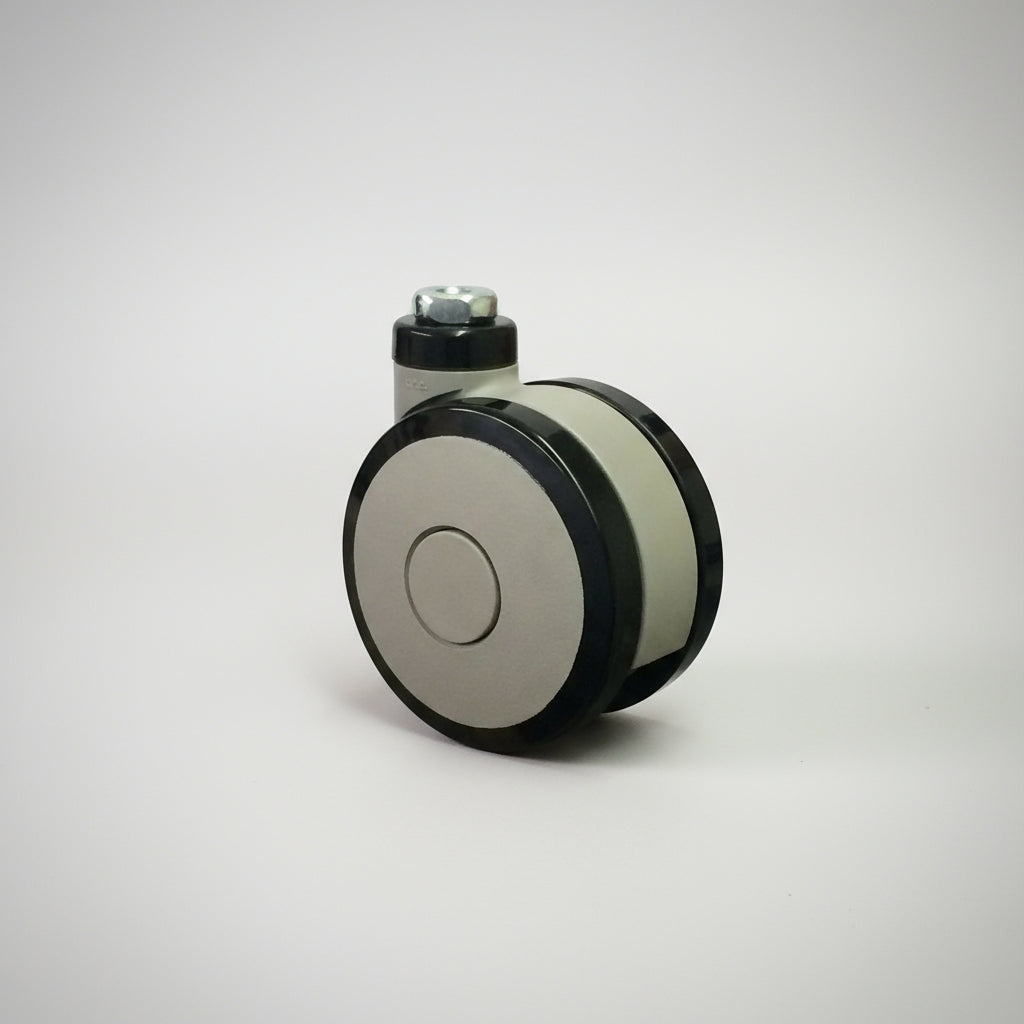
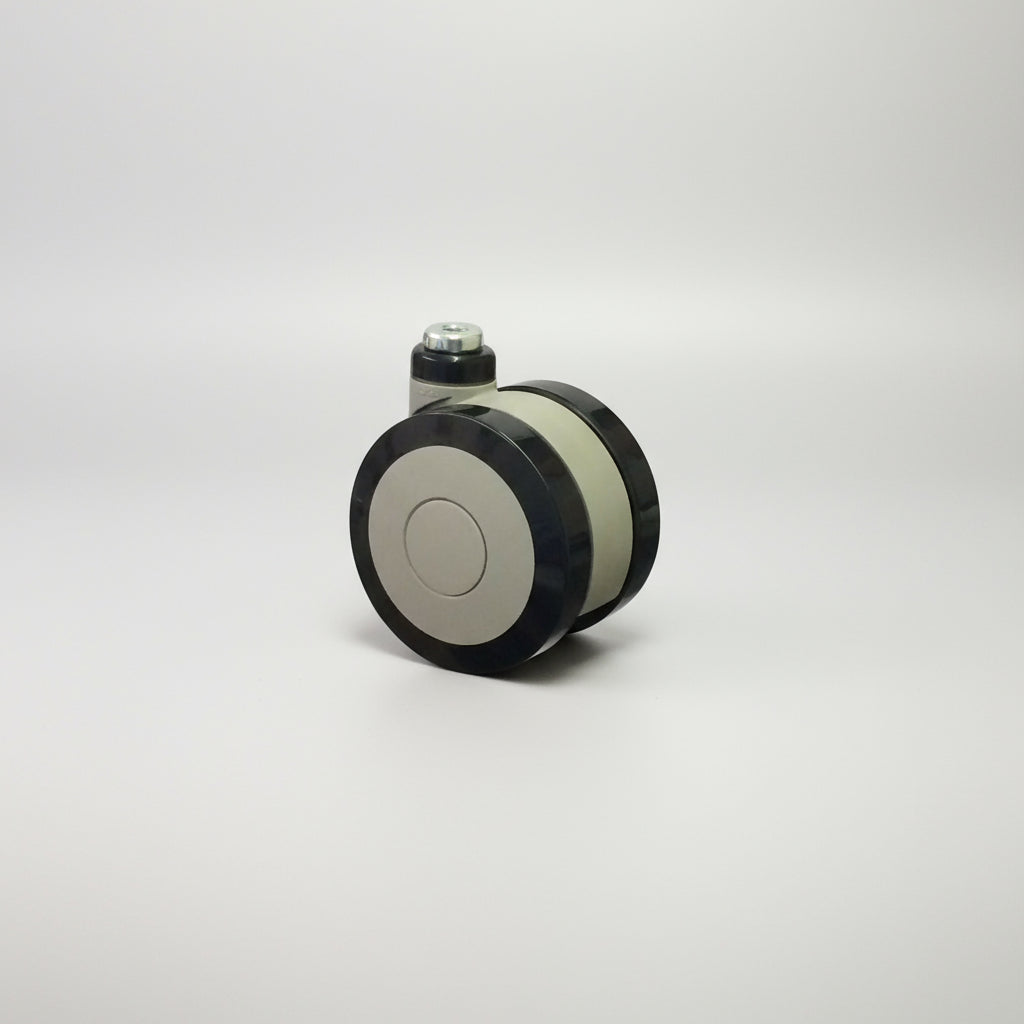
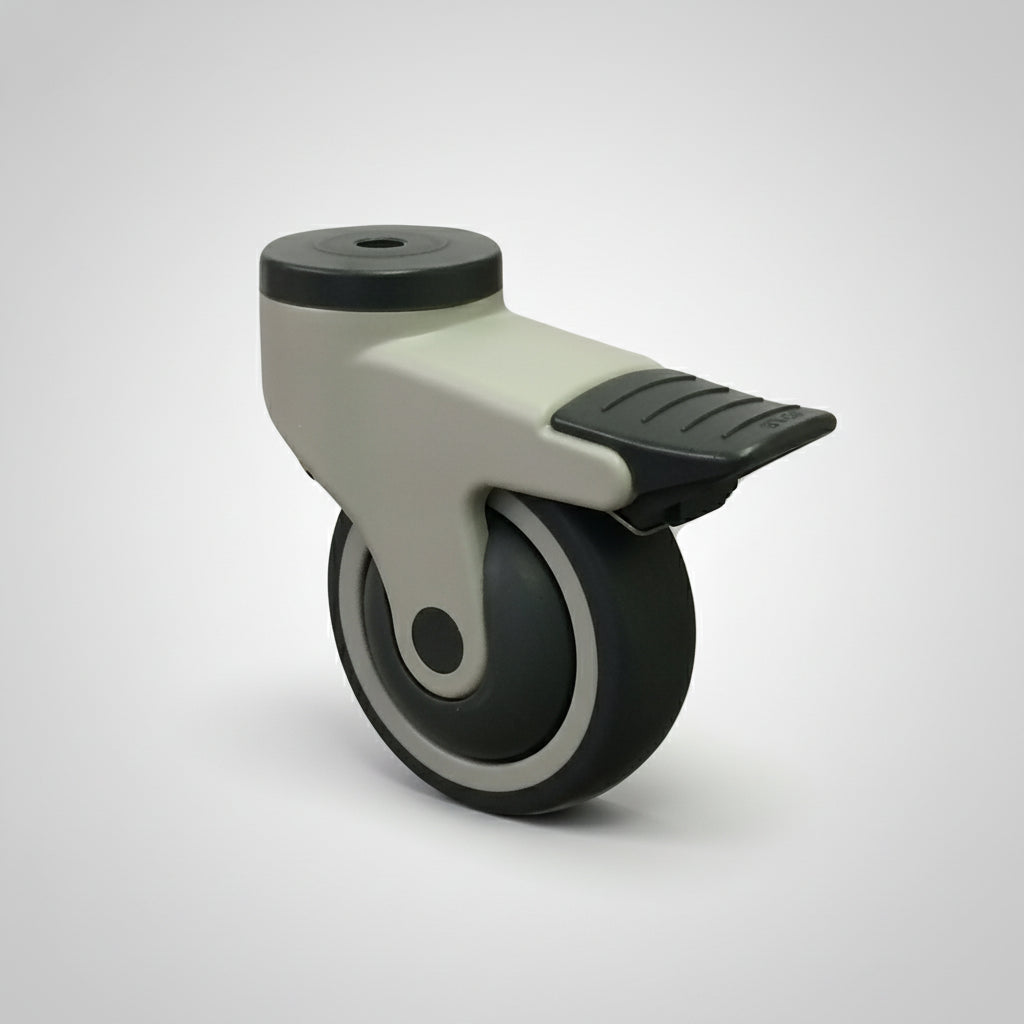
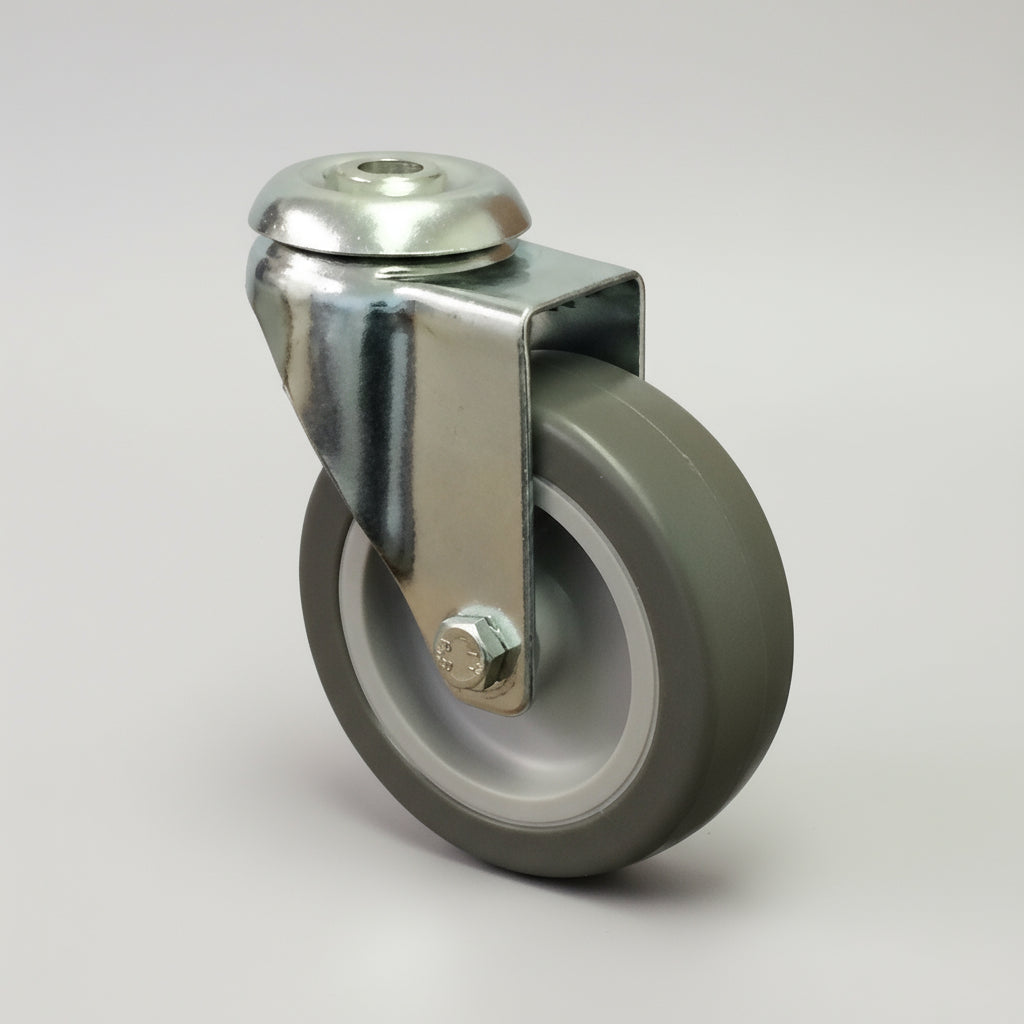
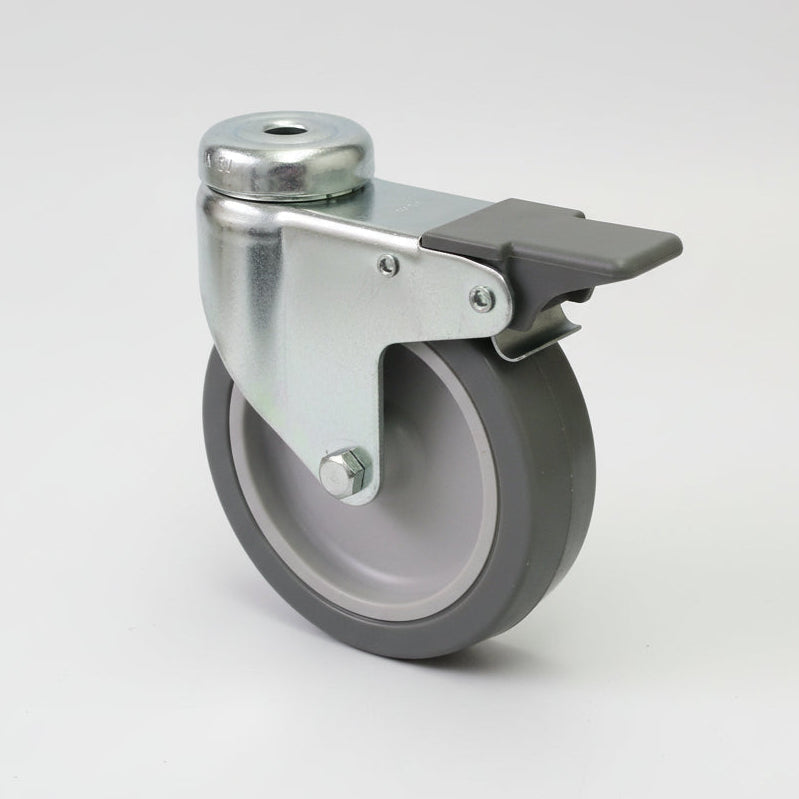
Everything on this page is held in UK stock and available in single quantities or by the pallet. Use the filters above to narrow by weight rating, wheel diameter or total castor height, or read on to find the type that will suit your application.
Medical equipment covers a wide range of weights, floor types and duty cycles. Our products are fitted to:
If your equipment is not listed, the ranges below are built to suit most medical furniture made in the UK, and we offer bespoke castors where they are not.
Wards and treatment rooms run on vinyl and sealed flooring, and the amount of noise they make matters. Our medical castors use grey rubber, thermoplastic rubber and polyurethane wheels that provide smooth, quiet operation under load. Light-coloured, non marking treads are standard throughout, so equipment in frequent use between rooms will not scuff or streak the floor. Non marking wheels protect the delicate flooring in hospitals and clinics.
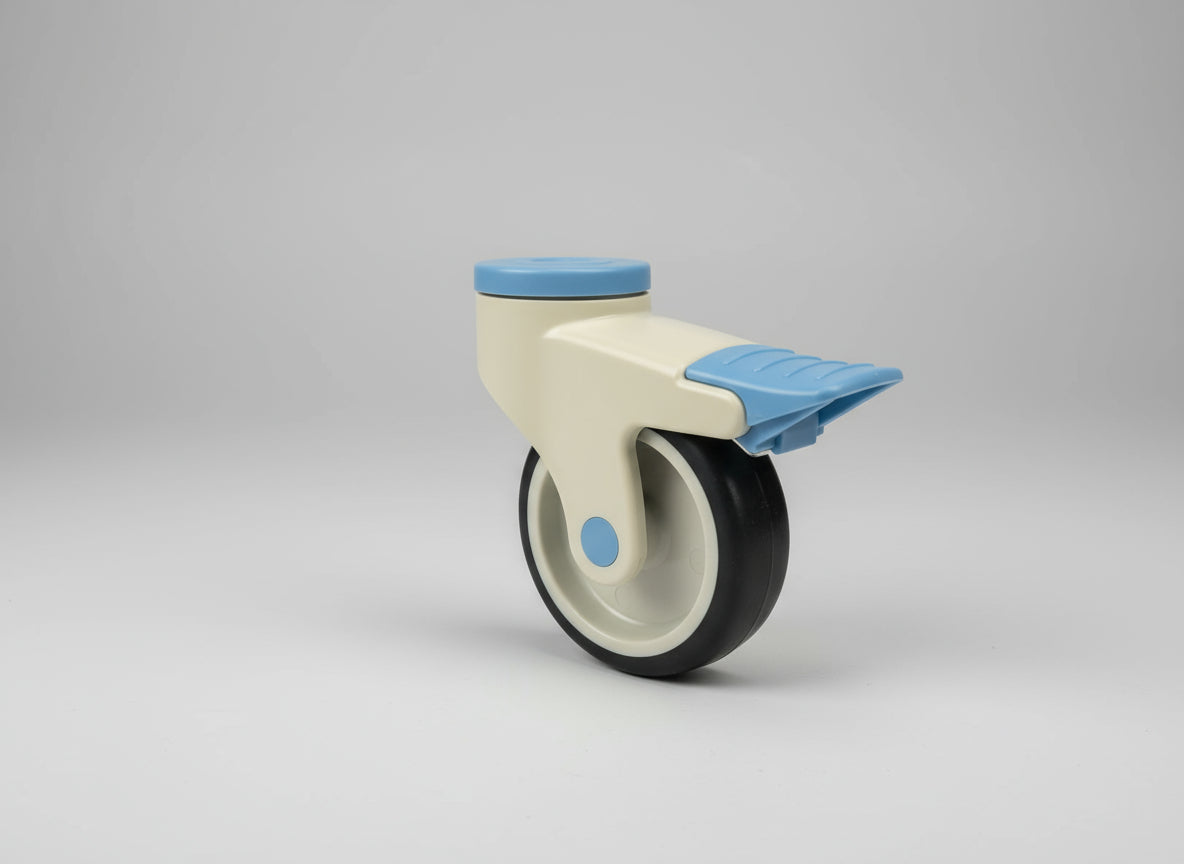
Most medical devices have to be immobilised where they stand, so high quality and dependable brakes are essential. Brakes on medical castors take several forms, and ours are designed to be applied by foot. Nearly every model is available as a matched pair — a swivel castor and the same castor with a brake — so one item can be fitted with two of each, giving stability without losing mobility.
Match the brakes to the equipment: a side lock is enough for a drip stand, but a loaded bed needs a combined or three-way brake. Brakes are usually given by abbreviation on trade drawings, so send us the reference if you have one.
Hygiene standards for medical castors favour materials that are easy to clean and disinfect. Nylon bodies wipe down, resist the chemicals used in a medical facility and stand up to repeated cleaning. Chrome plating gives the same resistance and durability with a traditional finish. Wheel tread materials should be matched to the flooring in your facility to protect against damage.
Hospital beds are the heaviest piece of medical equipment most facilities move daily, and they need castors with a high load capacity that stay stable when stationary. Our 150mm chrome braked castor with a precision bearing is built for this: the bearing keeps the wheel turning under sustained weight, and the brakes hold a loaded bed in place. Larger wheels handle heavy loads and uneven surfaces, and reduce the push-pull force on staff - something that really matters when beds are moved several times a shift.
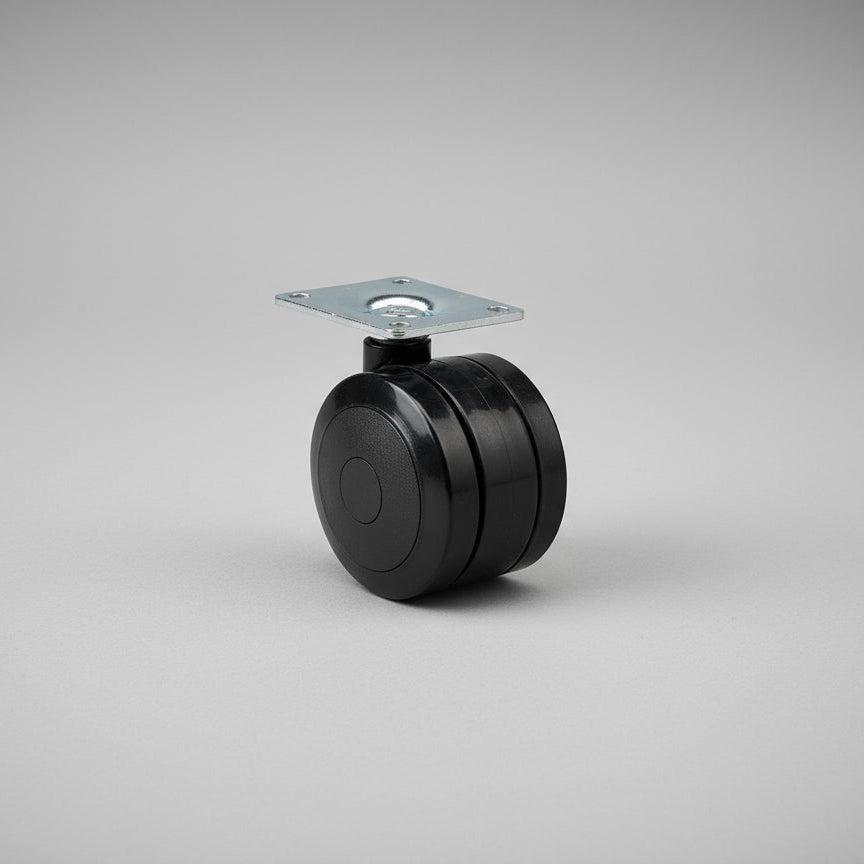
Smaller medical devices, diagnostic equipment and laboratory trolleys need castors that manoeuvre in tight spaces. Trolleys carrying samples between benches demand control. These are engineered for precision rather than capacity. Our 75mm twin wheel castors are designed to turn easily around a corner and carry more than their size suggests. Twin wheel castors with polyurethane treads are the usual choice for patient lifters, where the load shifts as the patient moves.
ISO 22882 covers castors and wheels for institutional applications, setting out requirements for load capacity and durability — a useful reference point when you are specifying for a tender.
Anti-static and conductive wheels are available across our institutional and medical ranges, and are generally specified for operating theatres, where static build-up around sensitive equipment must be prevented. The same wheels are used in any electrostatic discharge environment, including areas housing sensitive diagnostic equipment.
Anti-static wheels are marked A/S on trade specifications. If a drawing calls for them and you are not sure which castor it refers to, send us the reference and we will be happy to identify it for you.
Paired wheels spread weight and swivel smoothly under a shifting load, which makes them ideal for patient lifters, medical carts and food service trolleys.
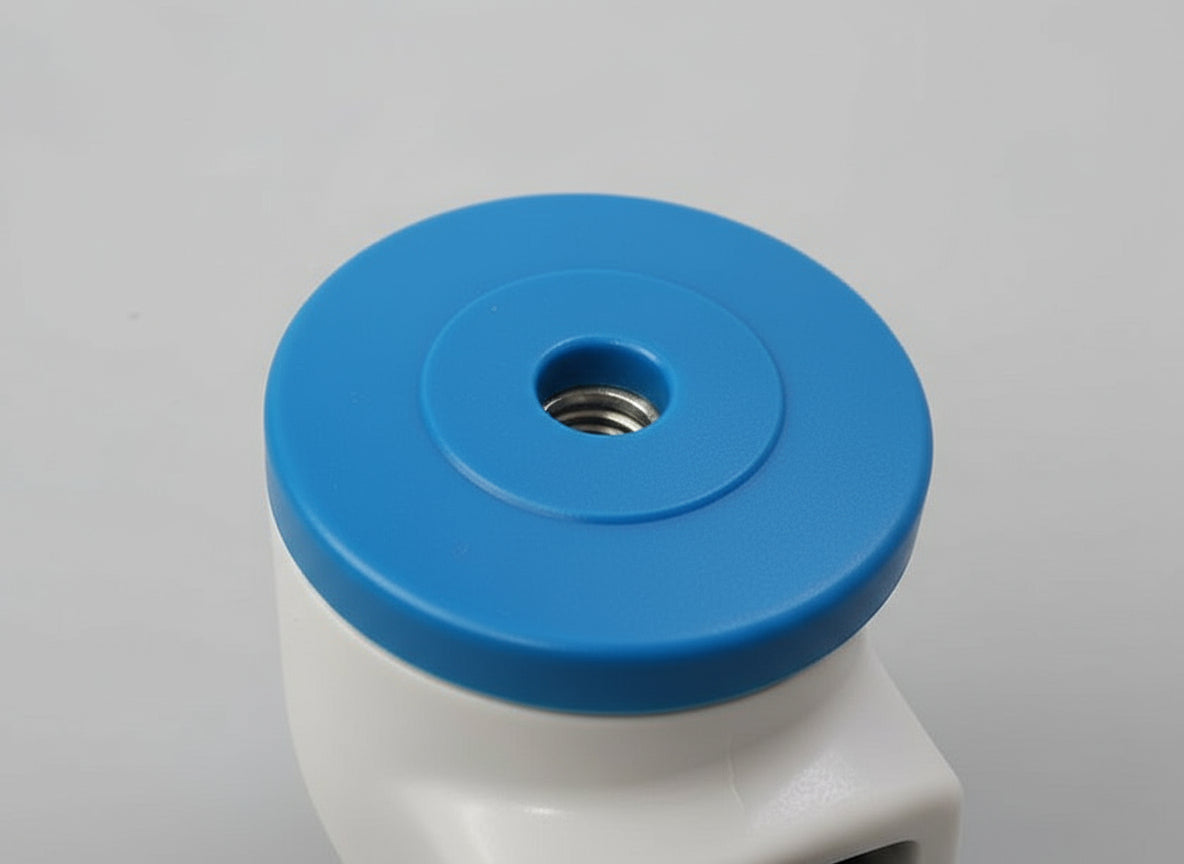
Available in 100mm and 125mm, braked or swivel, in bolt hole and stem fittings. The workhorses of the range - light, quiet and easy to clean. Nylon castors work well on medical furniture, IV stands, commodes and shower chairs, and the grey and blue colours let you match castors to existing equipment.
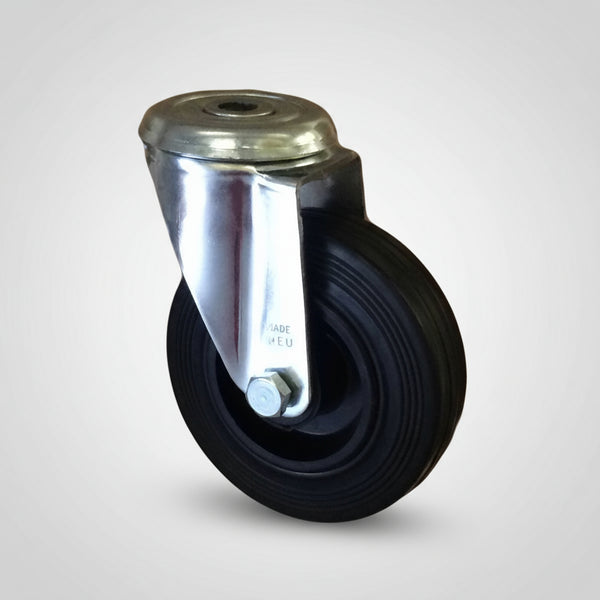
Chrome plated bolt hole castors in 100mm, in swivel and braked versions. Chrome castors cross over between medical and institutional use and are the traditional choice for beds, cabinets and ward furniture.
Divide the total loaded weight by three rather than four. On an uneven floor only three castors reliably take the weight, so sizing to three builds in a safety margin. Medical castors must support heavy loads and maintain stability when stationary, so check the brakes are rated for the same load as the wheels.
Medical and institutional castors are most commonly supplied in 50mm, 75mm, 80mm, 100mm and 125mm; larger diameters exist but are rare. Our range runs from 75mm to 150mm. Larger wheels roll more easily over room/hall thresholds and cable covers, at the cost of extra height.
Important: castors are named by wheel diameter, not by overall height. A 100mm castor stands around 127 to 130mm tall once the fork and fitting are included, and the same applies at every diameter. If you are working to a fixed clearance under a frame, use the total castor height filter above and work back from there rather than sizing by the wheel.
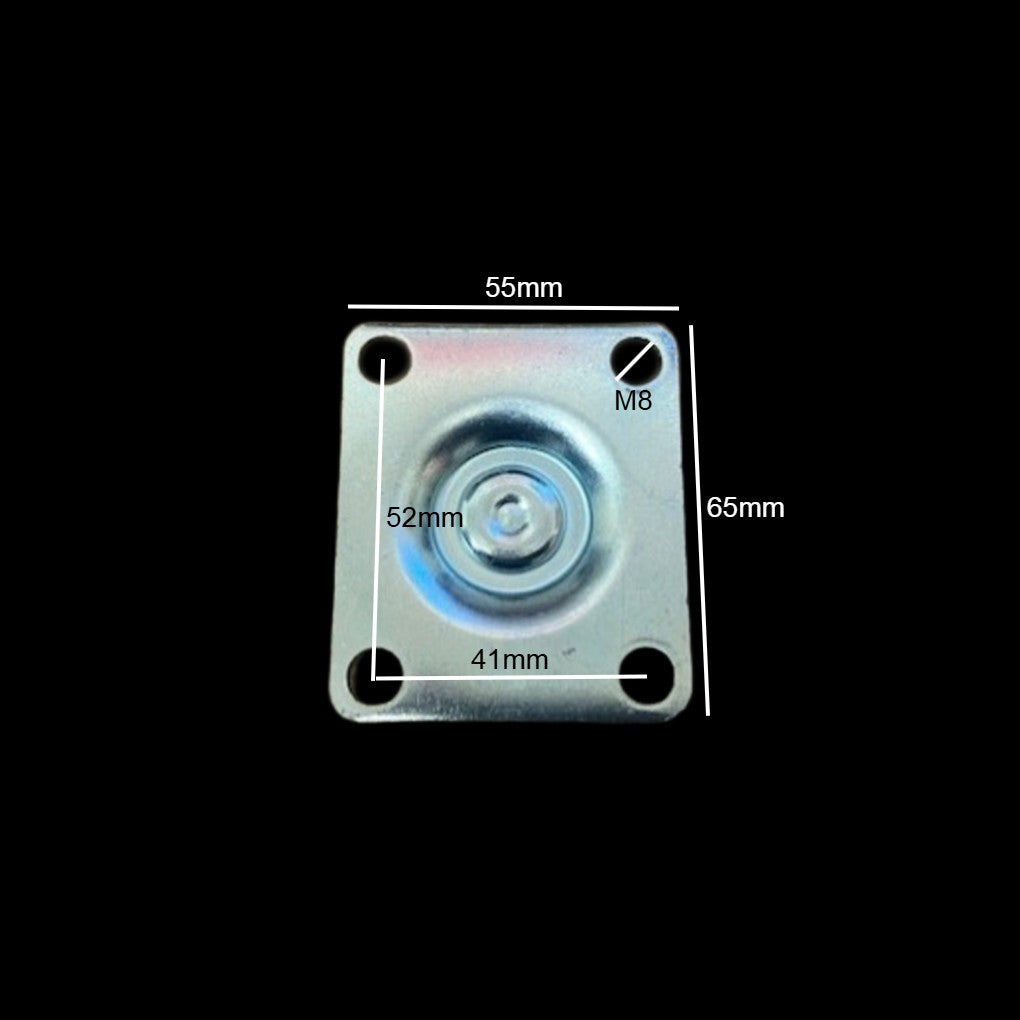
Replacements more often fail on fitting type, not wheel size. Industrial castors use standard bolt hole centres, so a replacement plate usually drops straight on. Medical and institutional castors do not — plates are often smaller and come in all sizes, so the holes on a new castor may not line up. It is important to measure the bolt hole centres and the stem diameter before you select a replacement.
On larger orders we can adjust:
For hospital beds we offer 100mm and 150mm castors with combined swivel and wheel brakes. Hospitals usually select a braked castor at all four corners, or three-way locking where the swivel, the wheel and the direction are all controlled. Larger wheels are designed to reduce push-pull force, which matters in hospitals where beds are frequently moved.
Yes. Our nylon and chrome products are designed for healthcare settings where equipment is wiped down daily. Smooth mouldings with no exposed threads prevent dirt build up, and the high-quality materials used throughout meet the cleaning regimes of hospitals and laboratories.
Many of our products are suitable for wheelchairs, shower chairs and commodes. Wheelchairs vary widely in fitting, so measure the existing stem or plate before you select a replacement. Send us a photograph and the sizes and we will identify an ideal match, or learn more from our castor types guide.
If you are specifying essential components for a new medical device, replacing castors across a fleet of beds or wheelchairs, or need a combination of sizes and materials not shown, contact us and we will be happy to assist you. We supply hospitals, laboratories, care homes and medical equipment manufacturers across the UK, from single hospitals to national contracts. We answer technical questions from healthcare professionals and design teams alike.

