
Braked swivel castors, sometimes called lockable or locking castors, are swivel castors with a built-in brake. With the brake off the castor swivels and rolls freely; with the brake on, the load is locked where you put it. That mix of mobility and stability is what makes braked swivel castors essential on trolleys, medical equipment and display cases that have to move easily and then stay locked in position in use.
QED Castors has supplied braked castors for industrial and commercial applications since 1987. This collection holds every braked swivel castor in stock, from 35mm low level castors to 150mm chrome plated castors, with load capacity from 50kg to 250kg per castor. Most sizes come in braked, swivel and fixed versions of the same design, sharing plate dimensions, bolt hole size and stem size.
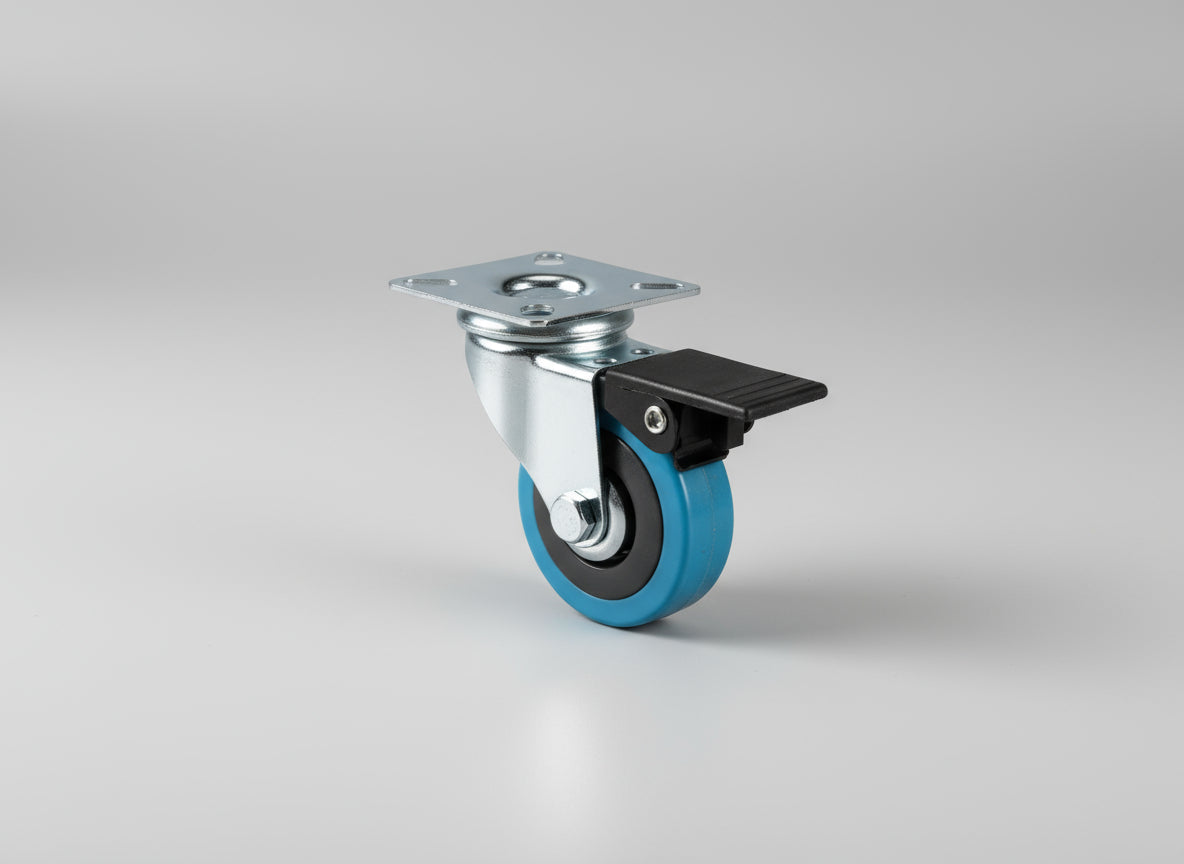
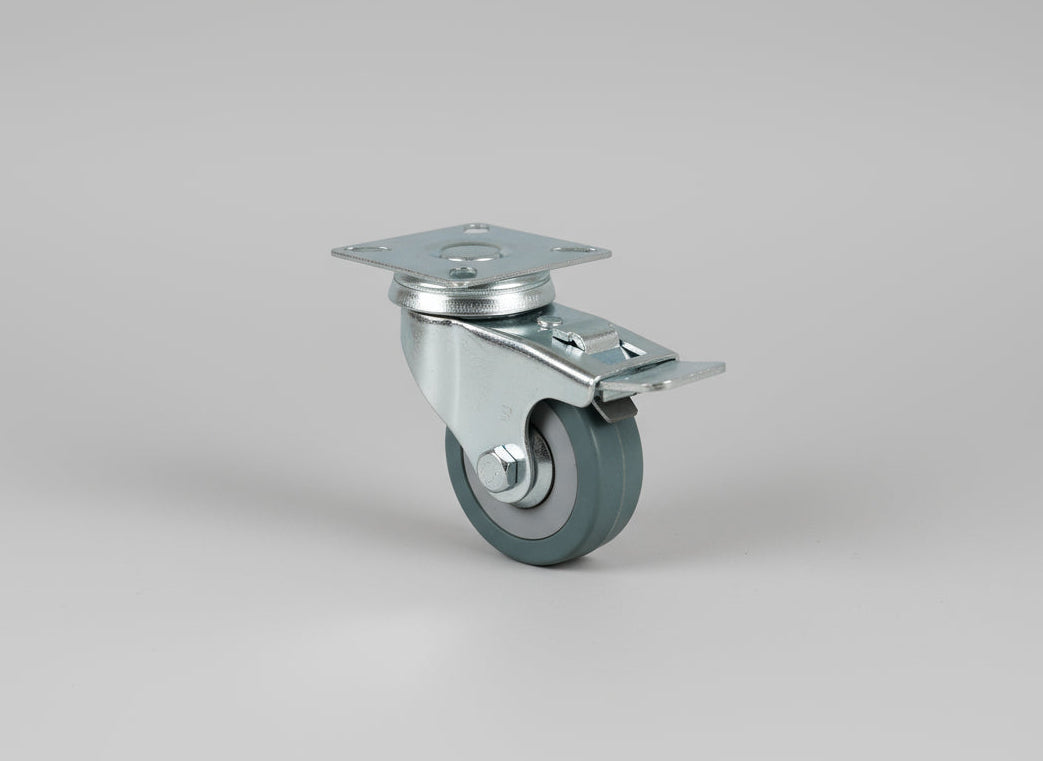
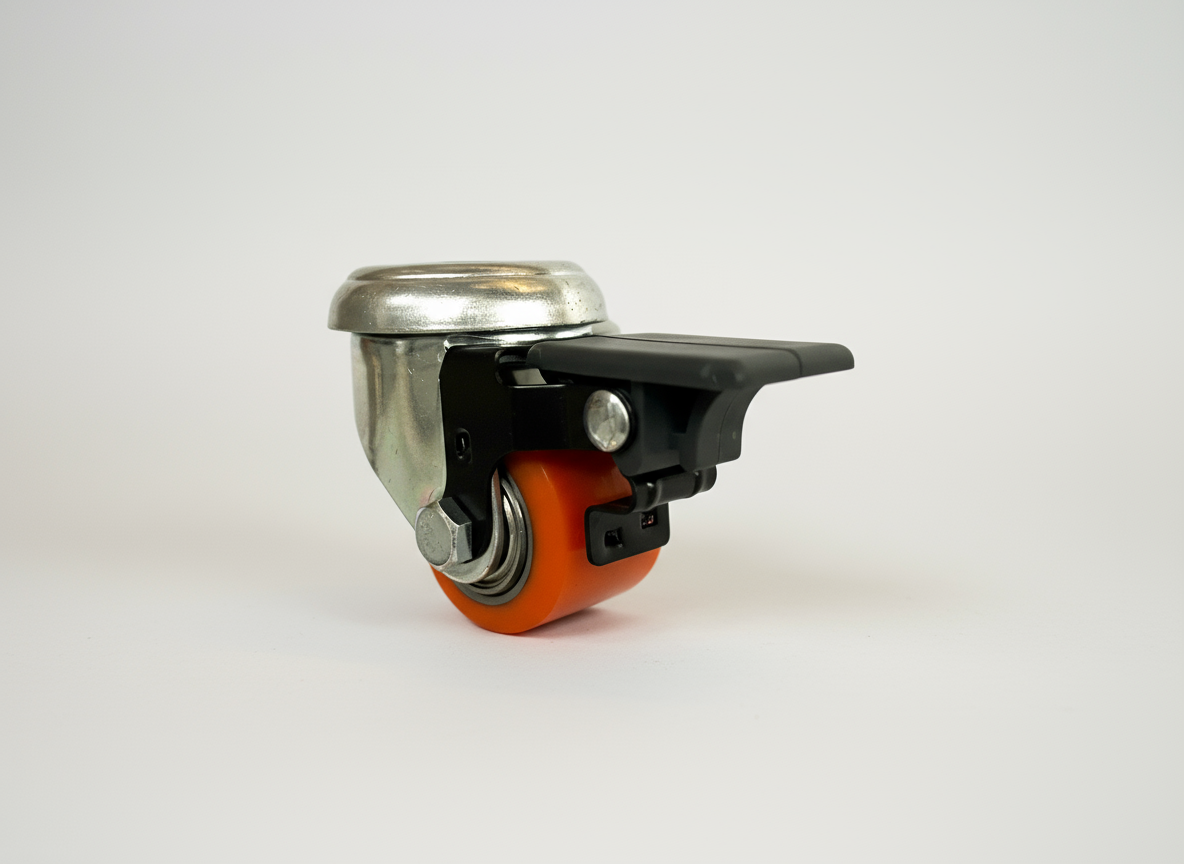
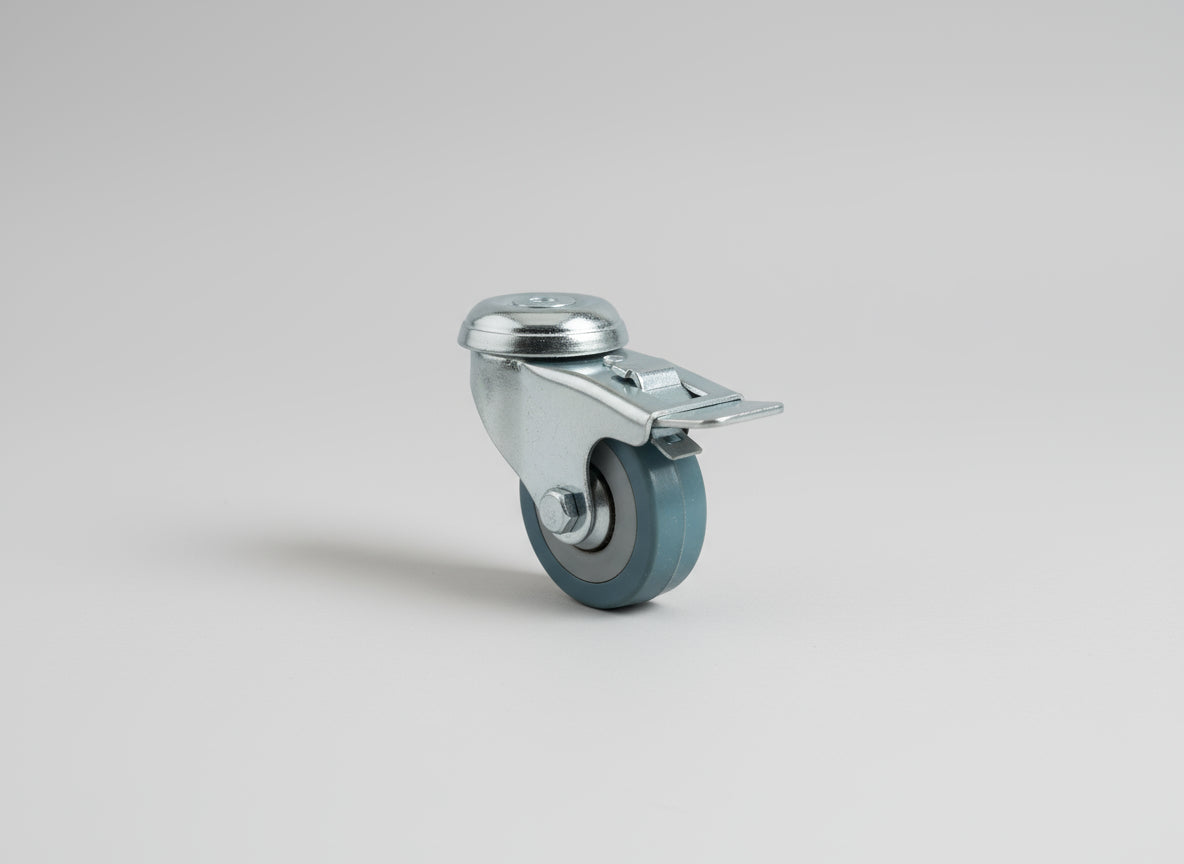
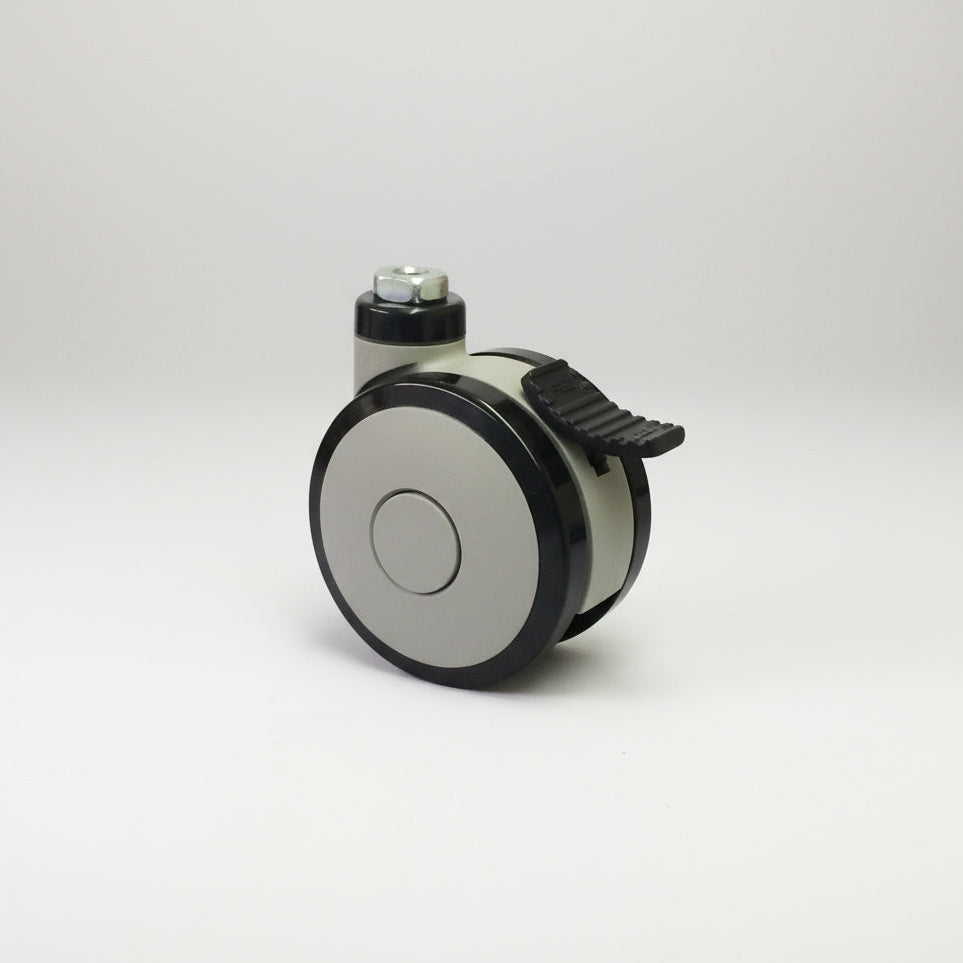
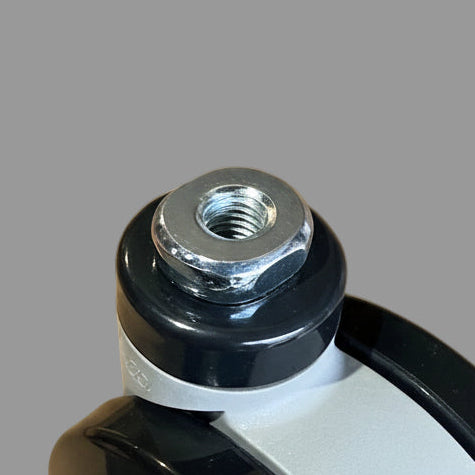
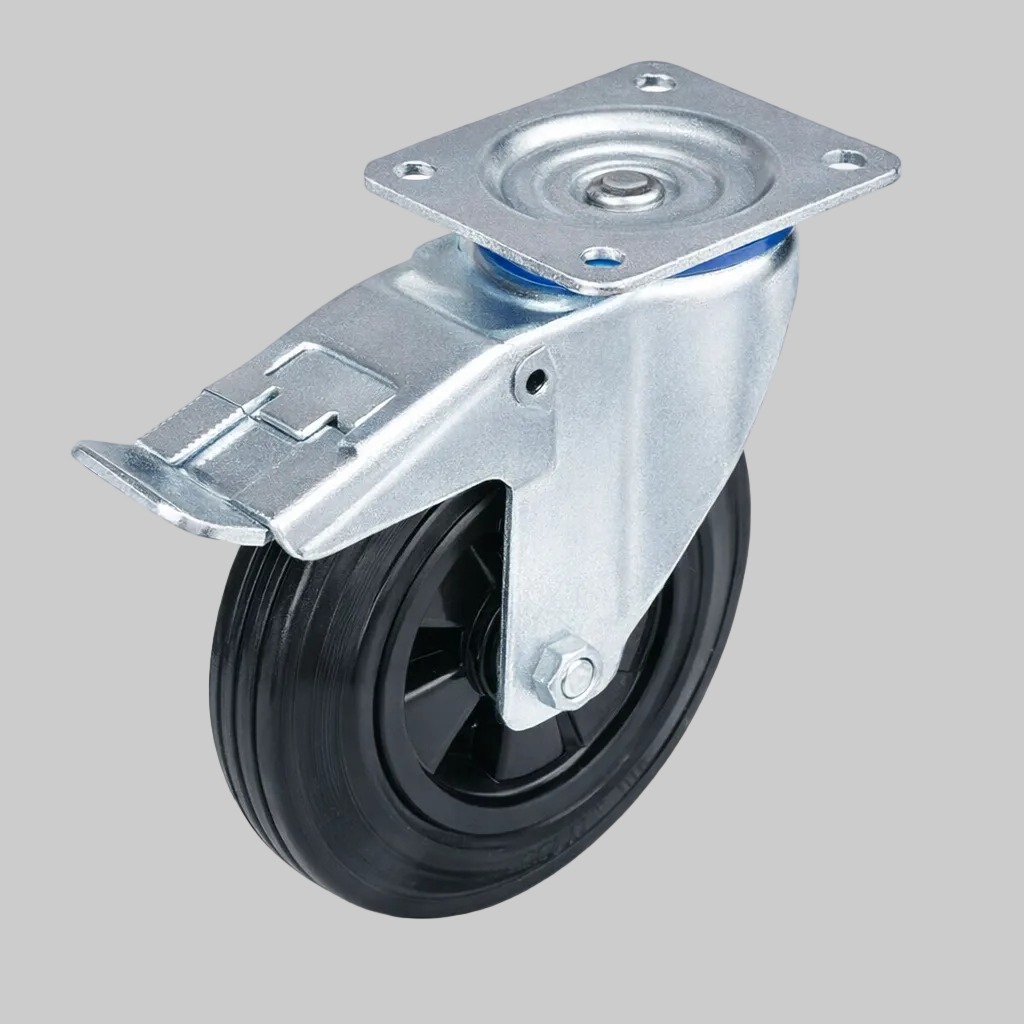
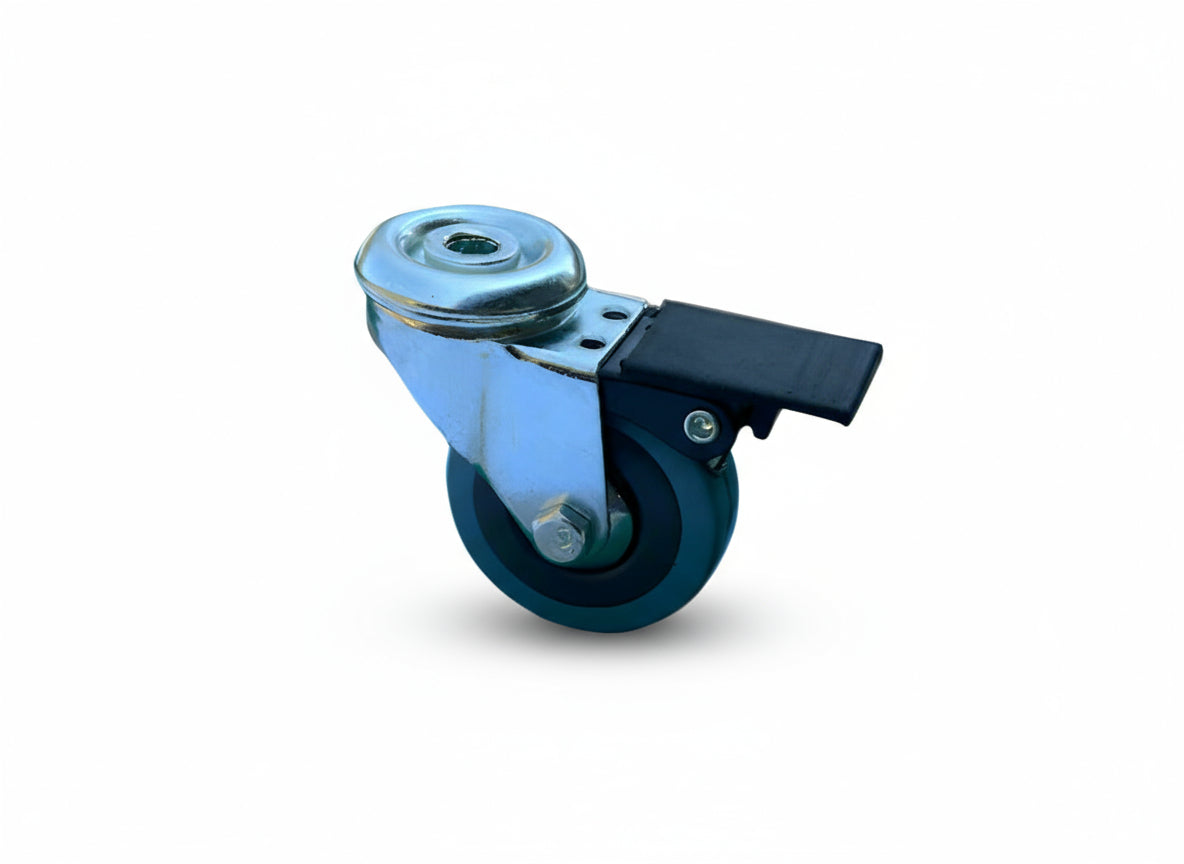
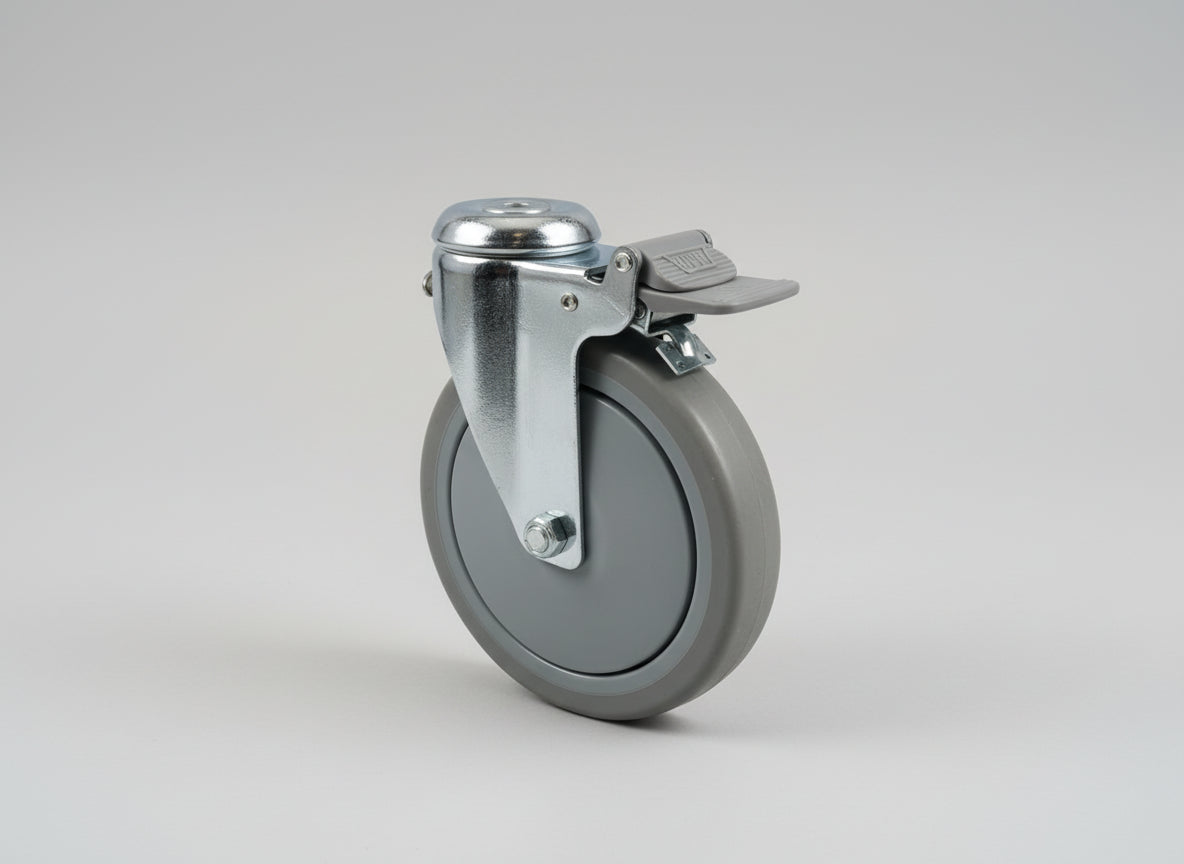
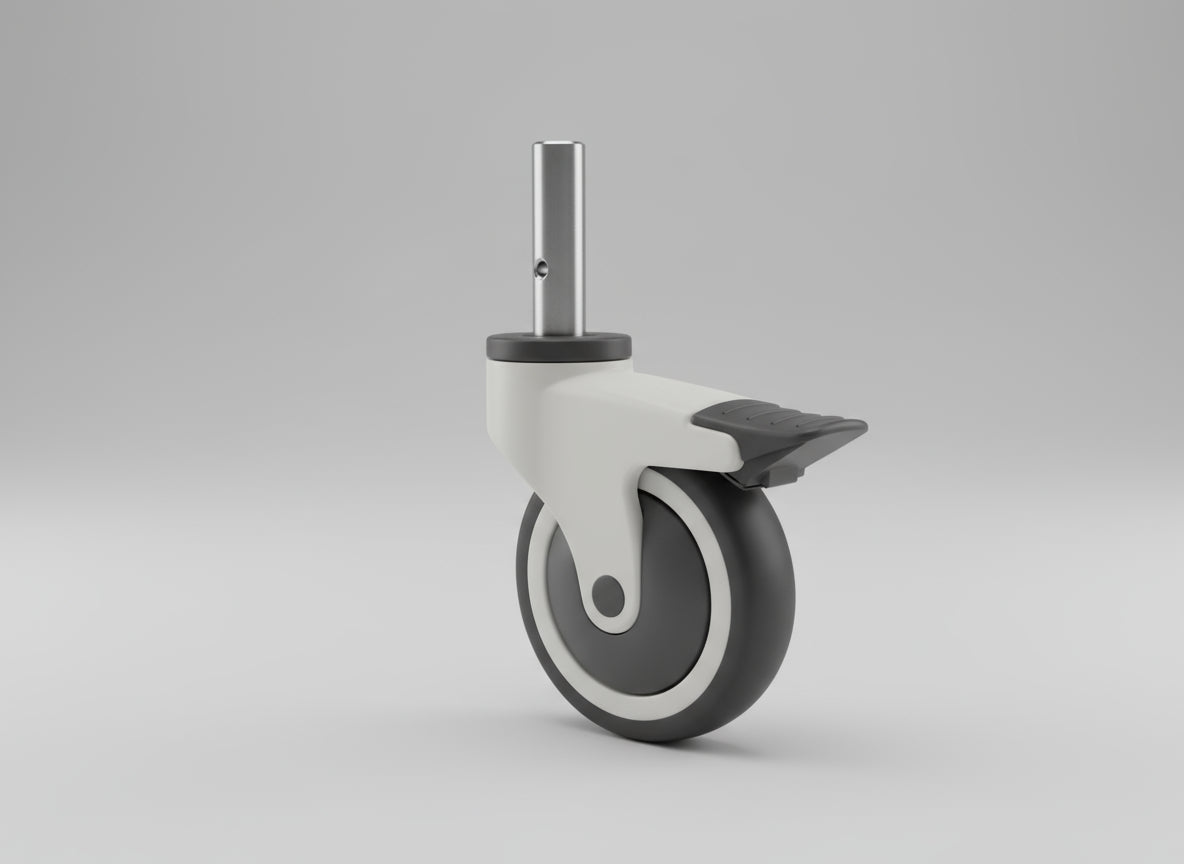
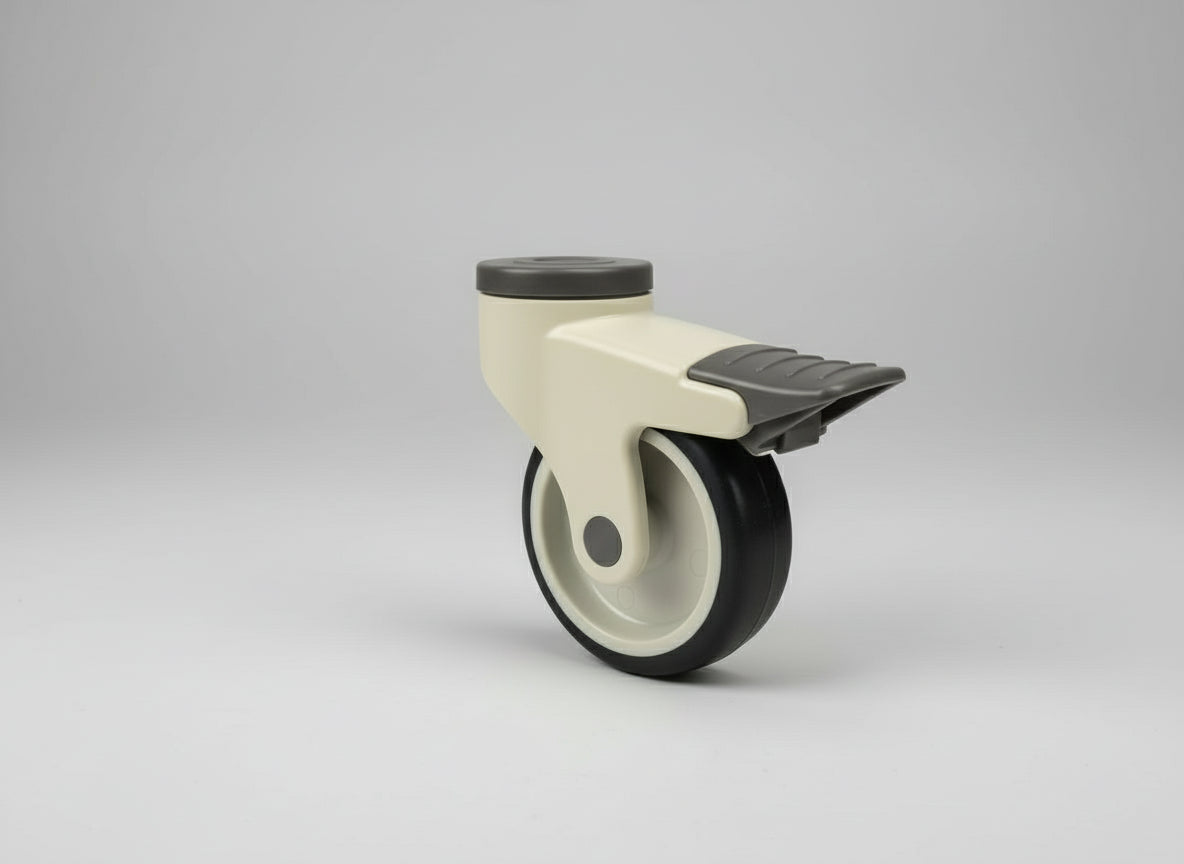
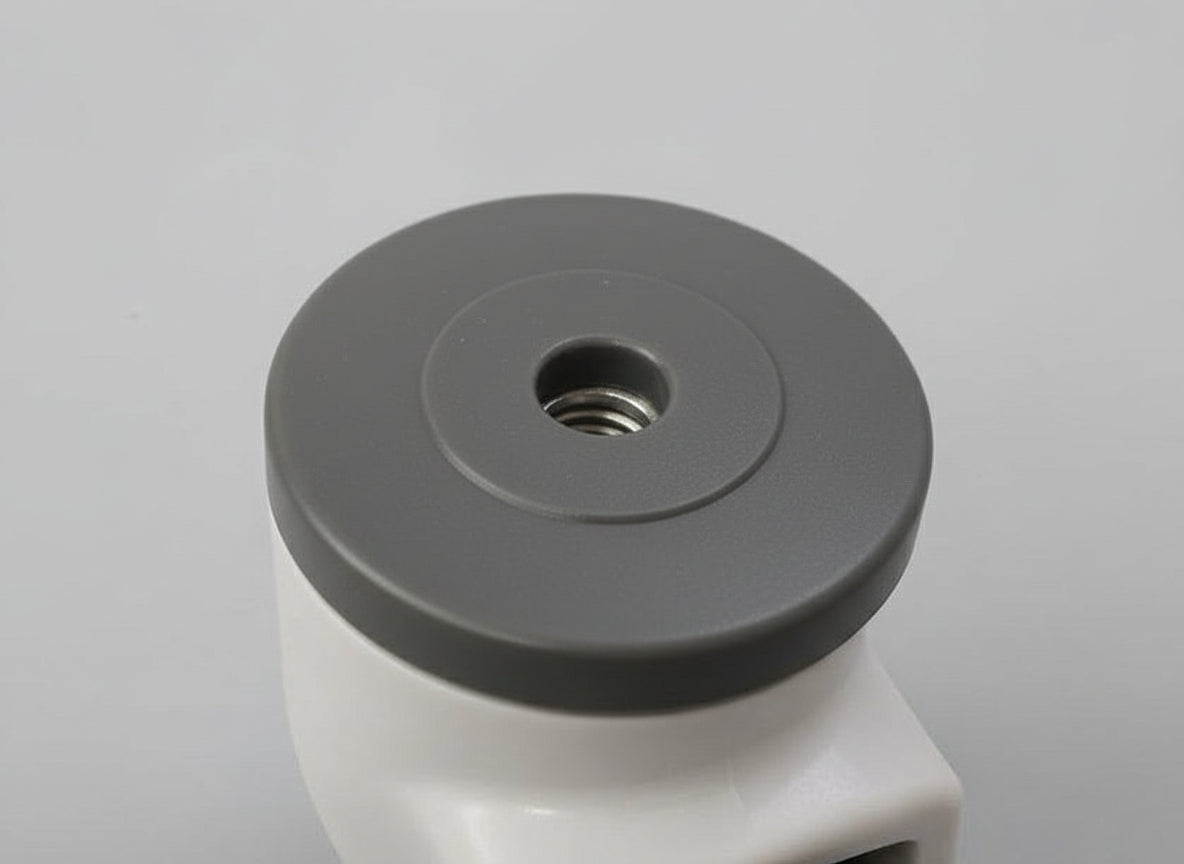
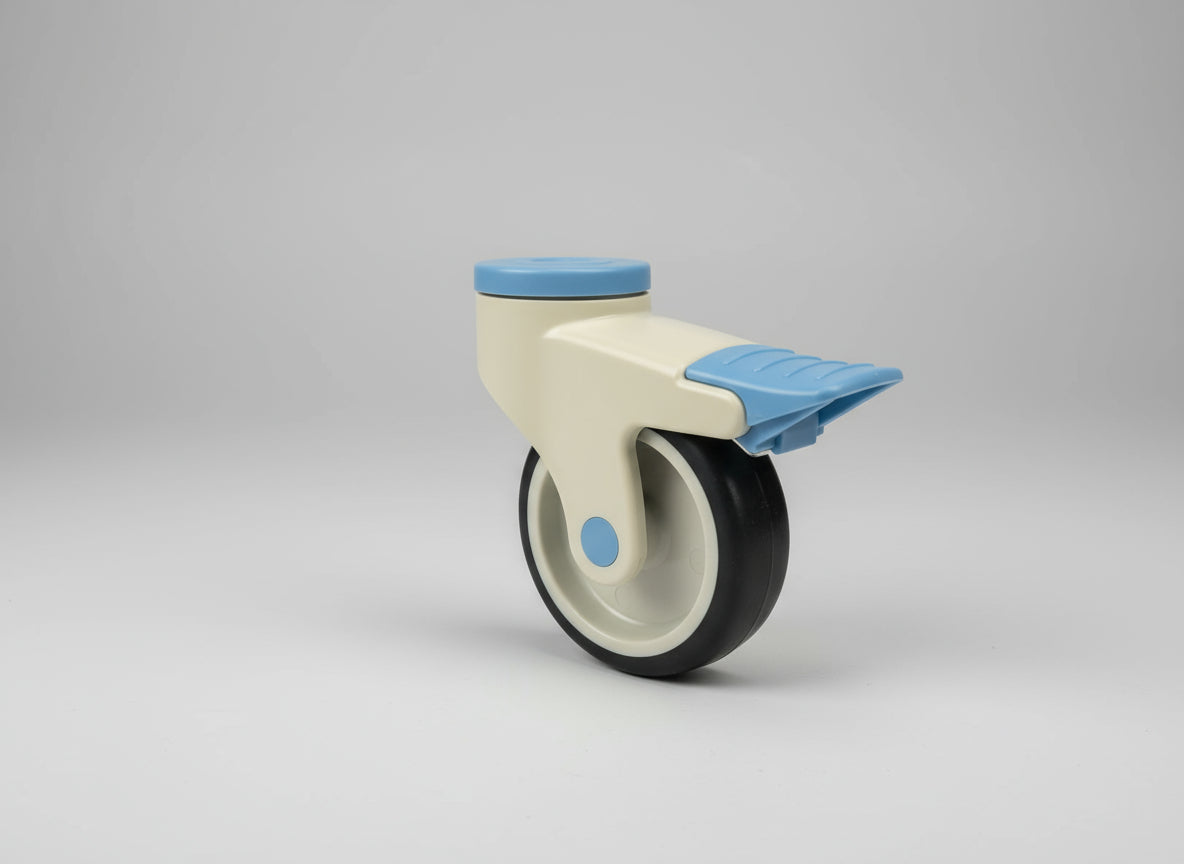
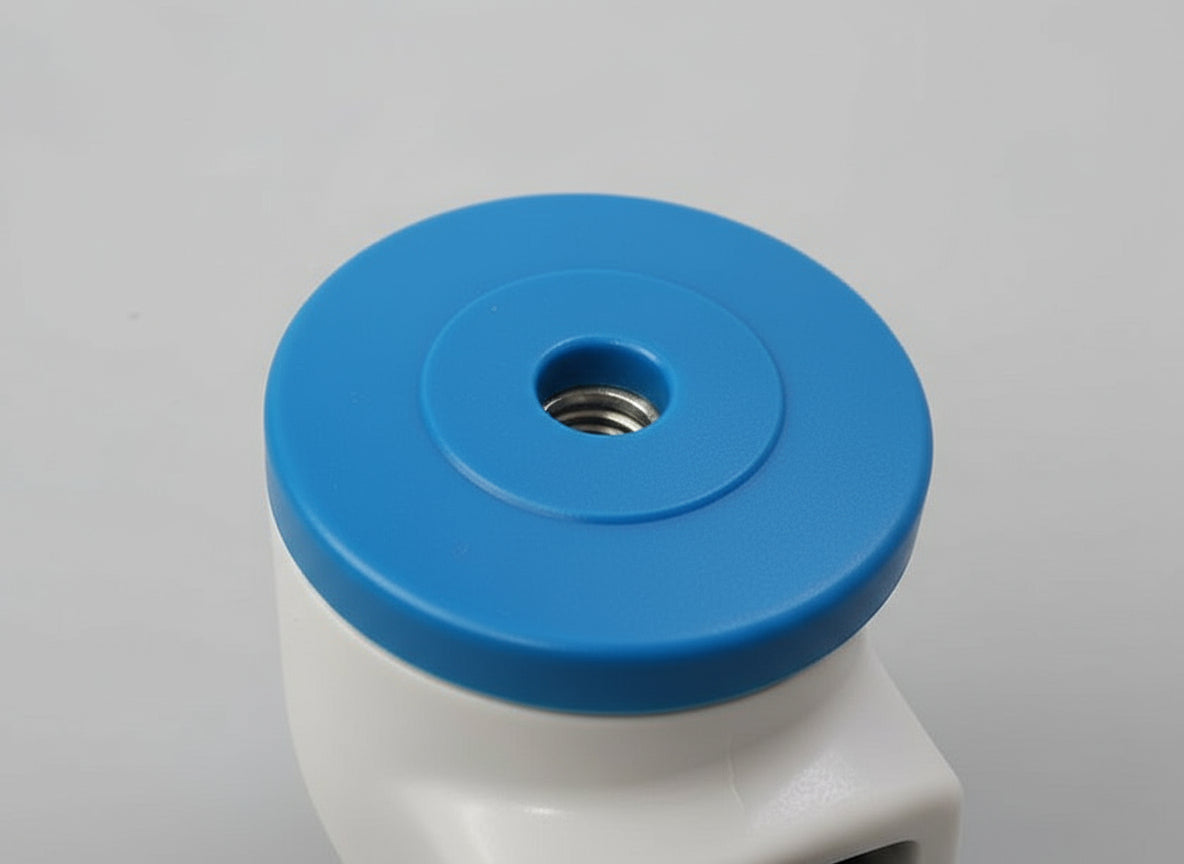
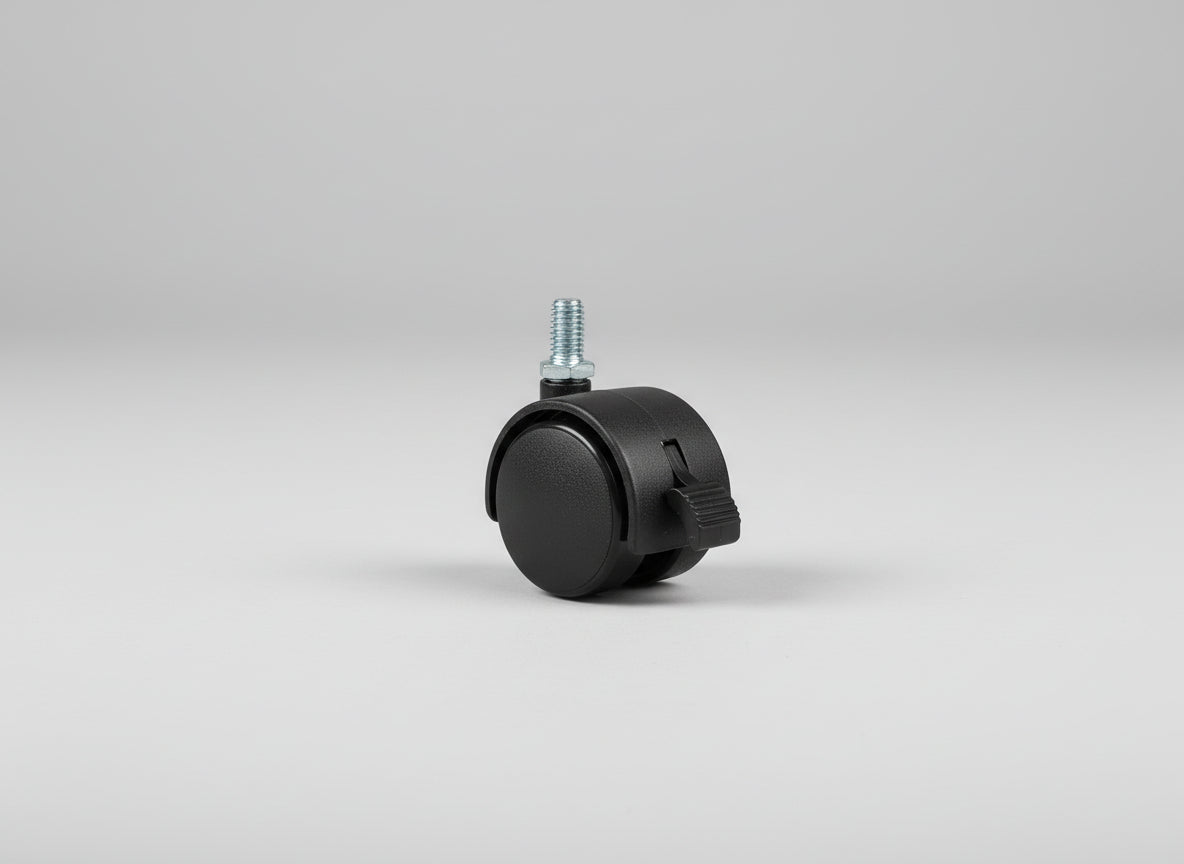
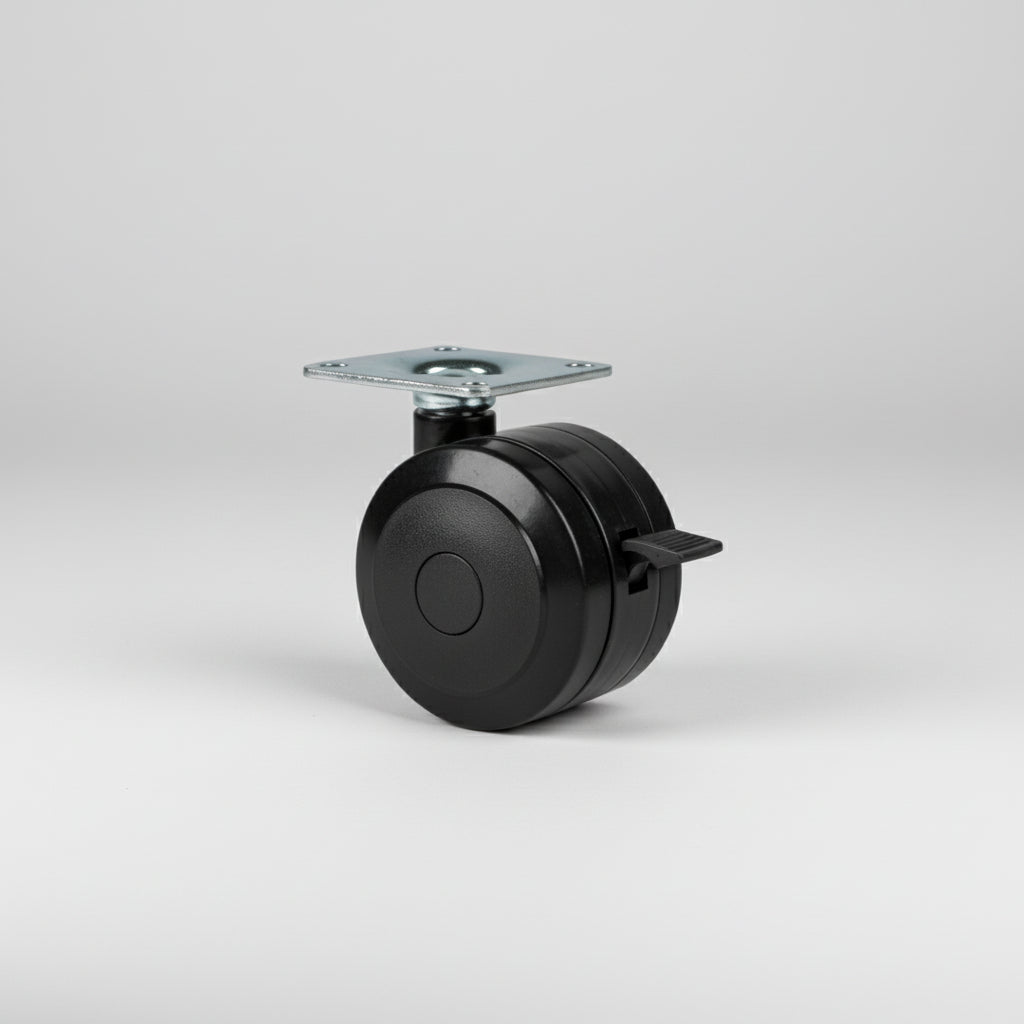
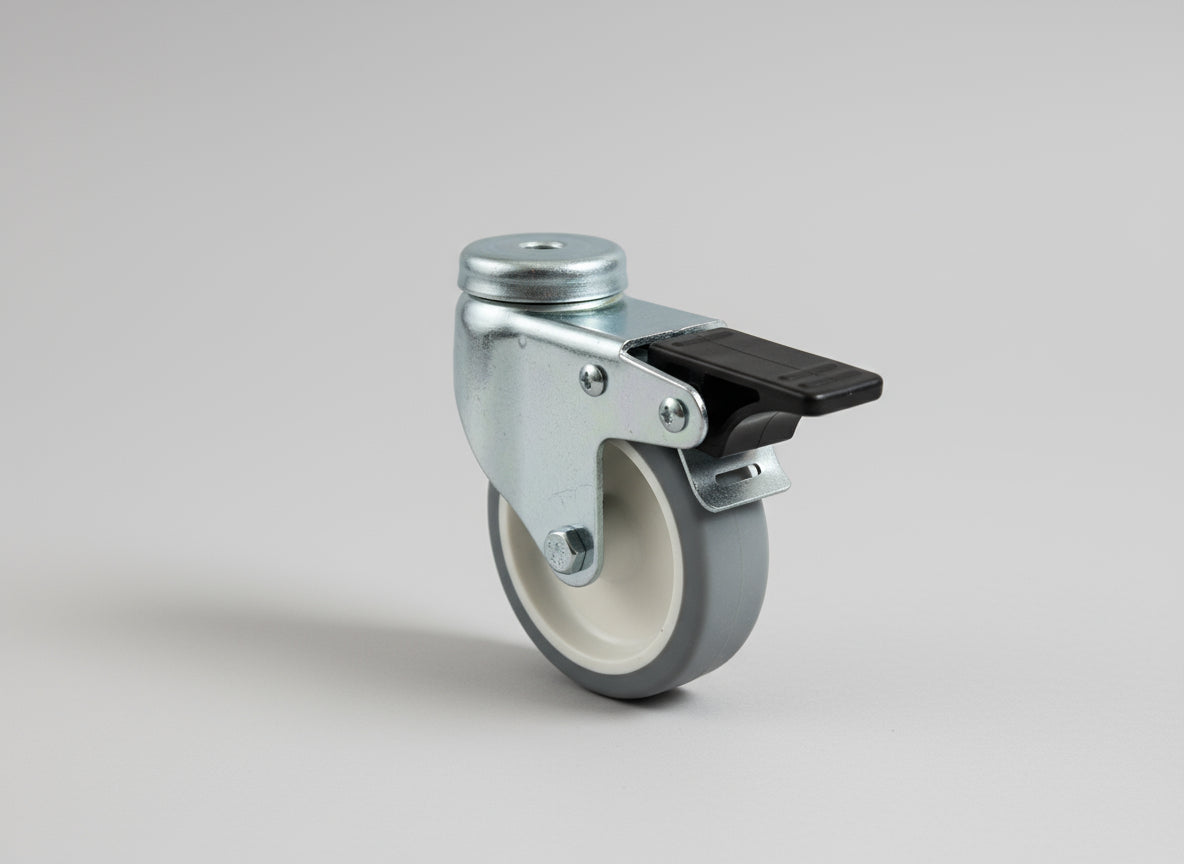
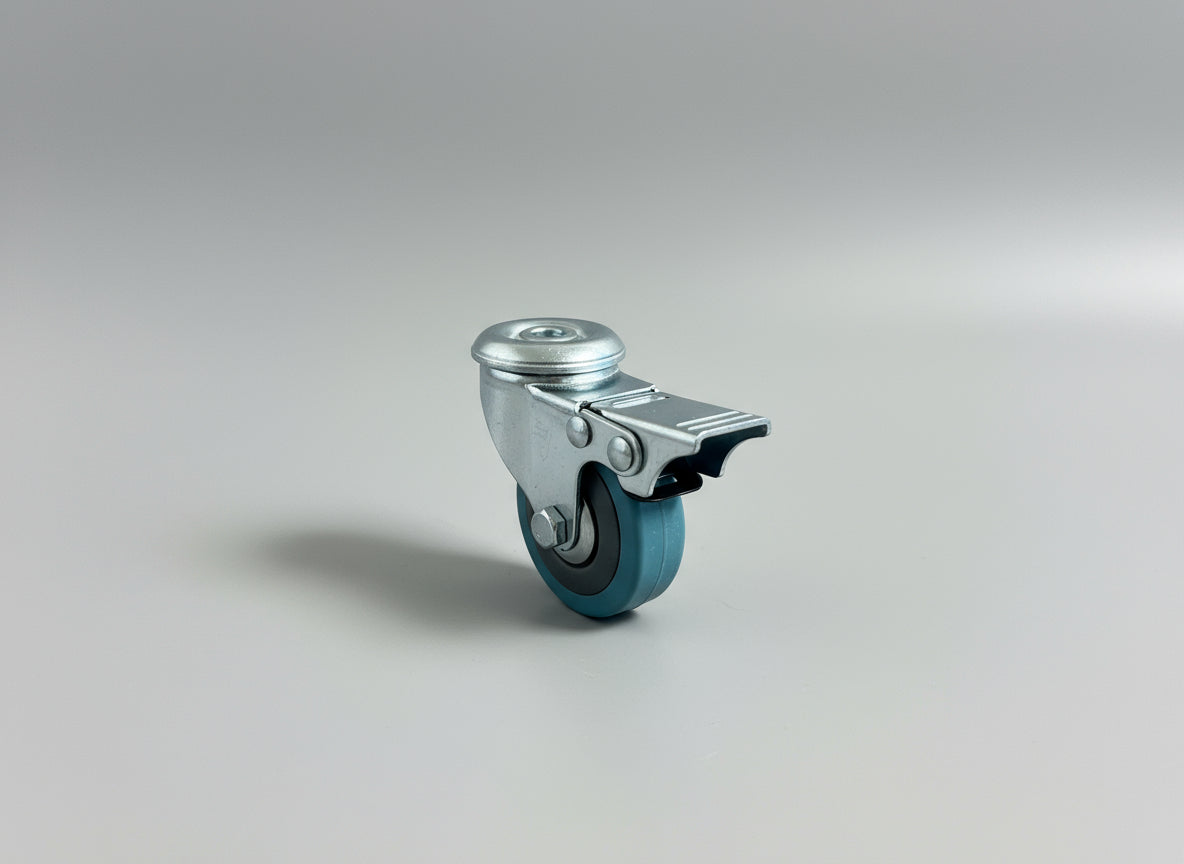
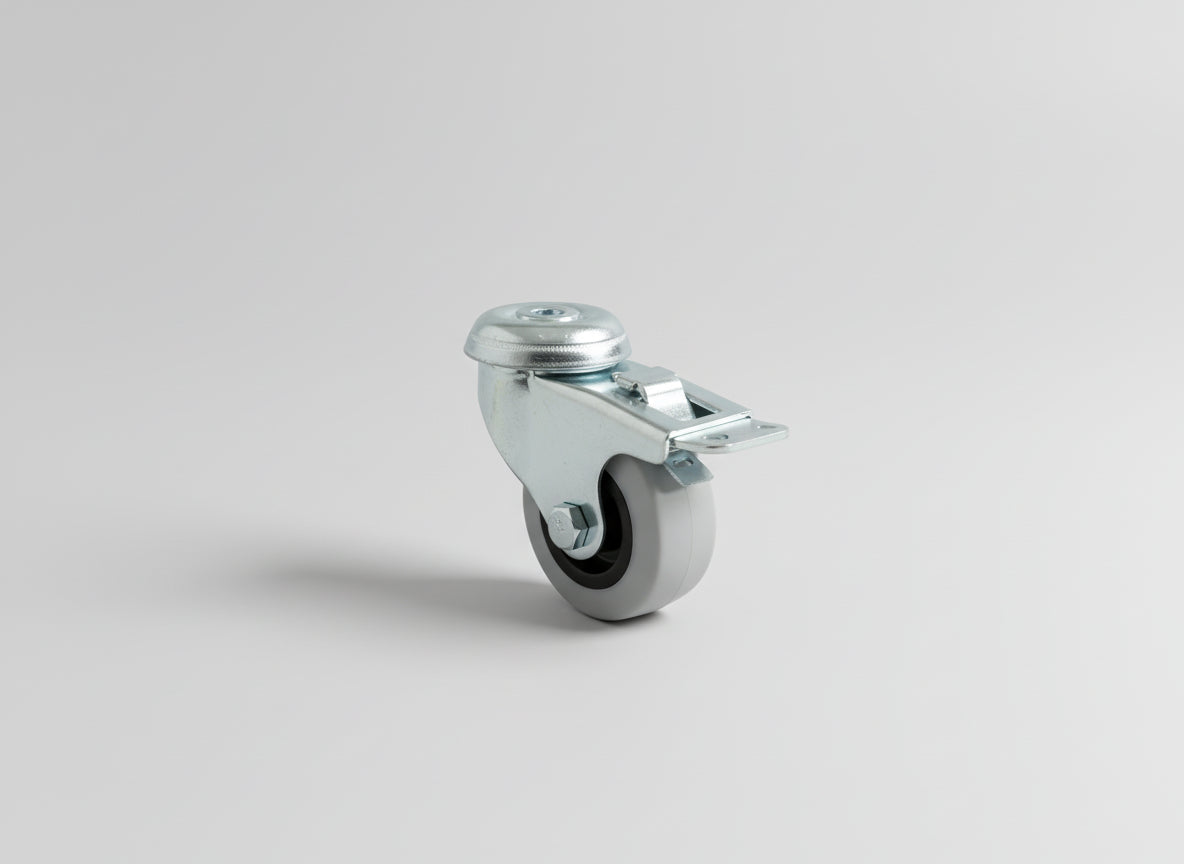
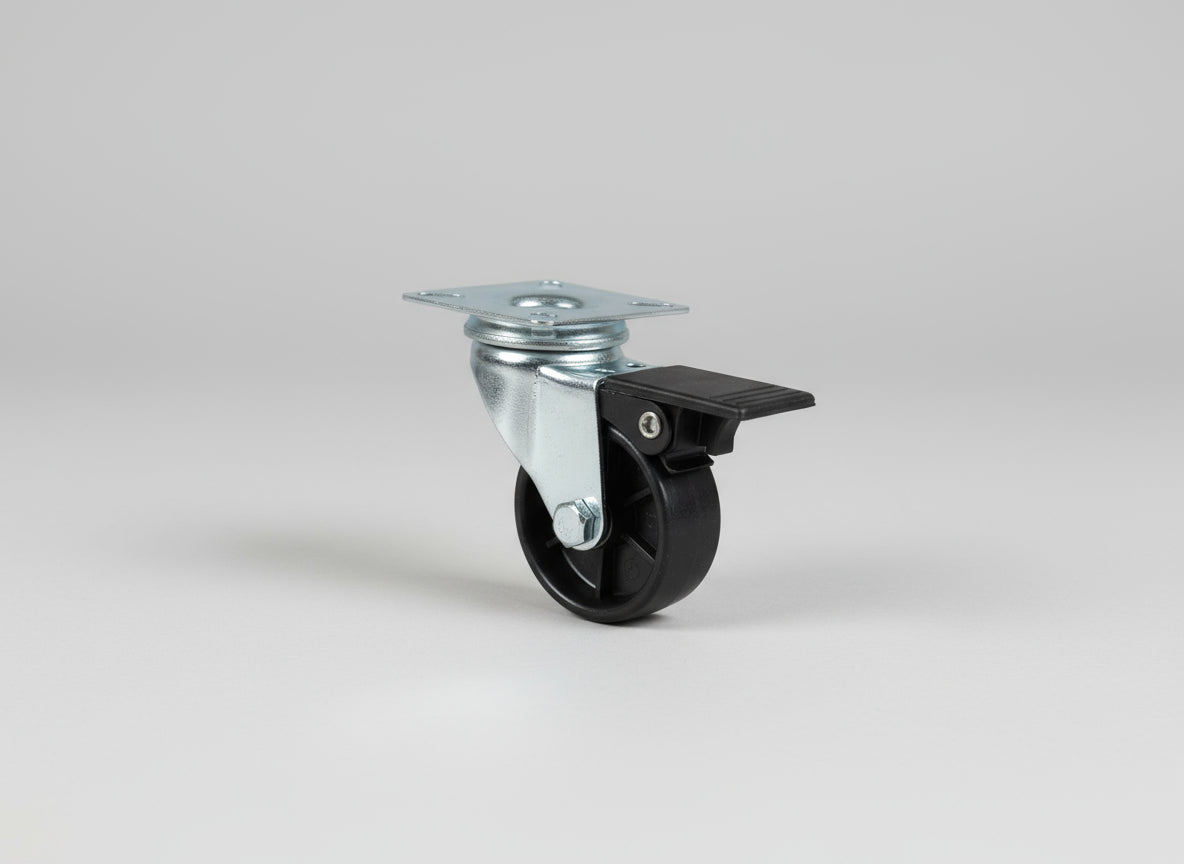
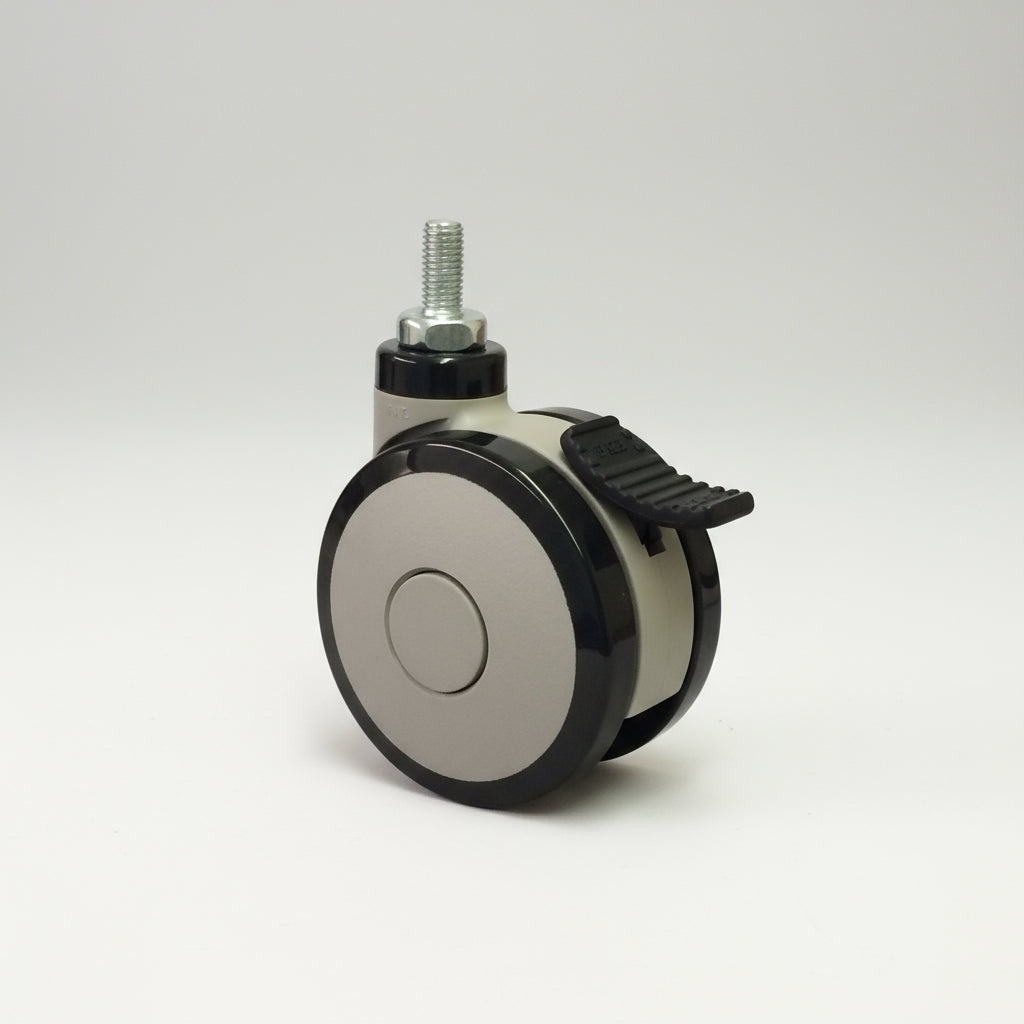
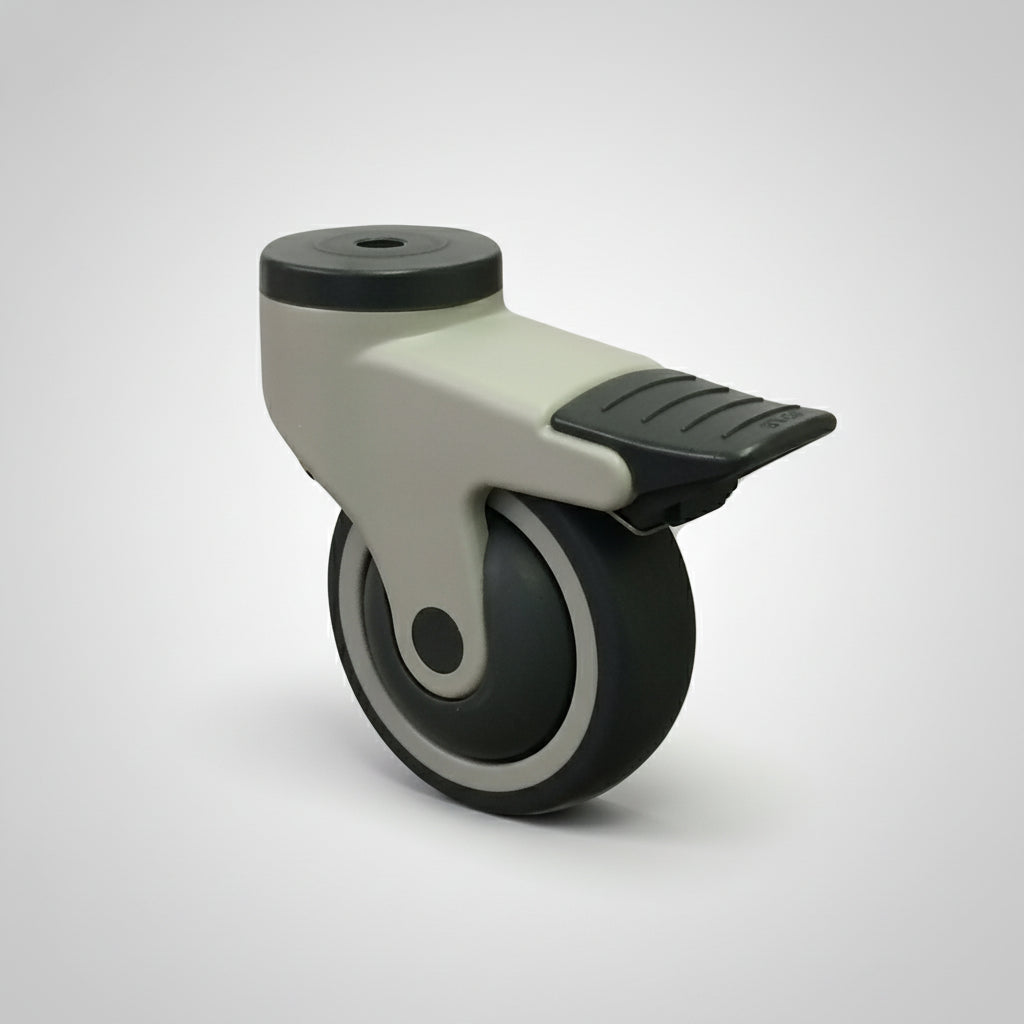
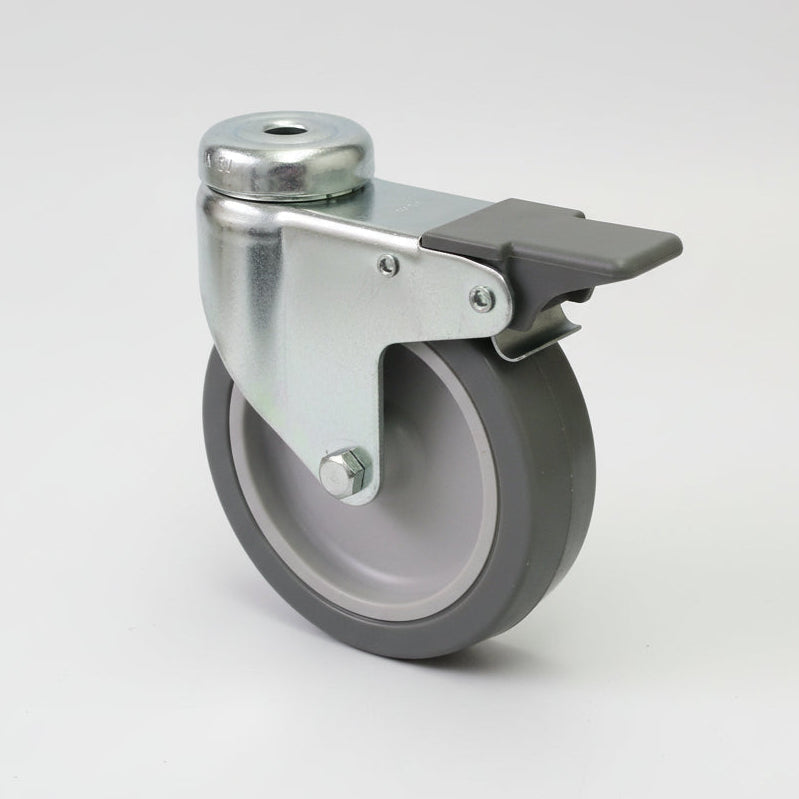
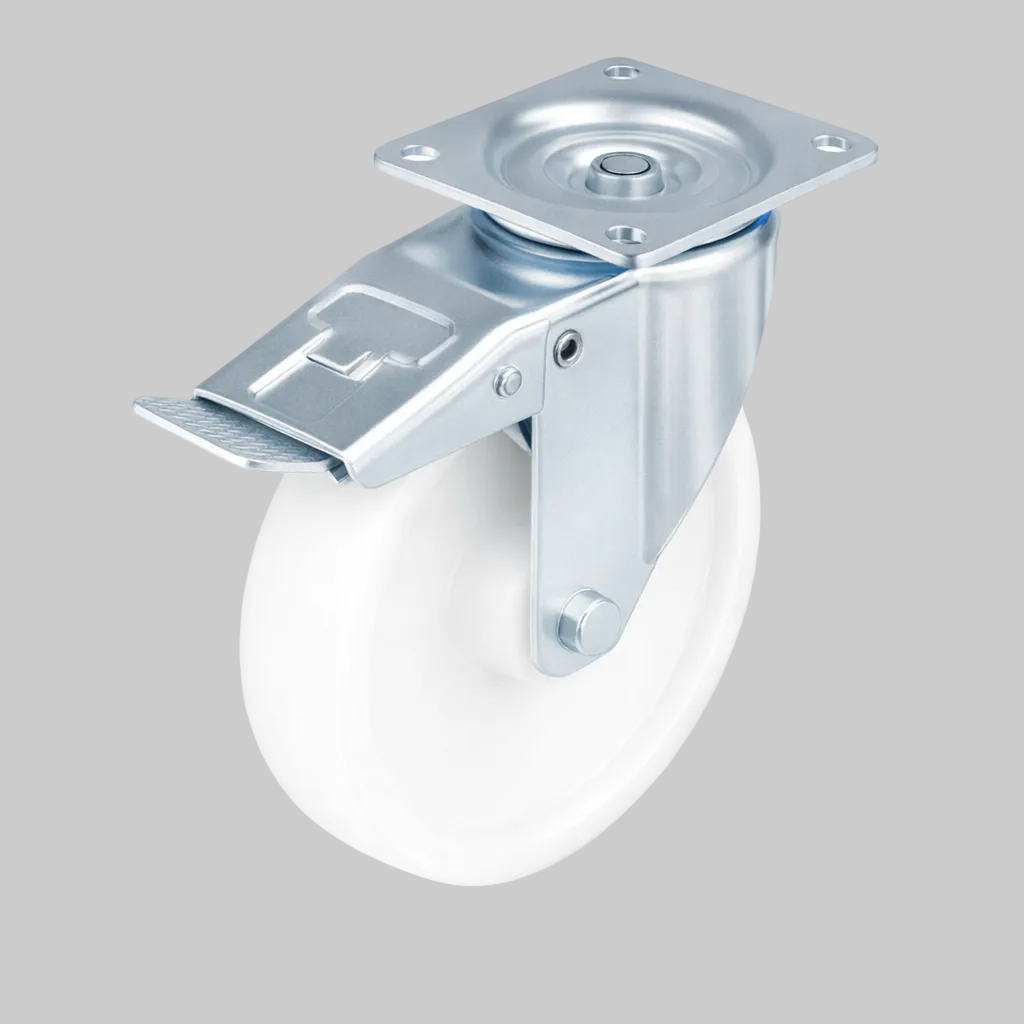
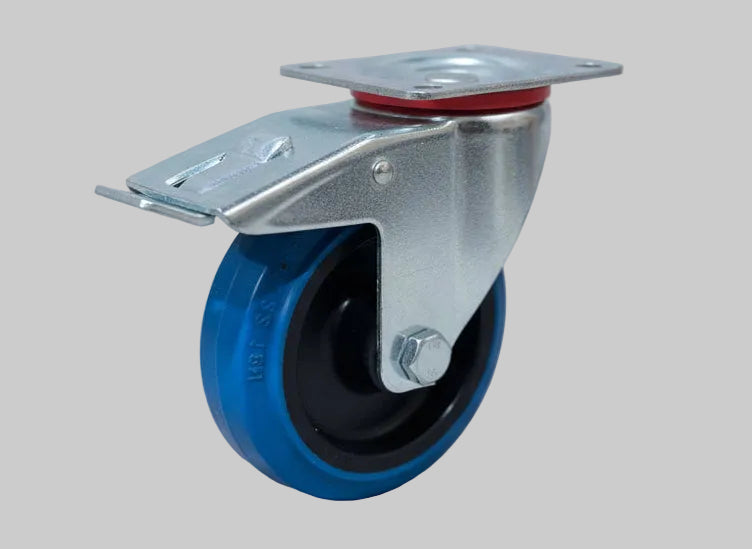
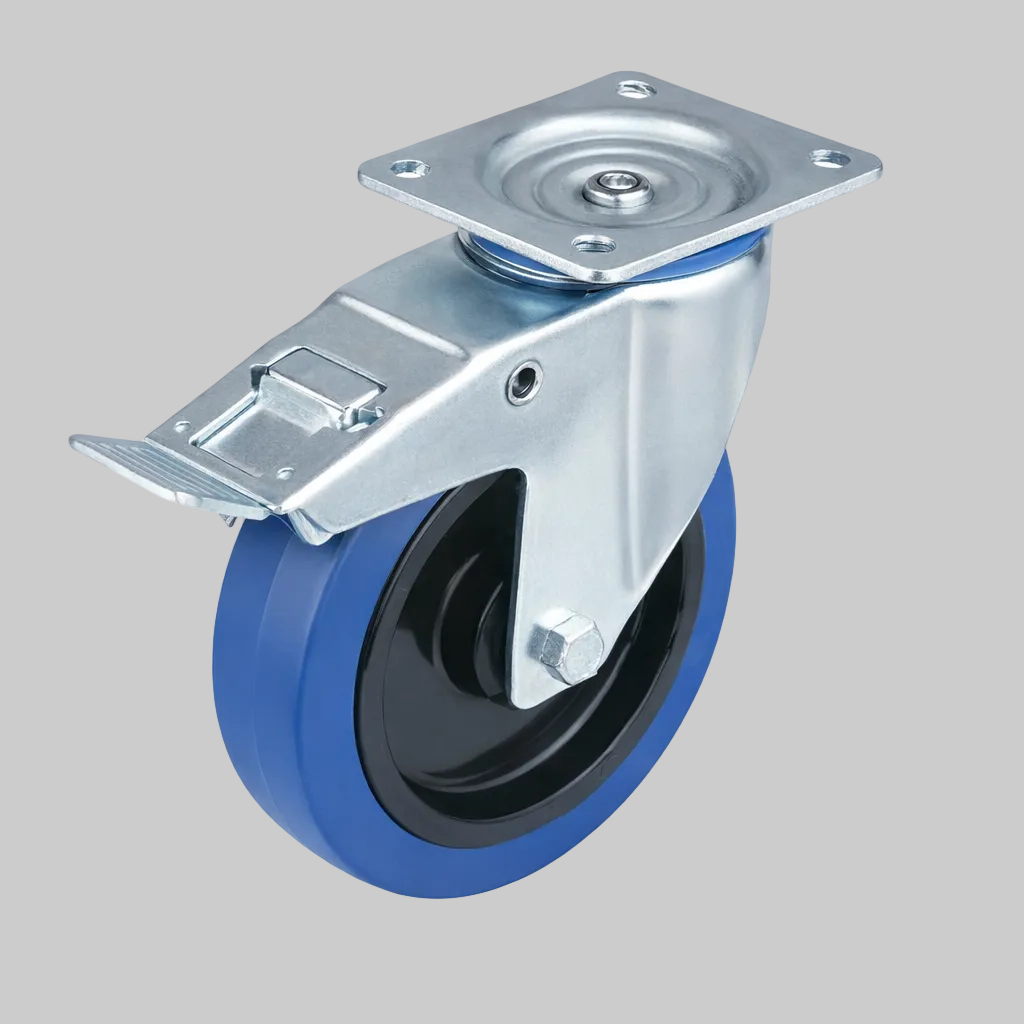
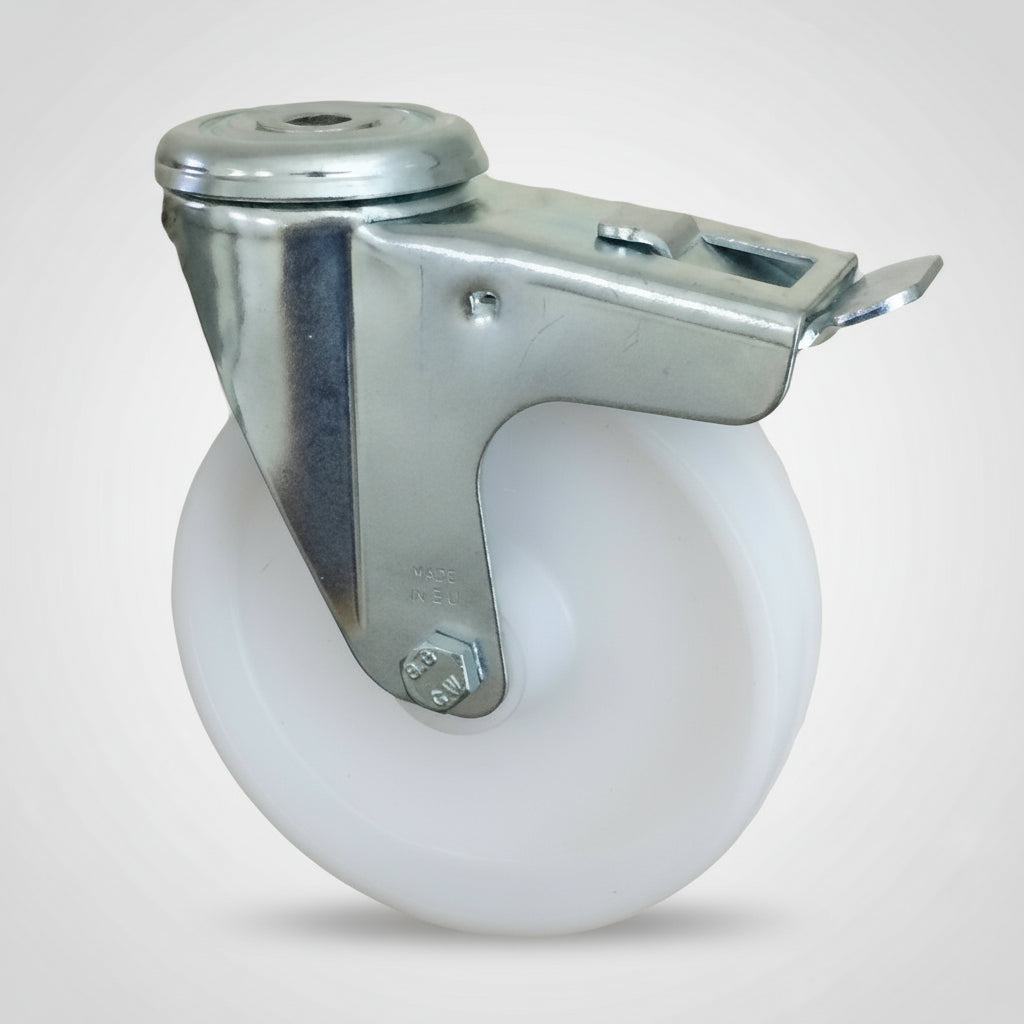
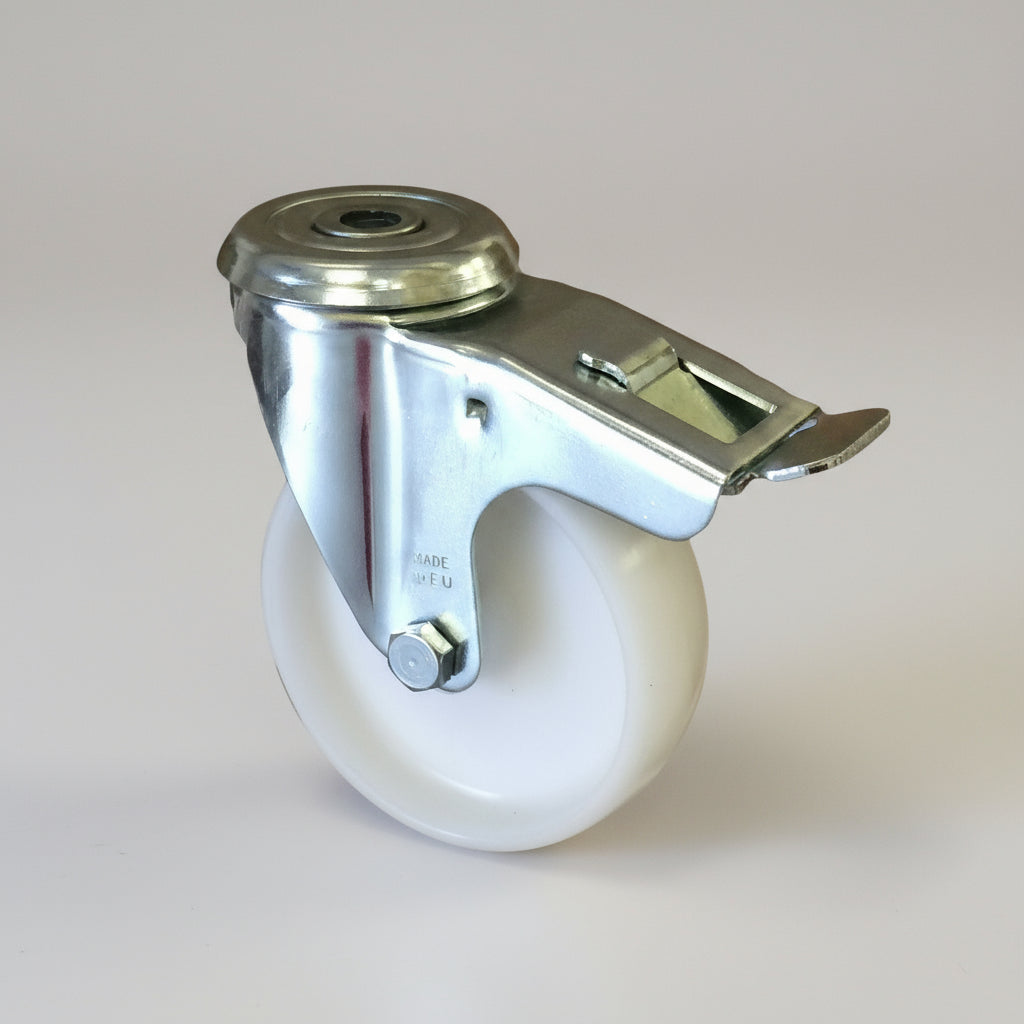
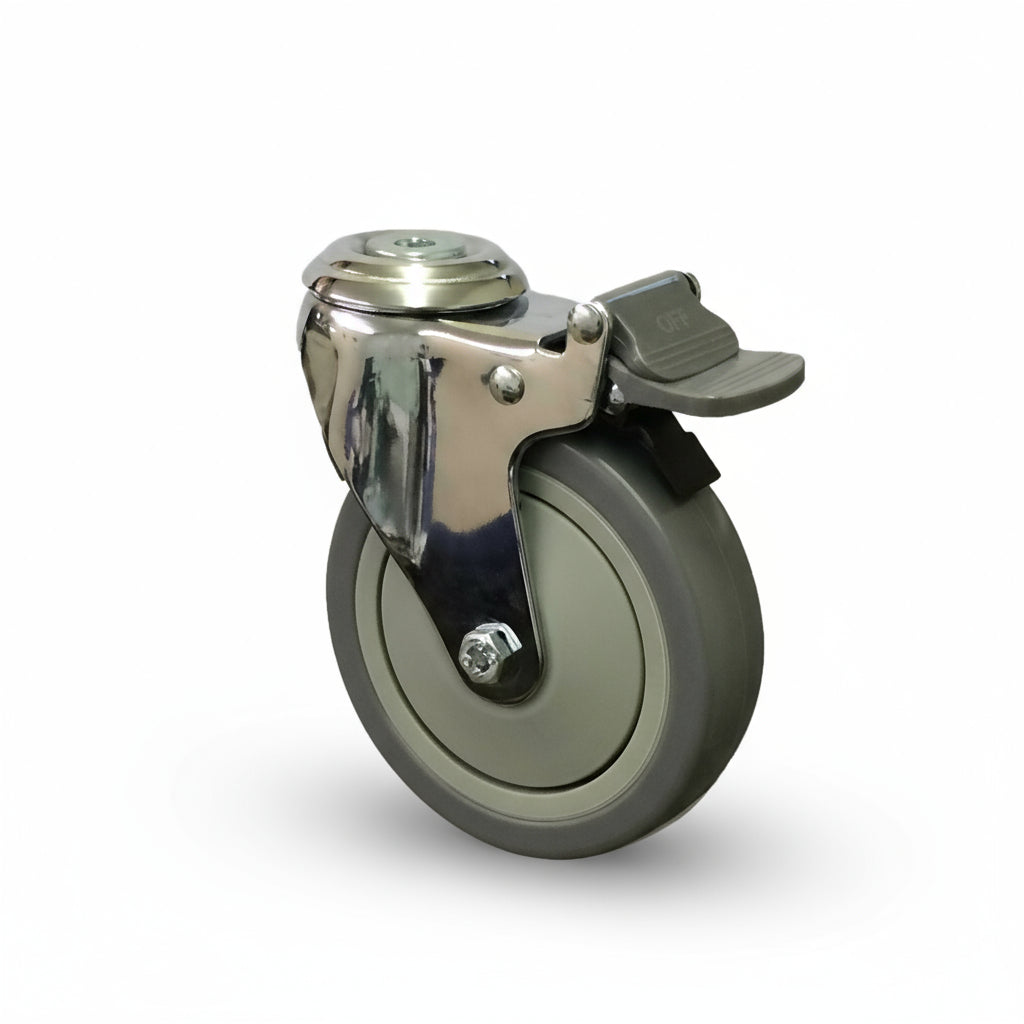
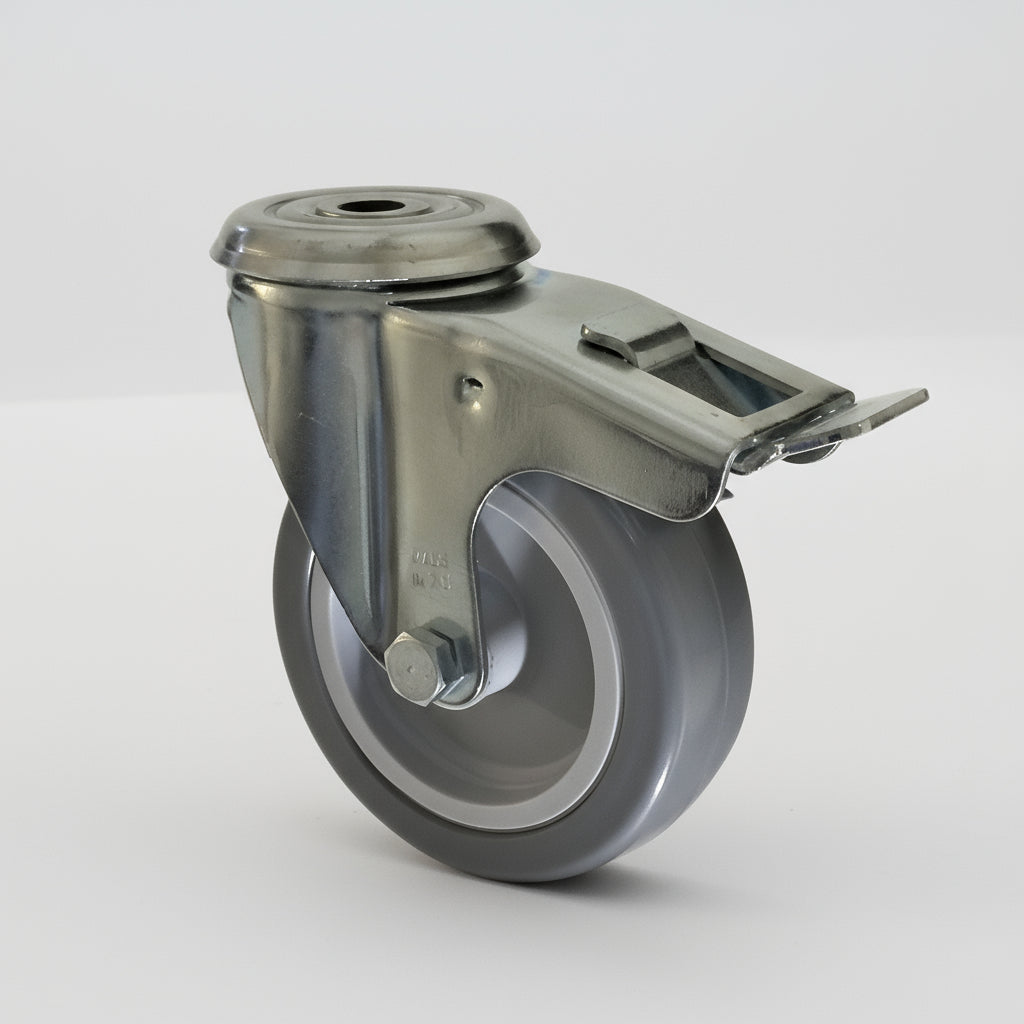
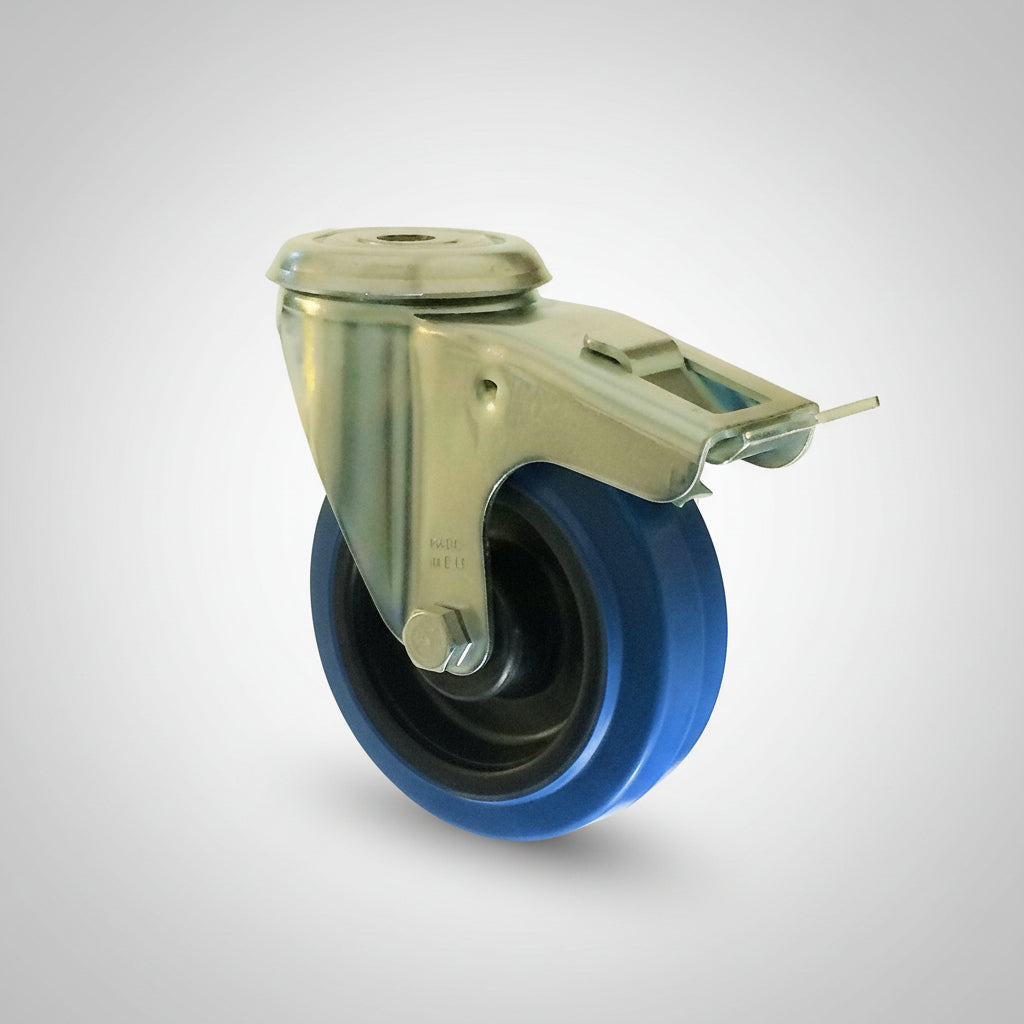
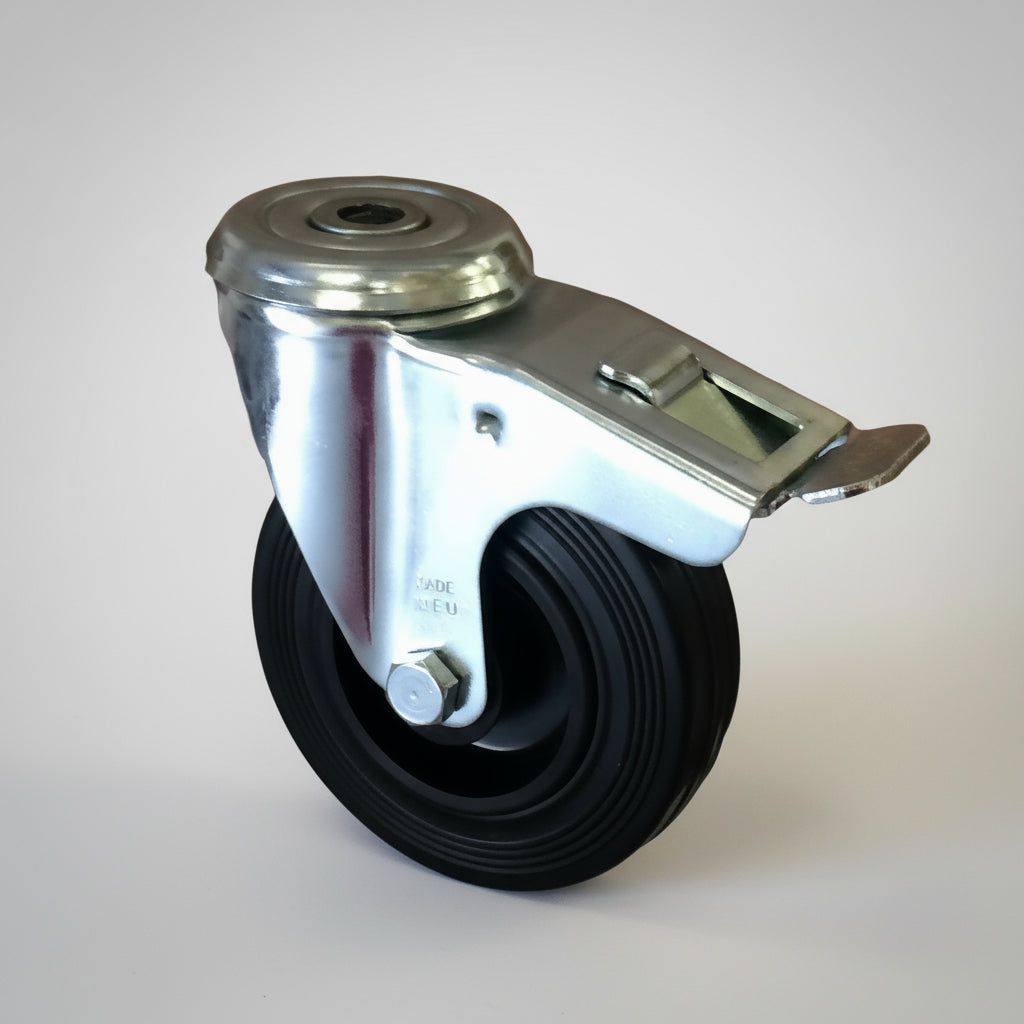
A braked swivel castor carries an integrated brake on the fork, applied and released by foot so hands stay clear of the load. Two brake systems are used on castors. Every braked castor in this collection uses a combined swivel-and-wheel brake, which locks the wheel and the swivel head together so the castor can neither roll nor turn and the load is held rigid. The other system is a side lock brake: a wheel brake that presses against the tread and stops the wheel turning while the swivel head can still rotate. We stock one castor with a side lock brake and can supply it on request. Both brake systems give secure positioning once locked, and both release with a single press so the swivel castors are free to move again.
Bolt hole castors fix through a single hole with an M8, M10 or M12 bolt. Sizes run from the 35mm low level heavy duty braked bolt hole castor rated to 120kg, through 50mm and 75mm grey rubber tyre braked swivel castors designed for lightweight trolleys and display cases, up to 100mm and 125mm castors with grey rubber, black rubber, blue elastic or nylon wheels rated to 100kg, with the 125mm nylon wheel braked castor rated to 250kg.
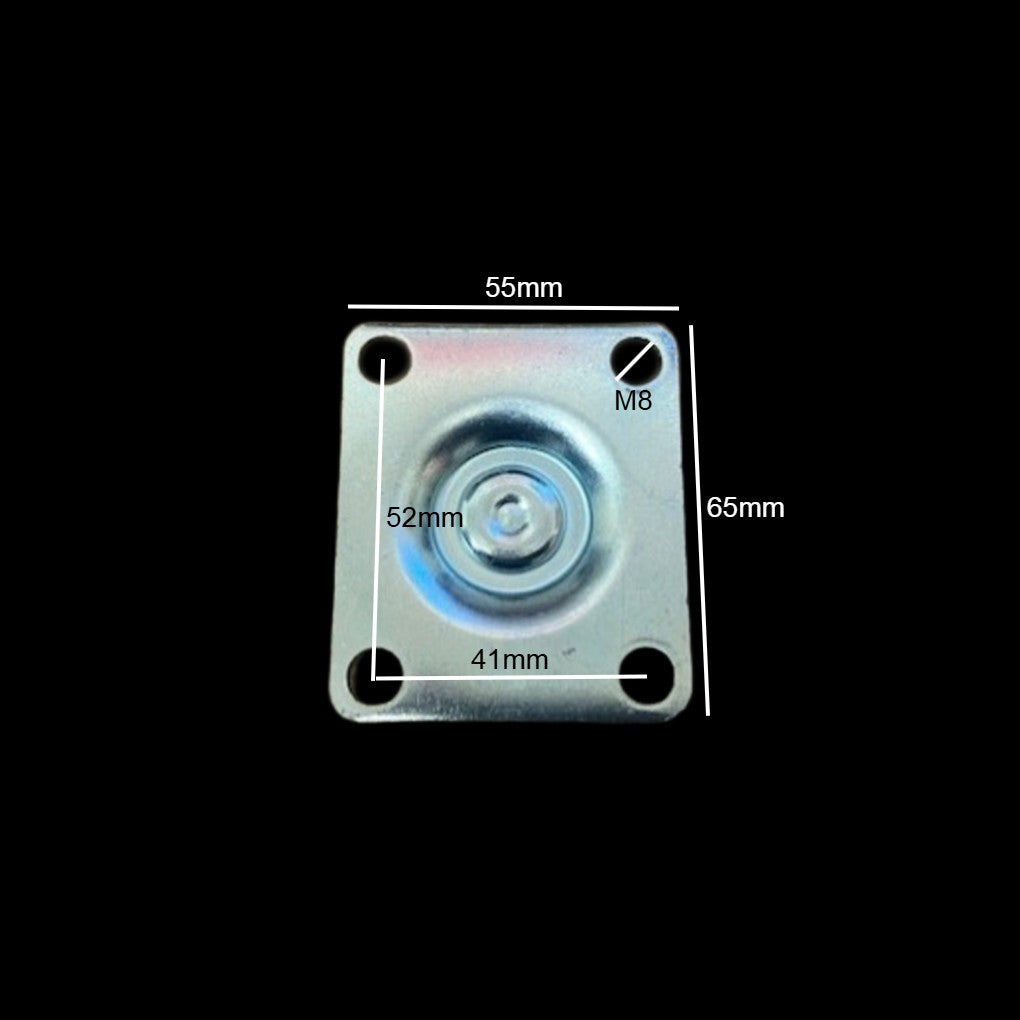
Plate fitting castors bolt to a flat top plate and take the heavy loads in the range. The 100mm blue elastic roller bearing plate castor has a load capacity of 150kg and the 125mm version 200kg, the highest load capacity in the collection. The 100mm nylon wheel plate castor is rated to 180kg and the 100mm black rubber tyre plate castor to 100kg. Compact 50mm braked plate castors in polypropylene and rubber tyre are ideal for light duty furniture and storage boxes at 50kg.
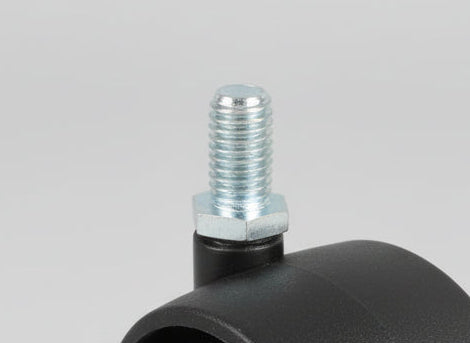
Threaded stem castors screw into a tapped socket: a 40mm twin wheel braked castor on an M8 x 15mm stem for healthcare and office furniture, and a 100mm twin wheel braked castor on an M12 stem. For institutional equipment the 125mm nylon body braked castor uses a 22mm x 80mm solid stem with stainless steel parts.
The wheel decides how the castor treats the floor and how it rolls under load. Grey rubber tyre wheels are the general purpose choice for smooth operation and floor protection. Blue elastic rubber tyres minimise vibration for quieter running and low rolling resistance, ideal for flight cases and tool chests. Nylon and polypropylene wheels are hard wearing and economical for bakery frames, tool stands and sack trucks in commercial and industrial use. Twin wheel castors with polyurethane tyres spread the load across two treads, and the chrome plated braked castor has a non-marking grey rubber tyre.
Wheel diameter runs from 35mm to 150mm across the collection. A larger wheel rolls more easily over uneven floors and thresholds and generally carries more, so choose the largest wheel diameter the equipment height allows. Each product page lists load capacity per castor, total castor height and the plate dimensions, bolt hole size or stem size.
Braked castors are essential wherever equipment must stay put while it is in use. The 35mm low level heavy duty braked bolt hole castor is built with precision bearings for loads up to 120kg on staging and scene shifters where clearance is limited. Our medical range braked castors, in nylon body bolt hole and stem versions, use glass-reinforced nylon with a grey thermoplastic rubber tyre for commodes, shower chairs and food service carts, where the brake prevents unintended movement. The 150mm chrome braked castor uses precision ball bearings for medical applications where hygiene matters. For industrial applications above 250kg per castor, heavy duty castors with brake sit in our heavy duty range.
Not in practice. The brake is part of the castor fork rather than a bolt-on part, so the answer is to fit the braked version of the castor you already use. Our swivel castors are designed with braked partners in the same fitting, so the swap needs no change to the fixing.
Only braked castors do. Plain swivel castors turn and roll freely and fixed castors roll in a straight line; neither gives stability on its own. Trolleys are usually fitted with a mix, with braked swivel castors placed where the load needs to be locked in position for safety, giving mobility when unlocked and stability when locked.
Swivel castors, which rotate on a swivel head to steer, and fixed castors, which run in one direction only. A braked castor is a swivel castor with a brake added, so it is usually listed as a braked swivel castor.
Two brake systems are used. A combined swivel-and-wheel brake, fitted to every braked castor in this collection, locks the wheel and the swivel head at the same time, so the equipment cannot roll or rotate until the brake is released. A side lock brake presses a lever against the tread to stop the wheel turning only.
We have supplied braked castors for industrial and commercial applications since 1987, and stocked products ordered by 2pm go out for next day delivery across the UK mainland. Not sure which braked castor you need? Send us a photograph and a measurement and we will identify what you need.